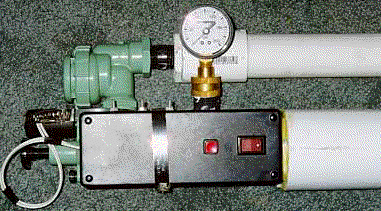
An air cannon, or pneumatic cannon is a large bore device that uses air pressure to propel an object. An air chamber on the cannon (PVC on the bottom of the cannon) is pressurized to about 100PSI. All of the air is released at once, launching whatever is in the barrel. I find that my air cannon is useful for propelling all kinds of things, from large quantities of paintballs to water, potatoes, lemons, and snowballs.
Parts List:
Air Cannon Electrical System:
- 1 ea. 1" Anti-siphon solenoid sprinkler valve
- 1 ea. 3ft of 1.5" SCH40 PVC
- 1 ea. 3ft of 2.5" SCH40 PVC
- 1 ea. 1.5" coupling
- 1 ea. 1.5"x1" Slip x Thread Bush
- 4 ea. 1" nipple
- 1 ea. 1" Threaded Tee
- 1 ea. Water/Air Gauge, 0-at least 150 PSI
- 1 ea. 2"-1" Slip x Thread Bush
- 1 ea. 2.5"-2" Slip Bush
- 1 ea. 2.5" Coupling
- 1 ea. 2.5" End Cap
- 1 ea. Automobile Tire Valve Stem
- 1 ea. PVC glue + Primer
- 1 ea. Teflon Tape
- Electrical
- 1 ea. Black "Project Box" (Available at radio shack)
- 1 ea. Momentary Switch
- 1 ea. On-Off Switch
- A Couple Plastic Ties
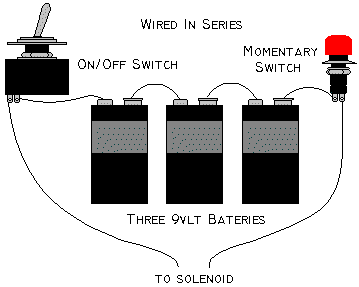
To make the air cannon electrical system (control box), use Radio Shack parts. All joints should be soldered for maximum efficiency. The valve operates at 24 volts DC so the three 9 volts are ample power. The electrical system should be mounted in the project box. Drill the appropriate sized holes in the box to mount the switches.
Air Cannon Fittings:
Here is a diagram of how the fittings go together:
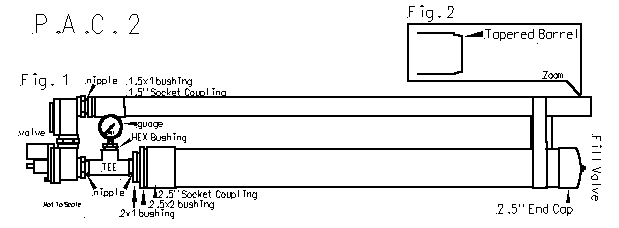
Schedule 40 pipe should only be used. First cut all pieces to length and clean the ends to be glued. Drill a hole in the end cap for the tire valve and screw it in place. Also, taper the firing barrel (Fig. 2). Obviously, don't glue the threads, use Teflon tape.
Valve- The valve is a one inch RainBird electric solenoid sprinkler valve which is available at Home Depot. It is rated up to 115 PSI, but I always used 100 PSI. I saw no need to go any higher.
Fill Valve- The fill valve I used was an automobile tire valve stem. It had its own nut and washers, so it was simply a matter of drilling an appropriate sized hole in the reservoir end cap and installing the fill valve before gluing on the end cap on to the reservoir pipe.
Set the control box against the firing barrel and use a small hose clamp to secure it. Then insert a block of wood or something similar at the end of the two barrels and use a large hose clamp to secure them. The 1 1/2" barrel fits potatoes better.
Other Important Information
The control box features a safety mechanism: a on-off toggle switch, and a button switch which must be pressed to get the cannon to fire. As an additional safety measure, I have connectors on my electrical box so that I can completely disassemble the electronics while loading, and handling the air cannon when it is not in use. The barrel I use most is a 1 1/2" barrel. I tapered the end to help cut the spud into shape (See the modifications section for more details). The solenoid actually has white wires as it does not matter which direction the current flows through it.
Firing Your Cannon
Grab some ammunition (preferably a potato or lemon) and shove it down the barrel. Use a ramrod (broom stick) to shove the ammo to about 2" from the end of the barrel. Now you can charge you cannon with air. You should have some kind of hose hooked up to a source of air. Preferably an air compressor or an air tank. Put a nozzle on the end of the hose to connect to the valve stem. It’s just a simple tire nozzle. When the nozzle is on the end of the valve it will start filling up the chamber. You'll be able to hear a hiss inside the chamber while it’s filling up. Keep putting air in until the gauge reads 90-100PSI. WARNING: Never charge your air cannon above 110PSI. The solenoid valve can only hold about 115PSI.
So now your cannon is filled with air. You can remove the hose that you used to fill the chamber. The air will be held in that chamber until you fire. Warning: Try not to leave the air in the chamber for long amounts of time, or when transporting the cannon, don't leave the air inside the chamber. Otherwise your ready to blast away. Arm the cannon and press the "fire" button. The projectile should go flying.
NOTE: At cold temperatures PVC can weaken causing it to explode.
Modifications-
Feel free to experiment with your pneumatic cannon and create helpful accessories.
Question: What should I do if my batteries die while the cannon is charged with air?
Answer: You can drain your cannon using the bleed screw. It is mounted on the solenoid valve. NOTE: If you oven the screw to fast it will open the valve.
Question: Can I hook up a CO2 tank to the gun so I do not have to pump?
Answer: NO!!!!! I
commonly am asked by people how to hook up a CO2 tank to this. CO2 Tanks
have pressures as high as 1200psi. 1200psi in a system rated for 110 PSI
means PVC shrapnel tearing the skin from your bones in a rather ugly explosion!