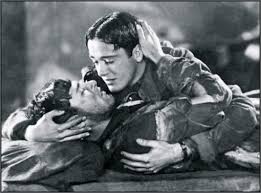
Wings (1927) depicted the first same sex kiss in American cinema
Throughout the early 20th century depictions of LGBT+ were quite prevalent in film, despite these dipictions often being steriotypical or exploitative. This ranged from the reversal of typical gender rolls such as in Charlie Chaplin's A Woman (1915) or A Florida Enchantment by Sidney Drew (1914) to the first same sex kiss in a mainstream American film in the 1927 War Film Wings. This increased representaion of LGBT+ and gender non-conforming characters continued as filmakers continued to grow more expiremental artistically.
This growth in LGBT+ and gender non-conforming representaion was halted in the early 30's with the introduction of The Motion Picture Production Code. Backed by many religious groups the Motion Picture Production Code, also known as the Hays Code, dictated what was or was not "acceptable" to be shown in American films. This moral guideline presented a list of things which were to be strictly prohibited in film ranging from excessive violence to interracial-relationships. The Hays code also prohibited what it described as "sexual perversion". This rule was used to effectivly ban the depiction of same sex relationships or transgender / gender non-conforming characters unless they were depicted as wrong or morally corrupt.
This continued for decades until 1968 when, after years of enforement weakening, the Hays Code was retired. This would soon be followed by a wave of groudnbreaking LGBT+ films and attempts by Hollywood to commandeer and market LGBT+ films for profit in the 1970's.
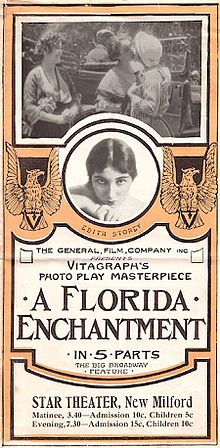
A Florida Enchantment (1914) depicts a woman who, after eating a
magic seed, changes gender and starts to have romantic feelings for women