Home
Committee members
AGM 
Setup Roster
Membership Form
Up

Frequencies Used by Sunset Members as at April 2007

Members and guests who wish to fly at Sunset Soaring Club must place a 50mm (2 inch) "Silvertone" frequency key into the apropriate slot in the club's frequency board - if that slot is free. Only then may they switch on their transmitter. Therefore, current and potential members should try to select one of the less used frequencies shown below to avoid a potentially long wait for a free slot! Currently unused frequencies are shown highlighted in pale yellow.

These tables were last updated on 24 April 2007. If you buy a new transmitter or new crystals, please email Robin with your new frequency details.

Note: A more detailed (and likely more up to date) list of which members use which frequencies is kept in the visitor's log book at the field on flying days.

If you plan to fly with us, be sure to consult these tables before buying a new transmitter or a new set of crystals - and preferably email Robin as well to get the very latest list.

Try to find a frequency which is currently unused or only sometimes used. Most new transmitters use the 36MHz band. Please Note: 35MHz (UK) and 72 MHz (USA) frequencies may not be used in Australia.

2.4 GHz transmitters approved by MAAA are allowed, subject to MAAA Manual of Procedures MOP058, and the Club Code of Conduct which specifies a Silvertone key must be used on the special 2.4 GHz board, which limits the number of simultaneous 2.4 GHz users to 10.

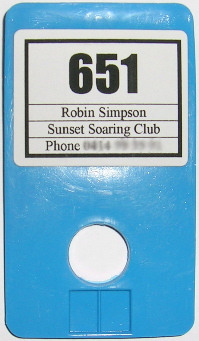
 Silvertone Key

A Silvertone frequency key for Channel 651 (36.510 MHz)


29 MHz Band

Channel

Frequency

Total Users

Used Often

Used Sometimes

10

29.725

1

1

11

29.735

-

12

29.745

1

1

13

29.755

-

14

29.765

1

1

15

29.775

-

16

29.785

1

1

17

29.795

-

18

29.805

-

19

29.815

-

20

29.825

1

1

21

29.835

-

22

29.845

-

23

29.855

-

24

29.865

5

1

4

25

29.875

-

26

29.885

1

1

27

29.895

-

28

29.905

1

1

29

29.915

-

30

29.925

-

31

29.935

-

32

29.945

1

1

33

29.955

-

34

29.965

-

35

29.975

-

36

29.985

1

1

37

29.995

-

40 MHz Band

Channel

Frequency

Total Users

Used Often

Used Sometimes

50

40.665

3

3

53

40.695

2

1

1

Note: Channels 51 and 52 at 40MHz are not recommended - they may be subject to interference from wireless paging systems.

36 MHz Band

Channel

Frequency

Total Users

Used Often

Used Sometimes

601

36.010

2

2

603

36.030

-

604
36.040
2
2

605

36.050

2

1

1

607

36.070

3

3

609

36.090

-

611

36.110

1

1

613

36.130

2

2

615

36.150

5

4

1

617

36.170

2

2

619

36.190

1

1

621

36.210

1

1

623

36.230

1

1

625

36.260

4

2

2

626

36.250

1

1

627

36.270

1

1

629

36.290

2

1

1

631

36.310

2

2

633

36.330

2

2

635

36.350

2

2

637

36.370

3

2

1

639

36.390

4

3

1

641

36.410

2

2

643

36.430

3

1

2

645

36.450

4

4

647

36.470

3

3

649

36.490

4

4

651

36.510

2

2

653

36.530

2

2

655

36.550

3

2

1

656

36.560

1

1

657

36.570

-

659

36.590

3

2

1

Note: Like many Australian Radio-Control aircraft clubs, for historical reasons Sunset Soaring Club mainly uses odd-numbered channels in the 36 MHz band for model aircraft and 20 MHz channel spacing (enforced by the 50 mm Silvertone frequency keys on our control board). The Australian Communications Authority (ACA) also allows these odd numbered channels to be used for radio controlled water craft, but not for radio controlled model cars.

The ACA mandates that even-numbered channels are for the exclusive use of model aircraft, and we allow this at Sunset, but it does mean that the odd channels either side cannot be used because we still insist on 20 KHz channel separation. If we were to support 10kHz channel spacing, under the MAAA's regulations we would have to require annual transmitter certification to ensure safety. The current 20Hz spacing rule reduces the risk of interference between adjacent channels without requiring transmitter certification.

For more information on Australian Radio Control frequencies and channels please click here.
For more information on world-wide R/C frequencies check http://www.ukrcc.org/index.htmlhttp://www.ukrcc.org/index.html

Last update 24 April 2007 by Robin
Hosted by www.Geocities.ws

1