BODY
CONDITION
SCORE YOUR HORSE
What is body condition
scoring?
It is a visual and hands-on method to evaluate the amount of body fat a horse
has. Developed at Texas A&M University by D.R. Henneke and others, this
system is a good management tool to determine the optimum amount of body fat for
every type of horse.
How does body condition
scoring work?
The amount of fat covering areas of the neck, withers, down the back, around the
tailhead, over the ribs and behind the shoulder is evaluated. These areas are
where the horse deposits fat stores.
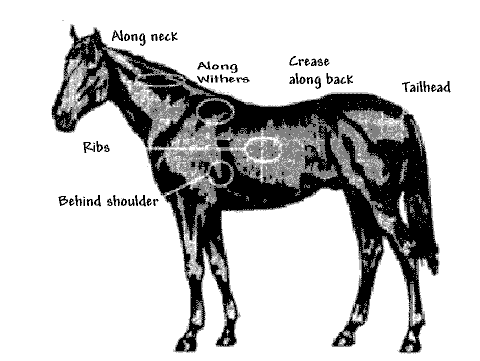
Body condition scores range from 1- 9, a score of 1 being emaciated with no fat stores and 9 being extremely fat. A score of 5 is moderate and where most horses should be. Be sure not to confuse body fat with gut fill or "belly".
Why is it important?
By evaluating each horse's body condition regularly, the feeding and exercise
program can be adjusted up or down to maintain the desired condition. Each class
of horse, based on age, workload and use has an optimal body condition score.
For example, a performance horse need enough body fat stores to use as an energy
source to maintain performance, while too much fat can decrease performance.
This system sets a standard for evaluating and communicating the condition of a horse. This makes it easy to discuss a horse's condition as simply as telling someone the score over the phone.
The two most common
nutritional problems most horse owners have is overfeeding or underfeeding their
horse. To prevent either of these problems from developing
1) body condition score the horse
2) adjust the feeding program if necessary
3) monitor the score frequently
There are nine areas throughout the body:
1) Neck
2) Withers
3) Shoulder
4) The area directly behind the elbow
5) Topline
6) Ribs
7) Tail head
8) Point of hip
9) Point of buttock
A tenth area found to be useful as well is the "twist", the area between the thighs, as viewed from behind. Each area should be appraised and scored individually and then the scores averaged to produce a final overall score. This doesn't mean you need to laboriously write down and calculate each area. What it does mean is that you need to look at the total horse and take into account individual differences. Some horses can be quite plump and yet still look a little ribby, so the overall score should look at areas other than just those ribs. Other horses can have quite a bit of fat cover, but because of funny conformation through the croup, look thin in just that one area. Be sure to look at all the areas, then form a general overall score based on individual areas of observation.
When appraising each area, use your hands as well as your eyes. Skeletal landmarks can be hidden by a furry winter coat, dirt, lighting or just the way the horse is standing. Hold your hand flat, fingers together, and feel for the reference points. Then walk around the horse and see if your observations are consistent from the other side as well.
|
DESCRIPTION OF BODY CONDITION SCORES |
||
| SCORE | NAME | DESCRIPTION |
| 1 | poor emaciated |
Bony structures of neck, shoulders and withers easily noticeable. Spinous processes, along the ribs, topline, point of hip and point of buttock all project prominently, with an obvious ridge down the back. Individual vertebrae may be identifiable. There is significant space between inner buttocks ("twist"). The animal is extremely emaciated; no fatty tissue can be felt. |
| 2 | very thin | Bony structures of the neck, shoulders and withers are faintly discernible. Spinous processes, ribs, topline, point of hip and buttock are prominent. Noticeable space between inner buttocks. Animal is emaciated. |
| 3 | thin | Neck, withers and shoulder are accentuated, but not obviously thin. Tailhead is prominent. Slight fat cover over ribs, but still easily discernible. Spinous processes, point of hip and point of buttock are rounded, but easily discernible. Twist is filled in, but without noticeable deposition of fatty tissue. |
| 4 | moderately thin | Neck, withers and shoulders are not obviously thin. Ribs are faintly discernible. Point of hips and buttocks are not visually discernible. Fat can be felt around the tailhead, prominence somewhat dependent upon conformation. There is a slight negative crease (a ridge) along the topline, especially over the loins and hindquarters. |
| 5 | moderate | Neck, withers and shoulder appear rounded and blend smoothly into the body. Ribs cannot be seen but are easily felt. Back is level with neither a ridge nor a gully along the topline. Fat around tailhead is beginning to feel spongey. Slight amount of discernible fat deposited between buttocks (twist). |
| 6 | moderately fleshy | Fat beginning to be deposited along the neck, withers and shoulders. Fat over the ribs beginning to feel spongey, ribs cannot easily be felt. Fat around tailhead feels soft. May be slight positive crease (gully) along the topline. Noticeable fat deposition between buttocks. |
| 7 | fleshy | Fat deposited along neck and withers and behind shoulder. Individual ribs can be felt, but with noticeable filling between ribs. Slight positive crease down back. Fat around tailhead feels soft. |
| 8 | fat | Noticeable thickening of neck. Area along withers is filled with fat, area behind shoulder is filled in flush with body. Ribs cannot be felt, noticeable positive crease down back, fat around tailhead is very soft. Significant fat deposited along inner buttocks. |
| 9 | extremely fat | Bulging fat along neck, shoulders and withers. Flank is filled in flush. Patchy fat appearing over ribs, obvious positive crease down back. Obvious fat deposited along inner buttocks. |
Because miniature horses have a much longer hair coat than full size horses the only way to accurately judge the condition of your mini is to feel through the hair. It is recommended that you give your horse a good feel at least once a month.
Thank you to Texas A&M University and others for sharing this valuable information.
" A healthy horse is a happy horse."