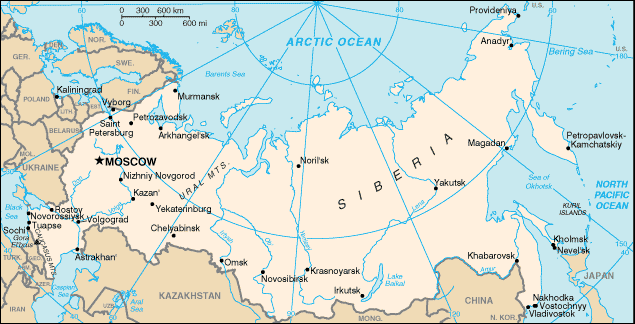
Russia Facts in Brief
Originally the civil ensign, this flag was first
recognized for use on land in 1883, and was used
until the fall of the Kerensky Government in
1917. It was re-adopted as the flag of the Russian Federation in August of 1991.
General [comparable U.S. figures follow in brackets]
Name: Russian Federation; independence declared August 24, 1991
Area: 6.5 million square miles [3.8 million square miles]
Population: 147.5 million [260.7 million]
Official language: Russian (over 140 other languages and dialects currently in use)
Currency: Ruble (technically consists of 100 kopeks, at present obsolete)
Rate of exchange: 29.5 = about $1 (March, 2002; for current rate, see Xenon Laboratories)
Demographics
Population density: 22 per square mile [69 per square mile]
Ethnic composition: Russians: 81%; Tatars: 4%; Ukrainians: 3%; Chuvash: 1.2%; Others (less than 1% each): 10.5%
Age structure: 0-14 years: 20% [22%]; 15-64 years: 67% [65%]; 65 years+: 13% [13%]
Literacy: 98%
Economy
GDP: $452 billion (1997 estimated)
Exports: $88.3 billion (1996)
Imports: $59.8 billion (1996)
Foreign debt: $130 billion (year end, 1996)
Labor force: 73 million (1996)
Unemployment: 9.3% nominal (1996), considerable additional underemployment
Agriculture
Arable land: 11% [20%]
Land use: arable - 8%; meadows and pastures - 5%; forest and woodland - 45%; other - 42%
Main crops: grain, cotton, sugar beets, potatoes, vegetables, sunflowers
Major Cities and Populations (year founded in parenthesis)
Moscow (1147) - 9 million
St. Petersburg (1703) - 4.9 million
Nizhny Novgorod (1221) - 1.42 million
Novosibirsk (1893) - 1.41 million
Yekaterinburg (1723) - 1.37 million
Samara (1586) - 1.2 million
Vladivostok (1860) - 0.63 million
(Sources: State Department Background Notes 1998; CIA World Factbook 1997 )
Major Holidays
January 1 - New Year's Day
January 7 - Russian Orthodox Christmas.
March 8 - International Women's Day (also known as the "Spring Holiday")
April 4 - May 8 - Russian Orthodox Easter (must be calculated each year). The first Sunday after the first full moon following the vernal equinox; this day must follow Passover. If it does not, the Easter is celebrated the following Sunday.
May 1 - International Labor Day
May 9 - Victory Day (1945)
June 12 - Russian Independence Day
December 12 - Constitution Day
December 24-25 - (European) Christmas. Celebrated selectively, depending on ties and degree of contact with Westerners.
Please note: If a holiday falls on a Thursday
|