Achieving Great Saddle Fitby Chrisann Ware, Equine Myofunctional Therapist and Saddle Fit Consultant |
Ottenere una sella che calza bene
|
|
It is not impossible to have great saddle fit but it does require that you be a detective and take the time to really look at the horse you know so well. Back problems are slow to develop and often they are well advanced before we really see them. The other key aspect of good fit is to forget most of the hype that you have been told about brands and to find one that is a mirror image of your horse's back. Its matters not if it is a tree-ed saddle or a treeless. The equine back is as individual as our feet and we would never expect to wear the same shoes even if they were the "best" brand. Saddles whatever brand or type all need to do three things to fit. They must be the same shape as the horse's back, they must allow the horse room to move his spine from side to side and they must not drive themselves into the thin muscles that cover his scapular. Firstly price is no indication of good fit nor is “treeless” always a good thing – you need both support and protection from a saddle. First things first............. assess your horse's back for possible damage whilst running your hands over him. Do this several hours after a ride when the horse is cool and the muscles are reactive. If you do it straight after you unsaddle you may miss a lot of the signs of damage due to the muscles being desensitized due to lack of circulation from pressure. Healthy backs are warm, and the muscles should feel soft with a texture a bit like a boiled egg! There should be a yielding to your pressure and should feel as though they are "giving" and moving slightly ahead of your hand. You should be able to run your finger tips gently but firmly along his back where the saddle panels would be without the horse flinching and tightening up his back muscles. You should not see any "flickering" of the muscles due to your touch. There should be no hard areas or hot spots under your hand and definitely no white areas of hair. Most definitely they shouldn't feel like your ironing board does! If you find this there has been months or years of atrophy already. |
Non è impossibile fare in modo che una sella calzi perfettamente, ma la cosa richiede che voi diventiate degli investigatori e vi prediate il tempo necessario per osservare veramente il cavallo che conoscete così bene. I problemi alla schiena si sviluppano lentamente e spesso sono in uno stadio avanzato prima che ce ne accorgiamo veramente. L'altro aspetto chiave della ricerca di un adattamento perfetto è quello di dimenticare la gran parte delle iperboli che via hanno raccontato sulle varie marche e di trovarne una che riproduce a specchio la schiena del vostro cavallo. Non ha importanza che abbia o che non abbia arcione rigido. La schiena equina ha una precisa individualità come i nostri piedi, e non ci aspettiamo mai di poter calzare le stesse scarpe anche se fossero della marca "migliore". Le selle di qualsiasi marca o tipo hanno tutte bisogno di tre cose per calzare bene. Devono avere la stessa forma della schiena del cavallo, devono dare al cavallo lo spazio necessario a muovere lateralmente la sua spina dorsale e non devono spingersi fino ai sottili muscoli che coprono la scapola. Per prima cosa, il prezzo non è un indicatore di una buona calzata della sella nè la soluzione "treeless" è sempre una buona cosa - da una sella dovete ottenere sia sostegno che protezione. Ma cominciamo dalle cose da fare per prime... esaminate
la schiena del vostro cavallo per rilevare la presenza di eventuali
danni scorrendo le mani su di lei. Fatelo molte ore dopo una cavalcata
quando il cavallo si è raffreddato e i muscoli sono reattivi. Se
lo fate appena dissellato, potete perdere molti segni di danno a causa
della desensibilizzazione dei muscoli causata dalla carenza di
circolazione sanguigna conseguente alla pressione. Le schiene sane sono calde, e i muscoli devono dare una sensazione morbida con una consistenza simile a quella di un uovo sodo! Dovrebbe esserci una leggera cedevolezza alla vostra pressione e dovreste sentire che stanno rispondendo e muovendosi leggermente sotto la vostra mano. Dovreste poter scorrere con le vostre dita, gentilmente ma con decisione, lungo la sua schiena nella posizione dei cuscini senza che il cavallo si ritragga o metta in tensione i sui muscoli. Non dovreste vedere alcuna retrazione dei muscoli dal vostro contatto. Non ci devono essere zone dure nè punti più caldi sotto le vostre mani e assolutamente nessuna zona di pelo bianco. E ancora più decisamente, i muscoli non dovrebbero darvi la sensazione che vi dà la vostra asse da stiro! Se questo è quello che trovate, ci sono già mesi o anni di atrofia. |
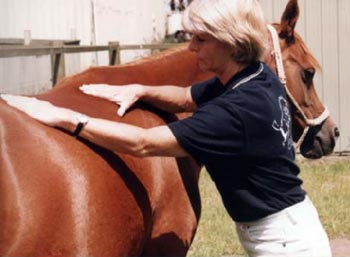 |
Run your hands from withers to croup, cover the whole area where the saddle would be. The horse should never "dip" under your touch or seem resentful in any way. Watch the horse's reactions, look at the expression in his eye, often they become very anxious about having their backs handled when they are sore. If you find an area of muscle that seems to have the imprint of the saddle already sunk into it, there is already muscle atrophy taking place. Horses with severely damaged backs may even be indifferent to your probing the surface tissue because long term swelling and pressure in this area will causes dysfunctional nerve impulses and the muscles might not be reactive at all due to permanent damage. These horses will be in constant chronic low grade pain. Backs that seem to "flicker" under your touch are very sore indeed and the muscle will spasm at your touch.......imagine what happens when you add your weight to the stirrup to mount. Many horses are so fearful of the pain of cramping backs that they will rear up when mounted to avoid the pain to come. |
Fate scorrere le vostre mani dal garrese alle reni,
coprite tutta l'area dove sarebbe appoggiata la sella. Il cavallo non
deve mai sprofondare sotto il vostro tocco, o sembrare risentito in
qualsiasi modo. Osservate le reazioni del vostro cavallo, guardate
l'espressione dei suoi occhi, spesso diventano molto ansiosi all'idea
che la loro schiena sia manipolata quando sentono dolore. Se trovate
una zona muscolare che sembra conservare su di sè
l'impronta della sella, c'è già atrofia muscolare in
corso. I cavalli con schiene fortemente danneggiate possono
anche rimanere indifferenti alla vostra esplorazione perchè
nella zona che esaminate la tumefazione di lunga data e la pressione
causa anomalie della trasmissione degli impulsi nervosi e il cavallo
potrebbe non essere affatto reattivo a causa di un danno
permanente. Questi cavalli sono in una perenne condizione di leggero
dolore cronico. Le schiene che sembrano ritrarsi sotto il vostro tocco
sono anche loro molto dolenti e il muscolo andrà in contrazione
spastica sotto il contatto... immaginate cosa avviene quando mettete il
peso sulle staffe per montare. Molti cavalli hanno una tale paura del
dolore che nasce dai crampi sulle loro schiene che si impennano quando
vengono montati per impedire che il dolore si manifesti. |
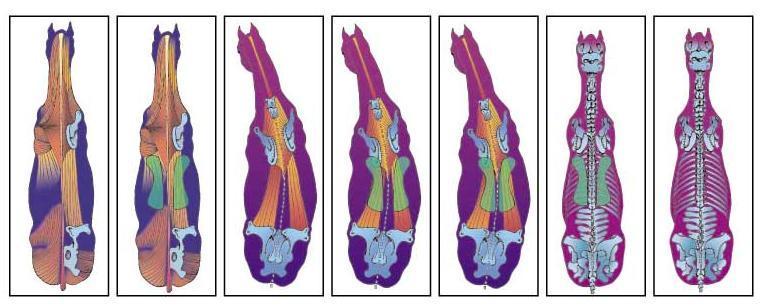
Indications of a saddle fit problemThe greatest indicator of a saddle fit problem is your horse. If he looks at you like you are the last thing he wants to see when you come towards him with his saddle this says it all! Horses don't lie or fake discomfort if he is unhappy about your choice in saddles he is telling you it hurts!. If you are reading this saddle fit information you may have come to this page looking for help with hoof problems. Be aware that hoof problems, especially clubby feet and hind hoof imbalances may cause asymmetry in the upper shoulder musculature of the foreleg. Often horses with this type of hoof problem will have one overdeveloped wither. This will make good saddle fit impossible as the saddle will be moved and twisted sideways when the horse is in motion. This often feels to the rider as if the horse isn't travelling in a straight line or the saddle appears to be "eating" the saddle cloth constantly..... some people say it feels like "riding a bag of bottles". No amount of saddle padding/cloths will help......to have good saddle fit on these horses it is necessary to return the hooves to normal, after which the shoulder musculature will also slowly return to normal over time as the gaits normalize. Most of us would never consciously choose to hurt our horses. Unfortunately most of us have been taught to ride by instructors who had no knowledge of horses' musculo-skeletal systems or saddle fit problems. We therefore have been taught to ignore the subtle signs that horses give us when they are sore. Usually we are told they are just lazy or difficult or we are encouraged to use spurs and to train harder. Horses are branded as being "cold backed" or "bridle lame" when they try to show us that they can stand it no longer. Some spend years in chronic pain when all that was needed was a saddle that fitted well. Often even though owners seek help there are many unskilled, poorly trained saddle fitters, therapists and chiropractors working in the horse industry who will not recognize the signs of saddle fit problems. Horses are prey animals and as such will exhibit very few symptoms of poor saddle fit, often suffering chronic pain for many months sometimes years. Before they exhibit bad behaviours due to pain. Pressure from ill fitting saddles will restrict circulation to areas of the horses long back muscles. Eventually the nerves which innervate these muscles with electrical impulses will die and areas of the muscles will atrophy (waste away). The body replaces these areas with scar tissue which does not have the ability to stretch so the muscles is more likely to re-injure at these sites. The muscle is then working in a shortened state and the horse lives a life of chronic pain even when the saddle is removed. The horse when ridden will adopt an unnatural high head carriage and hollow out his back to protect the sore areas and eventually he will resort to bad behaviours when he can cope no longer with the pain. There are no "cold backed" horses just very sore horses. Owners are bombarded with glossy advertising for saddles that promises that this brand or that brand will fit just about every type of horse. This is a physical impossibility as horses backs are as individual as our feet and we would never expect to all wear the same size or shape shoe as everyone else. It doesn't matter which saddle you choose what does matter is that the tree and underside of the saddle is a mirror image of your horse's back and that the saddle is soft enough to bend and flex slightly with the horse's movements and that its inner construction is strong enough to withstand the stresses of riding. Use these notes as a guide and remember it is vital that before you select a new saddle you take the time to ride out in it and do the "white cloth test" listed below. This is the best way to assess what is happening once the dynamics of your weight is added to the saddle. Remember also that if the horse is already suffering from muscle wastage then this must be addressed with massage therapy and the back returned to normal before you select another saddle or you will be choosing one that is the shape of the damaged back and therefore just prolonging the problem. If your horse is exhibiting the following then suspect that you have a saddle fit problem already. • First of all does your horse snarl and lay back his ears when he sees you coming with your favourite saddle? You may love it, he hates it as it makes his time with you a punishment. Does your horse's back have areas of white hair, or if he is a grey, areas that don't seem to get wet when you hose him? White hair indicates damage from pressure, usually ongoing and done months ago. Pressure or friction has actually damaged the hair follicles causing them to grow back without pigment. Much the same as freeze branding does. Areas that don't seem to sweat are also caused by severe trauma killing the sweat glands. These are often evident under where the stirrup bars exert force directly behind the horse's scapular. Riding instructors often say that standing in the stirrups lifts your weight off the back. This practice does not "take your weight off the horse's back". Unless you have actually learned how to levitate above the horse it just concentrates it onto the two points where the stirrup bars attach to the saddle, driving the tree into his back there. • Even sweat marks are not a good indication of saddle fit as often areas of earlier damage will not sweat even after the muscles have returned to normal. Only the white saddle cloth/dirt map test mentioned below will give true indications of fit once your weight is added. • Does your horse have high head carriage or an over developed ewe-neck? The horse raises his head in order to hollow his sore back, which relieves some of the pressure there. This moves his centre of gravity backwards and causes him to use the muscles that support his spine incorrectly. These become fatigued and the support mechanism for the spine collapses, eventually the vertebrae of the neck/chest sink down and forwards giving this overdeveloped look to the underneath of the neck. Now you have a horse with a sore back and a sore neck. At this point you have horses with a complete collapse of normal functioning of a group of muscles. Horses working in this state also develop weakened abdominal muscles. • Does he over reach and strike the heels of his front feet with his hind shoes, or move with stilted strides until he has warmed up? The farrier is always expected to correct this problem by rolling the toes of the shoes. What can cause it, besides imbalances in the shoeing is the horse hollowing out his back, lifting his head, which in turn restricts shoulder action and results in shortened strides. Now that the shoulder movement is shortened the horse is unable to break over properly in front and becomes uncoordinated especially when tired. You can change the shoeing but unless you remove the cause, the problem will return. • Does your horse exhibit head tossing or want to reef the reins out of your hands and stretch his neck downwards? This is caused by the horse wanting to relieve the pain from the saddle. By stretching his neck forwards it stretches the ligaments of his neck and back and gives temporary relief. Much the same as we want to do when we are tight between the shoulder blades. • Does your horse resent girth tightening and 'blow up'? This is because he associates the saddle or girth with pain. People still seem to dismiss this as just horse behaviour and I have even seen horses abused and kneed in the stomach for supposedly "blowing up" when the girth is tightened. This is one of those nasty old wives tales (or should I say bad horse manager's tales). Horses never fake discomfort. They are also not capable of holding their breath deliberately, as this is not a concept they have. • What is actually happening is that because they know that they are about to be hurt they become tense. This causes them to tighten all their abdominal and thorax muscles, giving the impression that they are holding their breath. When they relax after the girth is tightened they appear to deflate! Much as we do when the dentist steps back from the chair and announces "finished". • The girth presses on the pectoral muscles under the chest that the horse uses to bring his legs backward with every stride. Pear shaped horses have all this force concentrated on a small area of pectoral muscle directly under their belly. Girths need to be as wide as possible and in a neoprene sleeve so as not to crush these muscles. The fashion at the moment of long girth points, which extend below the saddle, also causes areas of pressure against the horse's side where the thin serratus muscles lay against the ribs. • If possible get a saddler to change your points so that they have the saddle flap behind them and the buckles don't press into the horse's side. Western cinches which do up onto a steel ring will also grind into the horses ventral serrate muscles. Sometimes leaving a large imprint of damaged tissue underneath. Often this is the saddle of choice for young horses when the are first ridden and therefore the horse's very first introduction to a saddle is pain. • Never, never, do the girth up when you are sitting in the saddle. This gives you way too much leverage. Check tightness by passing your fingers under the front section between the horses legs. Not just behind the elbow where there is a natural hollow. • If your girth needs to be very tight to keep the saddle from slipping then your saddle doesn't fit properly. Treeless saddles are notorious for this! Be careful as many are based on a webbing strap that circles the horse once the girth is tightened. Excess tightening to prevent slipping will drive the webbing strap down into the horse's back even though there are pads underneath. One of the worst myths that is still going around is that the saddle must be placed well forward. This is actually one of the most damaging things you can do. What you are aiming for is to place it forward enough so you are as close as possible to the horses centre of gravity but not far enough forward that in tree-ed saddles the front of the tree is putting excessive pressure on the muscles that cover the scapular and withers. The saddle must be placed far enough back off the horses withers so that the scapular can move freely without the muscles that cover it being ground beneath the front of the tree and the saddle panels. In an average ride of an hour the scapular moves under the saddle 9,000 times! • Is he cold backed and sometimes bucks when first mounted? This is usually because the muscles of his back have become shortened and are in a contracted state. The application of your weight causes the panels under the saddle to press into these tight sore muscles. Sometimes horses will even buckle at the knees when mounted trying to get down and away from the pressure. • As you place your weight in the stirrup it pulls the saddle towards the opposite side of the horse's withers. This can be very painful. The girth also may pull the pectoral muscles sideways and upwards when this happens. Some horses become so frightened of this pain they will not stand still for mounting. • Does your horse start his ride (or workout) calmly but become agitated and jog and fidget as the ride proceeds? Horses who become unsettled the longer you work them usually find that this is the only way they can cope with their sore backs. These are usually the type of horse who is too polite to buck but is reaching the end of his tether! • Is his back hot or tender to the touch, or have raised areas when the saddle is removed? These are friction burns. Saddles that don't fit tend to pivot from the girth points. Moving from side to side causing great heat and skin damage. Often people feel that they can help by placing a saddle pad under an ill fitting saddle. Actually what you are doing is forcing more bulk into an already too small space. Just like buying shoes that are too small and then wearing them with hiking socks! • Does your horse resist flexing to one or both sides, or not want to pick up his canter leads one way? Horses resist flexing because the saddle panels are too close to his spinal processes. The part of his spine you can feel along his back is just the top of long spinal processes, which rise up from his vertebrae. Many muscles and ligaments have attachments to these processes and once the rider's weight is pressing the saddle panels down, it may be trapping and pinching these. How to check for good fitFirstly, just because your saddle felt good on the plastic horse in the saddlery when you tried it, doesn't mean your saddle fits your real live horse. Just because someone told you that their brand saddle fits a particular breed doesn't mean it will fit every horse of that breed. Just look around at human beings, we are all the same breed and yet we are all a very different shape we don't even wear the same shoe sizes. It is vital that it suits both of you. Also never expect all your horses to wear the same saddle, or imagine that it will fit for life. Every horse will change shape with age, work, weight loss or gain. Don't be misled by price either, the most expensive saddle is no better than a cheap one if it doesn't fit. A well balanced and well made saddle positions you comfortably so you don't have to struggle to ride. A wise saddler told me that you should never need to work hard at riding when you trial a new saddle. If you are struggling to feel centred or to rise to the trot then you are being positioned badly by the saddle. Saddles should aid your riding not hinder it, if you are fighting you own biomechanics to ride you will become fatigued and will ride with a poor posture which will cause back, knee and hip pain for you. White Saddle Cloth Test - Reading the dirt map!This is the most important thing you can do to assess saddle fit. NEVER buy any saddle that you have not taken home and done this test with first. The dynamics of your saddle will of course change once your weight is applied to it and the only way to really asses fit when it is weighted is to do this simple test. Ride using only a thin white saddle blanket (or a pale colour) for enough time to get a good dirt impression from the saddle panels, and examine your saddle carefully. What you are trying to establish is if the saddle panels are wide enough and disperse weight throughout their entire length, and if they mirror in reverse the shape of your horse's back.. It doesn't matter what type of saddle you choose, English, Stock, Western whatever................ it must pass this test. The saddlecloth imprint will tell you a great deal about the way your saddle fits once your weight is added to it. Spread it out on the ground next to your upturned saddle and look at them both carefully. 1. Is the imprint even throughout all the areas of the panels? If so you know that your weight is being distributed evenly throughout which disperses the pressure over the greatest area. If the imprint of the panels is in patches, then your saddle does not fit. Dark areas are where the saddle is bridging and there is heavy pressure. The light areas are not receiving any weight at all. This creates immense pressure in the dark areas. Dark patches only in the front panels of the saddle indicate that the saddle is pivoting off this area and probably moving from side to side at the back causing friction and heat. Dark areas on one side only show pressure there. Maybe you are carrying an injury and are sitting with your weight more on one hip, maybe there is atrophy of the other side of your horse's back. Dark areas at the back of the panels (often evident in stock saddles) show that all your weight and the consequent pressure to the horses is to the back of the saddle and you are not being centred properly. 2. Next examine the underneath of your saddle. There should be no hard spots in the padding and definitely no nasties like bolts or fittings pushing through which would be driven into his back. Sometimes stuffing will compact into hard rolls which are hard to feel with your hands but your horse will feel them when you sit on the saddle. The channel up the middle should be approx. 8 cm wide. It should not narrow towards the back as the horse's spine is no smaller there than near the withers. It must be wide enough never to touch the spinal processes when the horse flexes sideways. Panels should be wide. There should be no places where the panels have bowed and pushed in towards the spine and no sharp edges where they leather panels have collapsed. Next place the saddle on the ground and apply force while trying to twist it from side to side and front to back. There should be slight flexion as the leather gives but remember it is almost impossible to detect a broken tree unless the saddle is dismantled by a saddler. 3. Next place your saddle on the horse without any saddlecloth. You should be able to see daylight all the way along his spine and the front should give good clearance and not touch his withers even when your weight is in the saddle and a thick saddle blanket is under it. The saddle should sit level on the horse and the deepest part of the seat should be half way between the pommel and the cantle so the tree can disperse the weigh evenly along its length. 4. Run your hands under the panels and check if they are pinching in any particular areas. They should follow the shape of the horse without jamming your hand at any particular place. Can you feel tightness and restriction under where the stirrup hooks would be? Often the stuffing will break down here allowing them to drive into the horses back at these two points. 5. Next do up the girth and check to see if the saddle is still sitting correctly. Is it still level? Does it now appear to want to lift up at rear and dig into the horse's shoulders? Look to see if the deepest part of the seat is still in the middle. If not, never use pads or rolled up towels to correct saddle fit. They will move around and make lumps between the saddle and the horse's back. Just moving the saddle backwards away from the horse's withers can cure many saddle fit problems. It would be great if we could perch over the horse's centre of gravity which is just above his elbow in the middle of his chest, but unless you are bareback this is not possible to do. We must compromise between what is best for weight carrying and what is possible. Although the saddle should keep your weight over his centre of gravity it must also not crush the muscles that lay over his scapular. This only leaves us the portion of the back above the "shelf of ribs" for our saddle panels to sit. This allows the scapular muscles free movement without being crushed under the front of the saddle with every stride. Pony Clubs have much to answer for; even today instructors are still insisting that children place their saddles too far forward. Some of the newer flexible saddles allow for a more forward placement without squashing the delicate wither area but these must be well fitted by an expert saddle fitter and thoroughly tested by riding out in all conditions before purchase. If your saddle will not stay forward without a very tight girth, or you have to anchor your saddle forward with a tight breastplate (which is then damaging your horses shoulder muscles) your saddle is too far forward. Usually the saddle moves back to the correct position, leave it there! Cruppers also should be unnecessary. Never stretch your horses front legs out to pull the skin from under the girth. Horses do not have a shoulder joint like ours and to them this is an extreme stretch and when done to a cold or sore horse may cause a muscle tear. In fact never stretch cold horses. By now you may be thinking, oh dear, and feel the panic setting in. It is often a frightening thing for horse owners to acknowledge that their favourite saddle has actually been causing the problems, because the next step is finding a saddle, within your price range, that does fit. Don't despair, sometimes only small changes can have a dramatic effect. Things as simple as placing your saddle further back or having it restuffed. After all it is better to deal with the problem before muscle atrophy has taken place and your horse is in chronic pain. Once you have an understanding of what your saddle is doing to your horse it makes it possible for you to make informed choices about your next saddle. Saddlery owners today are usually more than happy to assist you to find what you need, after all happy customers are their best advertisements. Always try the saddle on your own horse and do the white saddle cloth test before buying. After all would you buy athletic shoes without ever trying them on? All saddles will have some impact on your horses back, how much depends on what saddle you choose but regardless of its outward appearance the mechanics of any saddle are exactly the same. Many horses never reach their full potential because training has become a punishment. No amount of training will overcome pain. In all horse sports there seem to be people who have the ability to reform problem horses. Often it is just the rider's excellent knowledge of saddle fit that has made the huge change in a horse's attitude. Wouldn't it be wonderful to know for sure you are doing the very best for your equine companion. Don't give up, just keep trying different saddles till you find the one that fits. Test all your existing saddles with the white cloth and at least you will know which ones are the best. Your reward is a horse that moves as nature intended. Fluid and forward going, balanced and athletic, without those niggling injuries, indeed a winning horse! The illustrations
above are reprinted with permission from Vikki Morgan Inc. and are from
the video "Free to Move - a Saddle Fit Video" (see below to order)
which is a simple explanation of saddle fit problems and how to assess
your horse's back for muscul-skeletal problems. It is ideal for
all those interested in equine health and should be part of every Pony
club's video library. |
Segni di un problema di adattamento della sellaIl migliore indicatore di un problema con la sella
è il vostro cavallo. Se dà la netta impressione che
l'ultima cosa che desidera è vedervi che vi avvicinate con la
sella, questo dice tutto! I cavalli non mentono e non nascondono il
fastidio; se non gli va a genio la vostra scelta riguardo la sella, vi
dice che gli fa male! Se state leggendo questa pagina sui problemi di
adattamento della sella potreste essere arrivati a questa pagina
dopo aver cercato aiuto per problemi agli zoccoli. Considerate che i
problemi agli zoccoli, soprattutto i piedi incastellati e lo squilibrio
dei posteriori, possono causare un'asimmetria della muscolatura della
parte superiore dei muscoli della spalla dell'anteriore. Spesso i
cavalli con questo tipo di problemi hanno un garrese eccessivamente
sviluppato. Questo rende quasi impossibile un buon adattamento della
sella perchè la sella sarà spostata e piegata
lateralmente quando il cavallo si muove. Questo dà spesso
l'impressione che il cavallo non stia procedendo lungo una linea retta
o la sella sembra "mangiarsi" continuamente il sottosella... alcune
persone riferiscono 'impressione di "montare un sacco di
bottiglie". Potete aggiungere quanti sottosella e quante imbottiture
volete senza risolvere il problema... per avere un buon adattamento
della sella su questi cavalli dovete innanzitutto riportare gli zoccoli
alla normalità, dopodiché la muscolatura della spalla
ritornerà lentamente allo stato normale con il trascorrere del
tempo man mano che le andature si normalizzeranno. La larga maggioranza di noi non deciderebbe mai
consapevolmente di fare del male al cavallo. Sfortunatamente alla
maggioranza di noi hanno insegnato a montare istruttori che non hanno
alcuna nozione sul sistema muscoloscheletrico del cavallo o sui
problemi di adattamento della sella. Quindi ci è stato insegnato
di ignorare i sottili segnali che i cavalli ci inviano quando sentono
dolore. In genere li chiamiamo pigri o difficili o siamo
incoraggiati ad usare gli speroni e ad addestrarli ancora più
duramente. Quando i cavalli ci dicono che non ne possono proprio
più, sono etichettati come "sensibili di schiena" o "affetti da
zoppia da briglia" [cold backed, bridle lame]. Alcuni trascorrono anni
in uno stato di dolore cronico quando sarebbe bastata solo una sella
che calzasse bene. Inoltre spesso nonostante i i proprietari chiedano
aiuto, ci sono molti sellai, terapisti e chiroterapeuti poco
esperti e poco addestrati che lavorano nel mondo dell'equitazione, e
che non riconoscono i segni di un problema di adattamento della
sella. I cavalli sono animali da preda e come tali esprimono
sintomi molto scarsi di un cattivo adattamento della sella, spesso
soffrendo di colore cronico per mesi e talora di anni prima di
manifestare comportamenti negativi causati dal dolore. La pressione di una sella non perfetta ostacola la
circolazione in zone localizzate dei muscoli longitudinali della
schiena. Alla fine, i nervi che portano gli impulsi elettrici a questi
muscoli muoiono e le zone muscolari colpite vanno incontro ad atrofia.
Il corpo sostituisce queste aree con tessuto cicatriziale che non
è in grado di allungarsi per cui il muscolo tende a danneggiarsi
di nuovo più facilmente in queste zone. Allora il muscolo lavora
in uno stato di accorciamento e il cavallo vive una vita di dolore
cronico che continua anche quando viene dissellato. Quando è montato, il cavallo adotterà
un'innaturale postura a testa alta e terrà la schiena insellata
per proteggere le zone dolenti, e alla fine ricorrerà alla
ribellione nel momento in cui non potrà più sopportare il
dolore. Non ci sono cavalli con la "schiena sensibile", ma solo cavalli
che sentono molto dolore. I proprietari sono bombardati da pubblicità
patinata di selle che garantiscono che questa o quell'altra marca si
adatteranno a qualsiasi tipo di cavallo. Questo è fisicamente
impossibile, perchè le schiene dei cavalli sono diverse fra di
loro come i nostri piedi e non vi aspettereste mai di poter calzare la
stessa misura o la stessa forma di scarpe che usano tutti. Non ha
importanza che sella scegliete, quello che importa è che lo
scheletro rigido e la parte inferiore della sella siano una precisa
immagine speculare della schiena del vostro cavallo e che la sella sia
abbastanza morbida da piegarsi e da flettersi leggermente con i
movimenti del cavallo, e che la sua struttura interna sia abbastanza
robusta da resistere alle sollecitazioni fisiche dell'attività
di montare. Usate queste note come guida e ricordate che è vitale che prima che voi scegliate una nuova sella vi prendiate il tempo di fare con lei una cavalcata e di fare il "test del panno bianco" menzionato in seguito. Questo è il modo migliore di accertare cosa succede una volta che alla sella è aggiunta la dinamica del vostro peso. Ricordate anche che se il vostro cavallo soffre già di atrofia muscolare, questo problema dev'essere risolto con massoterapia e i muscoli devono ritornare alla normalità prima di scegliere un'altra sella, altrimenti ne sceglierete una con la forma della schiena alterate e quindi perpetuerà semplicemente il problema. Se il vostro cavallo presenta le seguenti manifestazioni, dovreste sospettare che un problema di adattamento della sella sia già in atto. • Prima di tutto, il vostro cavallo soffia e tira indietro le orecchie quando vi vede arrivare con la vostra sella preferita? A voi piace, lui la odia, perchè trasforma in tempo che trascorre con voi in una punizione. La schiena del vostro cavallo ha zone con peli bianchi, oppure, se è grigio, aree che non sembrano aver sudato quando lo dissellate? I peli bianchi indicano un danno da pressione, in genere in corso e risalente a mesi prima. La pressione o la frizione ha effettivamente danneggiato i bulbi piliferi rendendoli privi di pigmento. Esattamente la cosa che fa la marchiatura a freddo. Le aree che non sembrano sudare sono anche loro causate da trauma severo che ha ucciso le ghiandole sudoripare. Sono spesso evidenti nell'area dove le barre delle staffe esercitano pressione subito dietro alla scapola del cavallo. Gli istruttori di equitazione dicono spesso che stare in piedi sulle staffe "toglie peso dalla schiena del cavallo". Questa pratica non toglie affatto peso dalla schiena del cavallo. A meno che non abbiate imparato a levitare sopra il cavallo, semplicemente lo concentra su due punti dove gli staffili si attaccano alla sella, tirando lo scheletro della sella contro la schiena del cavallo in quel punto. • Macchie regolari di sudore non sono un buon
indicatore di buon adattamento della sella, perchè le aree di
danno più iniziale sudano in modo irregolare solo dopo che i
muscoli si sono raffreddati. Solo il test del panno bianco
menzionato oltre fornisce vere indicazioni di buona calzata dopo che
è stato aggiunto il vostro peso. •
Il vostro cavallo tiene la testa alta e presenta un collo a cervo,
eccessivamente sviluppato? Il cavallo alza la testa per insellare la
sua schiena indolenzita, alleviando un po' la pressione su di lei.
Questo sposta indietro il baricentro e lo induce a usare in modo
scorretto i muscoli che sostengono la colonna vertebrale. I muscoli si
affaticano e il sistema di supporto della colonna vertebrale cede, alla
fine le vertebre cervicali e dorsali affondano in basso e in avanti
dando quell'aspetto ipertrofico alla parte inferiore del collo. A
questo punto avete un cavallo che ha male sia alla schiena che al
collo. Si è verificato un collasso completo della normale
funzione di un intero gruppo di muscoli. I cavalli che lavorano in
questa condizione soffrono anche di indebolimento dei muscoli
addominali. •
Il vostro cavallo si raggiunge e colpisce i talloni degli anteriori con
i ferri dei posteriori, o si muove con andature rigide prima di essersi
riscaldato? Il maniscalco spesso ritiene di correggere questo difetto
arrotondando la punta dei ferri. Quello che può causarlo, oltre
allo sbilanciamento della ferratura, è il fatto che il cavallo
insella la schiena, solleva la testa, di conseguenza il movimento delle
scapole è ostacolato e ne risulta un passo accorciato. A questo
punto, il movimento accorciato delle scapole impedisce un corretto
break over degli anteriori e il cavallo diventa scoordinato soprattutto
quando è stanco. Potete modificare la ferratura ma finché
non eliminate la causa il problema si ripresenterà. • Il cavallo incensa o tenta di strapparvi le
redini e di allungare in basso il collo? Questo comportamento è
causato dal tentativo del cavallo di trovare sollievo dal dolore
causato dalla sella. Allungano in avanti il collo stira i legamenti del
collo e della schiena e questo gli dà un sollievo temporaneo. La
stessa cosa che facciamo noi quando siamo tesi nella zona delle
scapole. • Il vostro cavallo si infastidisce nel
momento in cui stringete il sottopancia e "scoppia"? Questo avviene
perchè associa la sella o il sottopancia con il dolore. La gente
ancora dà l'impressione di considerarlo un difetto
comportamentale e ho visto regolarmente cavalli maltrattati e presi a
calci in pancia per supposta "ribellione" quando il sottopancia viene
teso. È una di quelle vecchie sgradevoli storielle,
tristemente frequenti nel mondo dell'equitazione. I cavalli non
simulano mai il disagio. Non sono nemmeno capaci di trattenere
deliberatamente il respiro, perchè non è un
concetto che possiedono. • Quello che realmente succede è che, siccome sanno che stanno per sentire male, diventano tesi. Questo provoca una tensione di tutti i muscoli toracici e addominali, dando l'impressione che stiano trattenendo il respiro. Quando si rilassano, dopo che il sottopancia è stato teso, sembrano sgonfiarsi! La stessa cosa che facciamo noi quando il dentista scende dallo sgabello e dice "Finito". • Il sottopancia preme sui muscoli pettorali
sottostanti la gabbia toracica, usati dal cavallo per portare indietro
il suo anteriore ad ogni passo. I cavalli a forma di pera hanno tutta
questa forza concentrata in una piccola area di muscolo pettorale
direttamente sotto l'addome. I sottopancia devono essere più
larghi possibile e con un guscio di neoprene per non schiacciare questi
muscoli. L'attuale moda di riscontri lunghi, che si estendono
più in basso della sella,provoca anche la presenza di punti di
pressione contro il fianco del cavallo nell'area dove il sottile
muscolo serrato è adagiato sopra il piano costale. •
Se possibile chiedete a un sellaio che sostituisca i vostri riscontri
in modo che sotto di loro ci sia il quartiere e che le fibbie non
remano all'interno sul fianco del cavallo. Anche le cinghie western che
terminano con un anello d'acciaio comprimeranno il muscolo serrato
ventrale, talora lasciando sotto si sè una larga impronta di
tessuto danneggiato. Spesso questa èla sella di scelta per i
cavalli giovani che sono monatti per la prima volta e quindi il primo
contatto del cavallo con la sella è associato a dolore. •
Non tirate mai, mai il sottopancia dalla sella. La posizione vi
dà un vantaggio eccessivo. Controllate la tensione passando un
dito nella parte centrale e anteriore del sottopancia fra gli anteriori
del cavallo. Non fatelo dietro il gomito, dove c'è una naturale
depressione. • Se dovete tirare molto il sottopancia per evitare che la vostra sella si sposti, allora la sella non calza bene. Le selle treeless sono note per avere questo problema! Fate attenzione perchè molte contengono una cinghia avvolgente che circonda il cavallo una volta che il sottopancia è messo in tensione. Un'eccessiva tensione per prevenire lo spostamento della sella spingerà la cinghia fino a contatto con la schiena del cavallo anche se sotto ci sono dei sottosella. Uno dei peggiori miti che ancora sono i circolazione è che la sella dev'essere messa bene avanti. In realtà questa è una delle cose più dannose che potete fare. Il vostro obiettivo è quello di piazzarla abbastanza avanti da avvicinarvi più possibile al baricentro del cavallo, ma non così avanti che nelle selle con anima rigida la parte anteriore di tale anima sottoponga una pressione eccessiva sui muscoli che coprono la scapola e il garrese del cavallo. La sella dev'essere sistemata abbastanza indietro rispetto al garrese, da permettere il libero movimento della scapola senza che i muscoli che la ricoprono siano coperti dalla parte anteriore dello scheletro della sella e dai cuscini laterali. In una cavalcata media di un'ora la scapola si muove sotto la sella 9.000 volte! • Il cavallo ha la schiena sensibile e talora sgroppa quando viene montato? In genere questo dipende dal fatto che i muscoli della sua schiena si sono accorciati e sono in uno stato di contrazione. L'applicazione del vostro peso provoca la pressione dei cuscini su questi muscoli tesi e doloranti. Talora i avalli addirittura si inginocchiano a terra quando vengono monatti, come tentativo di cedere e di allontanarsi dalla pressione. •
Nel momento in cui applicate sulla staffa il vostro peso, la staffa
tira la sella contro il lato opposto del garrese del cavallo. Questo
può essere molto doloroso. Il sottopancia può anche
tirare i muscoli pettorali di lato e verso l'alto. Alcuni cavalli sono
così spaventati da questo dolore che non staranno piazzati
quando il cavaliere deve salire. • Il vostro cavallo comincia il lavoro tranquillo, ma diventa agitato e trottigna man mano che la cavalcata procede? I cavalli che si agitano sempre più nel corso del lavoro in genere trovano che questo comportamento è l'unico che gli permette di sopportare il loro mal di schiena. Si tratta in genere del tipo di cavallo che è troppo educato per sgroppare ma che sono al limite della sopportazione ! • Il vostro cavallo è bollente o dolente al tocco, o ha zone sollevate quando viene dissellato? Si tratta di lesioni da frizione. Le selle che non calzano bene tendono a ruotare attorno ai punti di aggancio del sottopancia. Il movimento laterale causa sviluppo di calore e danno alla pelle. Spesso la gente ha l'impressione di poter alleviare il problema aggiungendo un sottosella sotto una sella che calza male. In realtà quello che fate è solo di aggiungere a forza uno spessore in uno spazio già stretto. Proprio come comperare delle scarpe troppo strette e poi indossarle usando calzettoni da neve! •
Il cavallo fa resistenza a flettersi da uno o da entrambi i lati, o
rifiuta di prendere il galoppo da un lato? Il cavallo resiste alla
flessione perchè i cuscini sono troppo vicini ai suoi processi
spinosi. La parte di colonna vertebrale che potete sentire lungo la sua
schiena è la punta dei processi spinosi, che si innalzano dalle
vertebre. Molti muscoli e legamenti hanno la propria inserzione su
questi processi e quando il peso del cavaliere preme in basso i cuscini
della sella, potrebbero intrappolare e pizzicare queste
strutture. Come accertarsi che la sella calzi beneInnanzitutto, il fatto che la sella vada bene sul
cavallo di plastica della selleria dove l'avete provata non significa
che vada bene anche sul vostro vero cavallo vivo. Il fatto che qualcuno
vi abbia assicurato che quella marca di selle va bene su una
determinata razza, non significa che vada bene su ogni individuo di
quella razza. Guardatevi in giro e osservate gli umani, siamo tutti
della stessa razza eppure abbiamo tutti conformazioni molto diverse e
non possiamo indossare tutti lo stesso modello di scarpa.
È vitale che la sella si adatti a entrambi, a voi e al
vostro cavallo. Inoltre non aspettatevi che tutti i vostri cavalli
possano usare la stessa sella, nè date per scontato che la
sella adatta lo resti per tutta la vita. Ogni cavallo cambierà
conformazione con l'età, con il lavoro, con la perdita o il
guadagno di peso. E non fatevi fuorviare dal prezzo, la sella
più costosa non è migliore di quella meno cara, se non
calza bene. Una sella ben bilanciata e ben fatta vi mette in una
posizione comoda per cui non dovete combattere per cavalcare. Un saggio
sellaio mi ha detto che non dovreste mai lavorare intensivamente quando
provate una sella nuova. Se fate fatica a sentirvi centrato, o ad
alzarvi al trotto, vuol dire che la sella vi mette in una cattiva
posizione. Le selle devono aiutarvi a montare e non ostacolarvi,
se dovete combattere la vostra stessa biomeccanica per cavalcare
vi affaticherete e monterete con un assetto difettoso che vi
causerà dolori alla schiena, alle ginocchia ed alle anche. Il test del panno bianco - Leggere la mappa dell'insudiciamento!Questa è la cosa più importante che potete
fare per giudicare come una sella calza. Non comprate MAI una sella che
prima non avete portato a casa e sottoposto innanzitutto a questo
test. La dinamica della vostra sella ovviamente cambierà quando è gravata dal vostro peso e l'unico modo di accertarsi di come calza quando viene caricata è eseguire questo semplice test. Cavalcate usando solo un sottile sottosella bianco (o di
un colore chiaro) per abbastanza tempo da ottenere una buona impronta
di sporcizia dai cuscini laterali, e esaminate attentamente la vostra
sella. Quello che state tentando di stabilire è se i cuscini
sono abbastanza larghi e se disperdono il peso in tutta la loro
lunghezza, e se rispecchiano in modo complementare la forma della
schiena del vostro cavallo. Non ha importanza che tipo di sella
scegliate, inglese, Stock, western... deve superare questo test. L'impronta sul sottosella vi darà molti informazioni su come la sella calza quando la caricate con il vostro peso. Distendetelo fianco a fianco alla vostra sella capovolta e guardateli entrambi attentamente. 1. L'impronta è uniforme in tutte le zone
che corrispondono ai cuscini? Se è così, sapete
che il vostro peso viene distribuito uniformemente, e questo disperde
il peso sulla maggior superficie possibile. Se l'impronta dei cuscini
è a macchie, allora la sella non calza bene. Le aree più
scure sono quelle dove la sella fa ponte e dove viene esercitata una
pressione maggiore. Le aree pulite non sono caricate affatto. Questo crea
una fortissima pressione nelle aree scure. Macchie scure presenti solo
in corrispondenza dei cuscini anteriori della sella indicano che
la sella sta facendo perno in questa zona e sta probabilmente
muovendosi lateralmente sulla schiena provocando riscaldamento e
frizione. Le aree scure su un solo lato indicano una pressione
localizzata in quelle aree. Può essere che soffriate degli esiti
di un trauma e che sediate con più peso su un lato, può
essere che ci sia atrofia sul lato opposto della schiena del vostro
cavallo. Aree scure nella parte posteriore dei cuscini (frequenti
nelle selle stock) evidenziano che tutto il vostro peso e la
conseguente pressione sul cavallo agisce sulla parte posteriore della
sella e che voi non siete adeguatamente centrato. 2. Successivamente esaminate la parte inferiore
della vostra sella. Non ci devono essere punti duri nei
cuscini e assolutamente nessun difettaccio come rappezzi o sporgenze
dell'imbottitura che sarebbero spinti sulla schiena del cavallo.Qualche
volta l'imbottitura si compatta in rotoli duri che sono difficili da
avvertire ma che sono sentiti perfettamente dal cavallo quando vi
sedete sopra la sella. Il solco centrale dovrebbe essere largo circa 8 cm. Non
dovrebbe restringersi verso l'indietro poiché la spina dorsale
non è affatto più sottile in questa zona rispetto alla
zona vicino al garrese. Dovrebbe essere abbastanza larga da non toccare
mai i processi spinosi quando il avallo si flette
lateralmente. I cuscini dovrebbero essere ampi. Non ci dovrebbe essere
alcun punto in cui i cuscini siamo inclinati e spinti verso la spina
dorsale e nessun angolo affilato provocato dal cedimento della
superficie di cuoio. Poi appoggiate la sella a terra e fate forza
tentando di piegarla lateralmente e dall'avanti all'indietro. Dovrebbe
esserci una piccola flessione determinata dal cedimento del cuoio, ma
ricordatevi che è quasi impossibile accorgersi di un'arcione
rotto finché la sella non viene aperta da un sellaio. 3. Poi appoggiate la sella sul
cavallo senza un sottosella. Dovreste riuscire a vedere la
luce in tutto il solco lungo la sua spina dorsale e la parte anteriore
dovrebbe avere un bel margine di spazio, e non dovrebbe toccare il
garrese nemmeno quando la sella viene caricata dal vostro peso
con sotto uno spesso sottosella. La sella dovrebbe stare piana sul
cavallo e la parte più profonda del seggio dovrebbe essere nel
punto centrale sua il pomello e la paletta in modo che lo scheletro
possa disperdere regolarmente il peso lungo tutta la sua
lunghezza. 4. Fate scorrere le vostre
mani lungo i cuscini e controllate se v siano punti in cui premono in
modo particolare. Dovrebbero seguire
la sagoma del cavallo senza bloccare in nessun punto la vostra
mano.Avvertite una resistenza e un'ostruzione sotto il punto in cui
sarebbero collocati gli agganci per le staffe? Spesso qui
l'imbottitura cede permettendo agli agganci di premere sulla
schiena del cavallo in questi due punti. 5. Poi applicate il
sottopancia e controllate che se la sella resta correttamente
posizionata. È ancora a livello? Dà
adesso l'impressione di sollevarsi nella parte posteriore e di
affondare sulle spalle del cavallo? Guardate se la parte più
profonda del seggio è ancora in posizione centrale. Se non lo
è, non usate mai sottosella o coperte arrotolate per correggere
come la sella calza. Si sposteranno e creeranno delle bozze fra la
sella e la schiena del cavallo. Basta spostare la sella indietro allontanandola dal
garrese per risolvere molti problemi di adattamento della sella.
Sarebbe magnifico se noi potessimo posizionarci esattamente sopra il
baricentro del cavallo che è collocato appena sopra i suoi
gomiti ma se non montate a pelo questo non è possibile. Dobbiamo
scegliere un compromesso fra la posizione migliore per reggere il peso
e quello che è possibile ottenere. Nonostante che la sella
debba tenere i vostro peso sopra il baricentro del cavallo, non deve
però schiacciare i muscoli che coprono la scapola. Questo
ci lascia a disposizione solo la zona della schiena sopra il "ripiano
delle costole" per appoggiarci sopra i cuscini della sella. Questo
consente ai muscoli della scapola una completa libertà di
movimento senza restare schiacciati dalla parte anteriore della sella
ad ogni passo. I Pony Club hanno parecchie domande da porsi; ancora
oggi gli istruttori insistono con i bambini perchè sistemino le
selle di gran lunga troppo avanti. Alcune delle selle flessibili di
nuova generazione consentono una posizione più avanzata senza
schiacciare la delicata zona del garrese ma devono essere adattate da
un sellaio esperto e accuratamente provate montando in tutte le
condizioni prima di essere acquistate. Se la vostra sella non sta in avanti senza stringere
molto il sottopancia, o siete costretti a bloccarla con un pettorale
molto teso (che allora danneggia i muscoli della spalla del cavallo),
la vostra sella è posizionata troppo avanti. In genere la sella
si sposta all'indietro nella posizione corretta, lasciatela lì!
Non dovrebbero essere necessari nemmeno i cruppers. Non tirate mai gli anteriori verso lavanti per
distendere la pelle sotto il sottopancia. I cavalli non hanno
un'articolazione della spalla come la nostra e questa manovra per
loro costituisce uno stiramento molto intenso, che potrebbe causare uno
strappo muscolare in un cavallo freddo o indolenzito. In realtà,
non stirate mai un cavallo freddo. A questo punto potreste star pensando, mamma mia, e
sentirvi prendere dal panico. Per i proprietari è spesso un'idea
terrorizzante, quella di accorgersi che la loro sella preferita sta
effettivamente causando problemi, perchè il passo successivo
è quello di trovare una sella, nei limiti di prezzo che potete
permettervi, che calzi bene. Non disperate, talora piccole
modifiche possono avere un effetto drammatico. Cose semplici come
quella di sistemarla più indietro o di rifare l'imbottitura.
Dopotutto, è meglio affrontare i problema prima che insorga
l'atrofia muscolare e che il vostro cavallo diventi vittima di
dolore cronico. Una volta che avete un quadro di cosa la vostra sella sta facendo al cavallo, la cosa vi rende capaci di fare scelte consapevoli riguardo la scelta della prossima sella. Al giorno d'oggi, i proprietari di sellerie sono più che felici di aiutarvi a trovare quello che vi serve, dopotutto i clienti soddisfatti costituiscono la migliore pubblicità. Provate sempre la sella con il vostro cavallo e fate il test del panno bianco prima di comperarla. Dopo tutto, comprereste un paio di scarpe sportive senza prima provarle? Tutte le selle hanno un certo impatto sulla schiena del
vostro cavallo, l'entità dell'impatto dipende da quale sella
scegliete, ma a prescindere dal sua aspetto esteriore la meccanica di
qualsiasi sella è esattamente la stessa. Molti cavalli non
esprimono mai il loro completo potenziale perchè l'addestramento
s trasforma in una punizione. Nessun tipo di addestramento permette di
superare il dolore. In tutti gli sport equestri sembrano esserci persone che
hanno la capacità di sistemare i cavalli problematici. Spesso
è solo l'eccellente conoscenza dell'adattamento della sella
quello che ha permesso un radicale cambiamento del comportamento del
cavallo. Non sarebbe magnificoessere assolutamente certi che stiamo
facendo il meglio per il nostro amico equino? Non rinunciate,
continuate a provare diverse selle finchè ne trovate una che
calzi perfettamente. Il vostro premio sarà un cavallo che si
muove come la natura aveva progettato. Fluidoe in avanti, equilibrato e
atletico, senza quelle lesioni persistenti, realmente un cavallo
vincente! |
Con l'uso di illustrazioni , gli effetti
biomeccanici delle selle e la loro azione sui muscoli e sui processi
spinosi dei cavalli sono resi evidenti. Scritto, commentato e girato dalla Terapista Miofunzionale Equina Caroline Hamilton. Per ordinarlo - chiamate Caroline
Hamilton on 03
9312 5573 scrivete una email a [email protected] |