:: Quit Cigarette Smoking ::
An average of 400,000 Americans die from smoking related diseases every year.
So why are you addicted to smoking?
Well, every time you smoke a cigarette, each puff introduces a drug called Nicotine into your body (along with thousands of other toxic chemicals - some even kill insects on contact, and some are used to embalm dead bodies).
Nicotine is the substance responsible for fooling your brain into releasing a "pleasure" chemical called Dopamine. Nicotine receptors on your nerve endings receive the Dopamine and create "Happy" nerve cells. It's Dopamine that gives you a false sense of well-being, and soon the body wants more and more Dopamine on a regular basis. This is the beginning of your addiction.
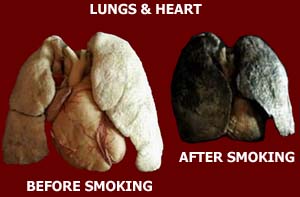
Unfortunately, the large number of toxic chemicals that come with the nicotine can ravage your body and cause such devastating conditions as heart disease, lung cancer, throat cancer, and emphysema. Many times the results are fatal.
It's not too late! Start taking care of yourself NOW and enjoy a healthier life
NICOTINE IS A NARCOTIC
If you have tried to quit smoking, you know how hard it can be. It is hard because nicotine is a very addictive drug. For some people, it can be as addictive as heroin or cocaine.
Quitting is hard. Usually people make 2 or 3 tries, or more, before finally being able to quit. Each time you try to quit, you can learn about what helps and what hurts.YOU ARE ADDICTED
Every smoker is addicted to a slightly different combination of "stimulants" in cigarettes and in the act of smoking. A stimulant is the addictive property in a cigarette that keeps you craving for more, even though you know you shouldn't.
You must find out what you like about smoking? Write that reason down. By writing it down, you will understand it.WHY YOU SMOKE?
Nicotine is the only known psychoactive ingredient in tobacco smoke. Addicted smokers smoke for one principal reason - to get their accustomed doses of nicotine. Therefore, most smokers realize that smoking is addictive. This means that when you stop smoking, you are likely to experience unpleasant symptoms such as irritability, sensitivity to sounds, light, and touch, and sudden, irrational mood changes. Many nonsmokers think that smokers smoke only to avoid such withdrawal symptoms. But research has shown that in addition to preventing withdrawal, nicotine seems to provide a surprising variety of desirable psychological effects.
THE FALSE REWARDS OF SMOKING
The average smoker takes ten puffs per cigarette. For the pack-a-day smoker, this works out to about 200 puffs per day. Each "hit" of nicotine reaches the smoker's brain within seven seconds, about twice as fast as a syringe full of heroin injected into a vein.
Once nicotine enters the brain, it starts to mimic the brain's most powerful chemical messengers. The result is a temporary improvement in brain chemistry that is experienced by the smoker as enhanced pleasure, decreased anxiety, and a state of alert relaxation.
As a result of this positive reinforcement many dozens of times per day, smoking becomes thoroughly a part of every aspect of the smoker's life. These positive effects of smoking explain why the smoking habit holds its victims in such a tenacious grip.
Most smokers will say that smoking helps them concentrate, keeps them from being bored, and helps reduce the perceived level of tension in their lives. As well, smoking helps them cope with an over-stimulating environment, gives them positive pleasure, helps them relax, reduces their feeling of distress, helplessness, and loneliness, helps them keep weight down, and makes them feel more at ease in social situations. Smoking can even provide a burst of energy when feeling tired, and can even help a smoker concentrate more effectively. In fact, smoking helps a smoker control his moods. Understandably, these substantial benefits would be difficult to give up.
These "rewards" of smoking go a long way toward minimizing the negative consequences, and an even longer way toward ensuring that the act of smoking will be repeated again and again, until it becomes a habit so well ingrained that you do it without even thinking about it.
But smoking is not just a habit - it is also an addiction. The nicotine in cigarettes is a powerful addictive drug that makes smokers feel good. Each time you smoke, the positive biological effects of nicotine add to all the other positive rewards of smoking, which makes the smoking habit even stronger.UNDERSTAND WHY YOU SMOKE
Is smoking a "positive" experience for you? If so, then you have conditioned your mind and body, through prolonged exposure to smoking, to get positive feelings when you smoke.
Non-smokers don't experience the roller-coaster ride of the high and lows. Instead, they maintain a much higher level of well-being. They don't need a cigarette to relax - they have learned to relax naturally.
http://www.geocities.com/sreehariabhilash/quitsmoking