
Click on the links to see a photograph, or where a small photo appears, click on it to see an enlarged version.
I visited Hungary in 1998 and 2001, and some of the contrasting photographs
show some significant improvements to the cemeteries in Kisvarda and Gemzse.
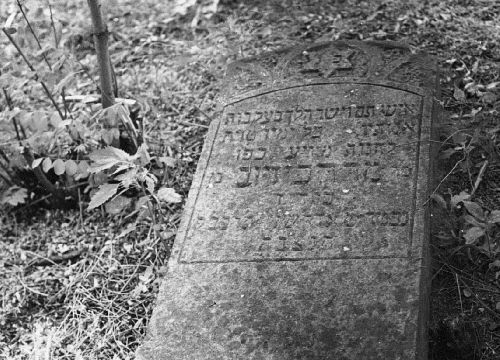
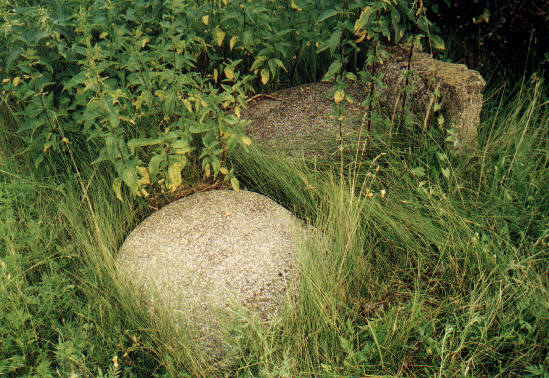
The gravestone of my great-grandfather Mordechai Spiro in Gemzse, when I first visited in 1973. It was not there anymore when I went back in 1998. It may have been stolen, as in a poor country even stone has some value; or it may have sunk into the ground.
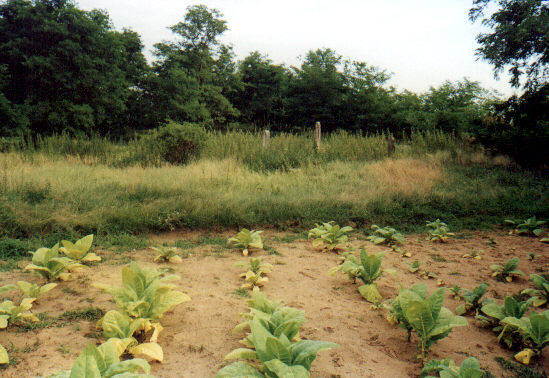
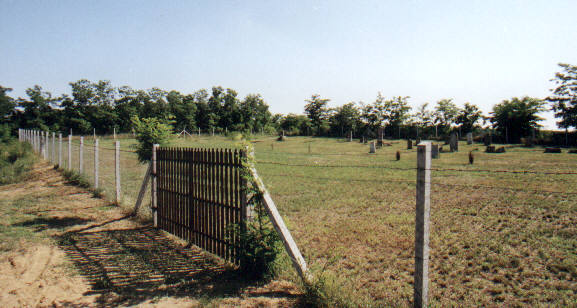
The Jewish cemetery in Gemzse, 1998, with most of the tombstones gone.
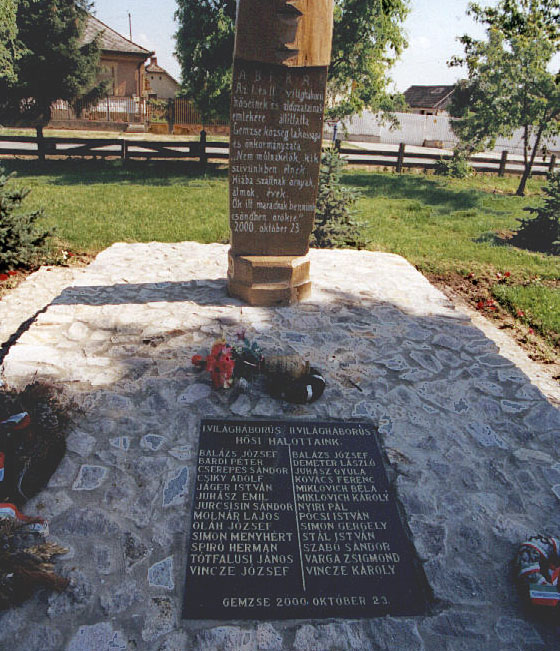
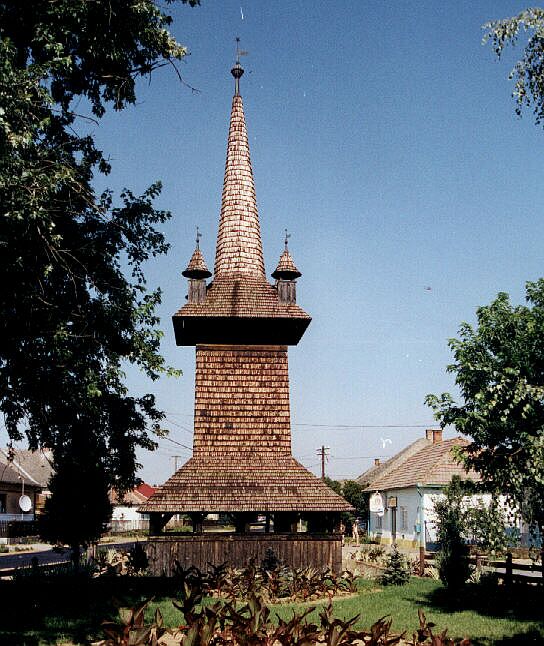
Memorial to residents of Gemzse killed in the world wars. This is a plaque installed in the village square in front of the wooden bell tower (fatorony in Hungarian). The memorial refers to our "heroic war dead." It includes the name of Herman Spiro, a cousin of my grandfather's who was killed in World War I. However, it omits the names of the half dozen Jewish men from Gemzse who died in World War II in the "work battalions" (munkaszolgalat) attached to the Hungarian army, digging trenches and other similar duties with very little food or clothing. My father's brothers, Dezso Spiro and Bela Spiro both perished in this service, Dezso on the Russian front in 1943, and Bela in Austria in 1944.
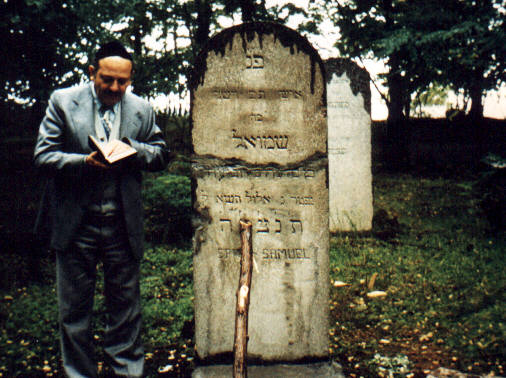
The grave of my grandfather, Samuel Spiro, in Gemzse,1998. The same, in 1978, before the erosion caused by acid rain. My grandfather died of cancer in 1941, and thus did not see the culmination of the Holocaust that took his wife and five of his seven children.
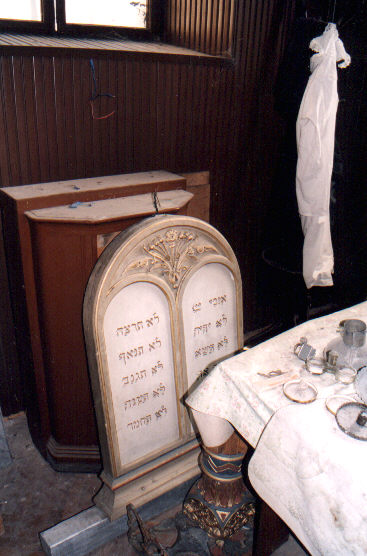
The Ten Commandments on the floor in the old prayerhouse beside the synagogue, Kisvarda, July 1998.
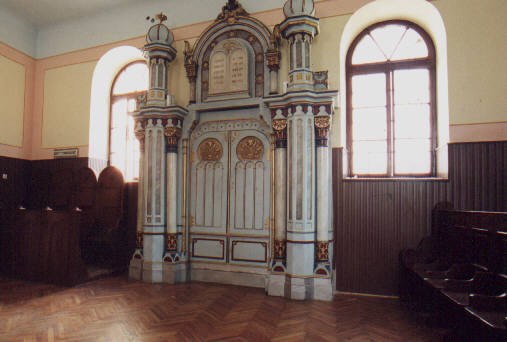
The Prayer House has been restored, after protests at the loss of this historical link to a lost Jewish community. This is how it looked in July of 2001. The attendant in the museum next door (the former synagogue) has the key, and opens it for visitors who request to see the "imahaz" (prayer house).
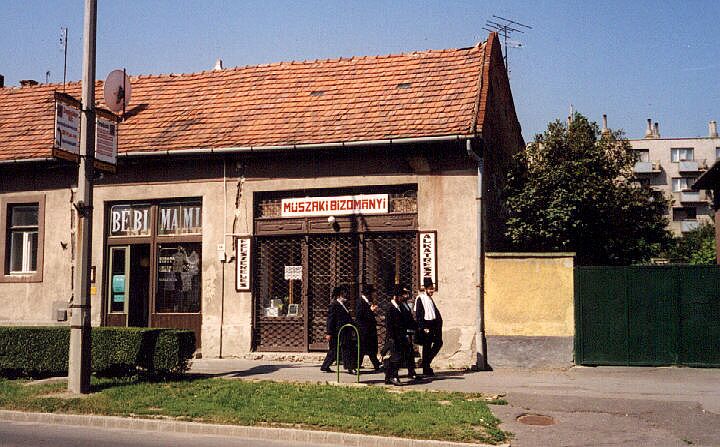
The synagogue (now known as the Retkozi Muzeum) is located in a pleasant spot across from a little park beside the main square in Kisvarda. The remaining prayer house is located in the yard between the synagogue and the store shown in the photo. (As of 2004, the Museum was open April to October, 9-12 and 1 to 4:30, closed Mondays. Phone 45/405-154.)
For a map showing the locations of Kisvarda's Jewish institutions circa 1930 click here.
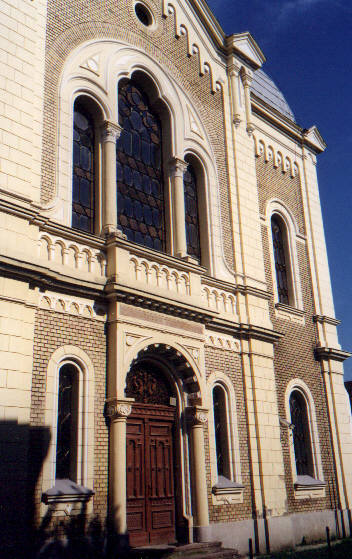
The side entrance of the former synagogue.
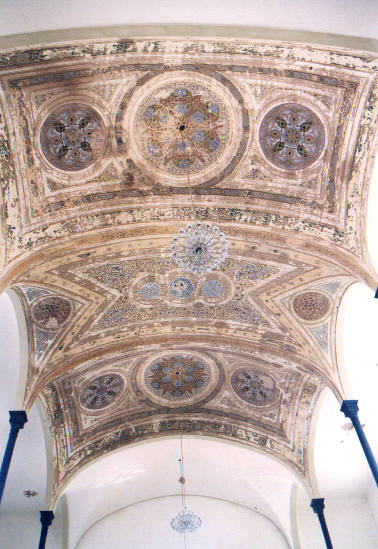
The ceiling of the former synagogue.
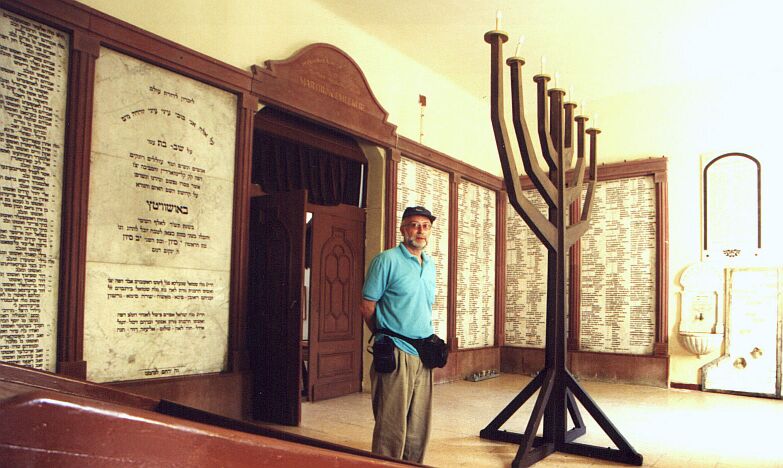
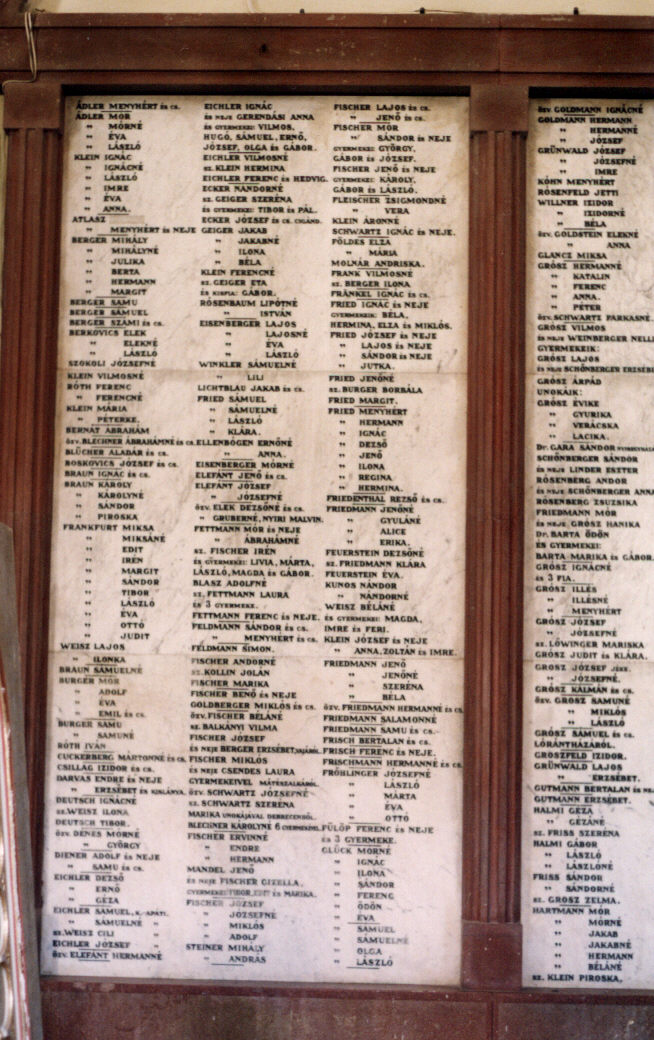
The memorial room in the side lobby of the former Kisvarda synagogue.
A closer view of the memorial plaque with the names of Holocaust victims.
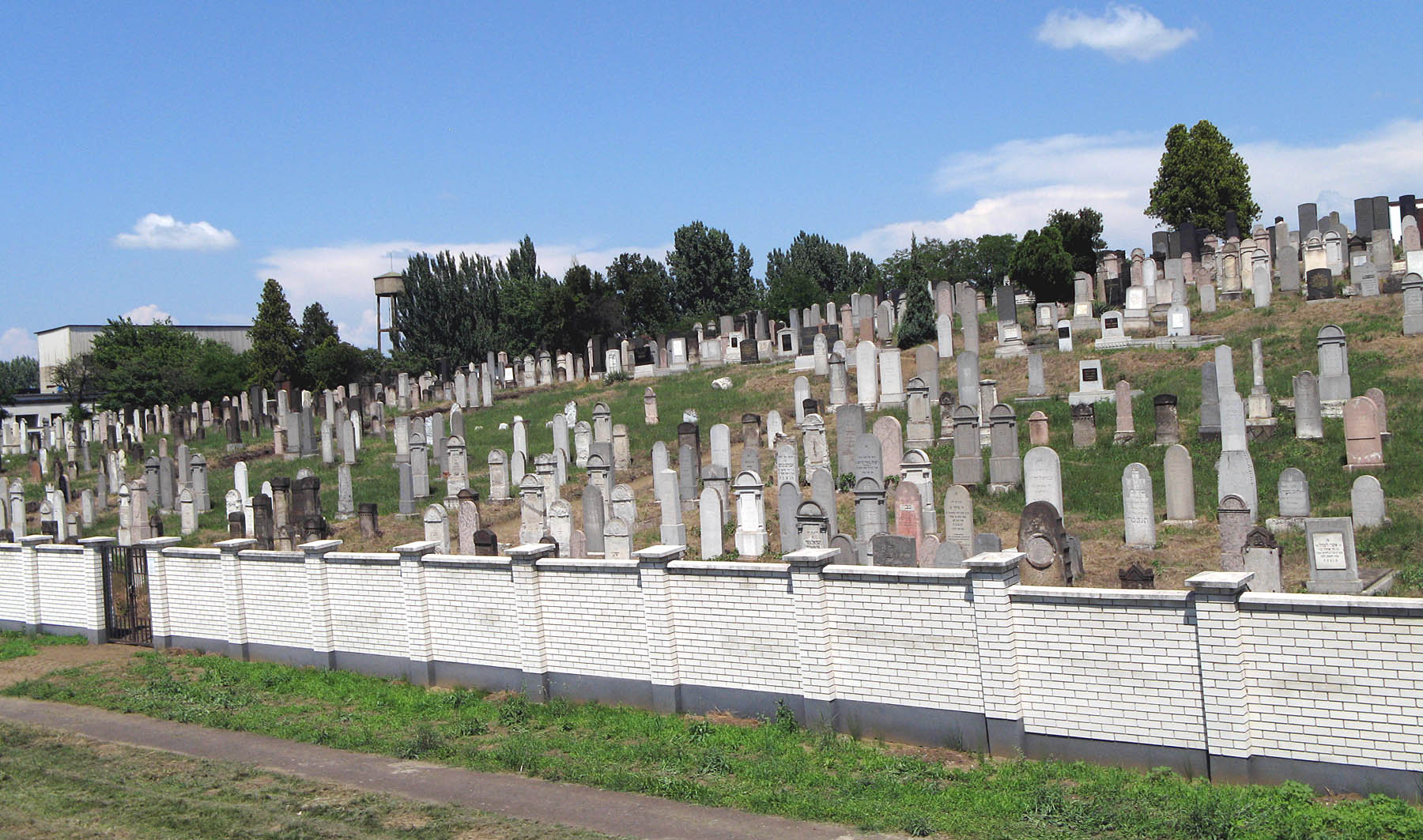
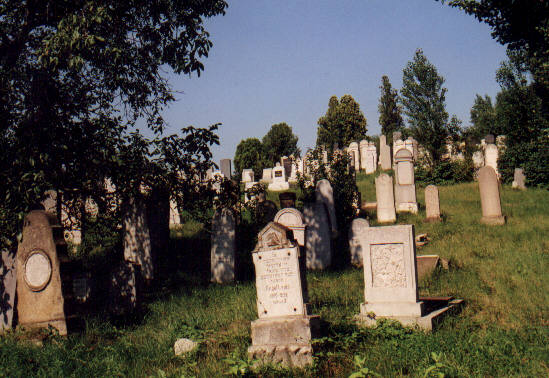
The cemetery in Kisvarda. Another view.
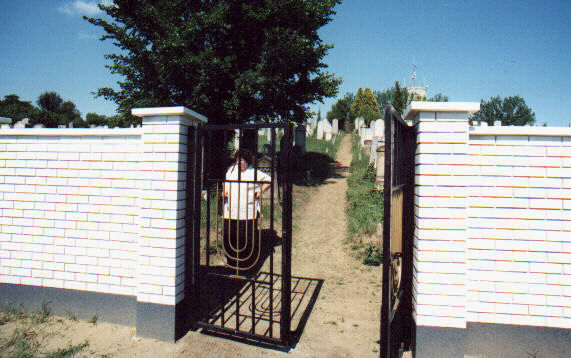
The new front
wall and gates of the Kisvarda cemetery dedicated in June of 2001,
thanks to a donation by the Lerner family of Toronto in memory of their
late father. The Kisvarda Jewish cemetery has a full time attendant who
lives with his family in a small house near the entrance. To enter the
cemetery, you have to ask him to unlock the gate.
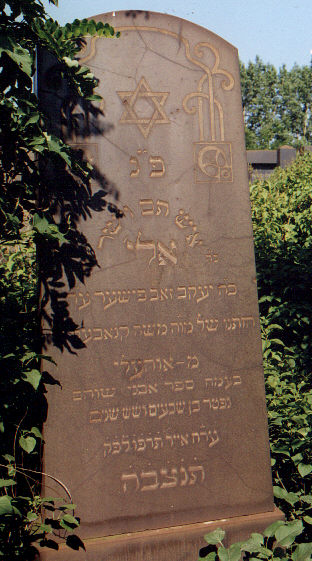
Gravestone of my great-grandfather Elias Fischer, 1850-1926. It is unusual in that it also mentions the name of his father-in-law, Moshe Knobel (Knopfler), of Satoraljaujhely, author of the commentary Avne Shoham. This gravestone is made of granite, and so it remains in good condition, with little evidence of erosion after 75 years. By contrast, gravestones made of limestone or other soft stone erode and become illegible in that space of time.
I visited Satoraljaujhely in 1998. I deliberately timed it for the 28th of Tammuz, the yahrtzeit of the Yismach Moshe, Rabbi Moshe Teitelbaum, the founder of the family of Szatmar Rebbe. His gravestone is in a building called an ohel. (There is an odd linguistic coincidence here, because ohel sounds like Ujhely, but it is actually the first part of the city's name, sator, which means the same in Hungarian as ohel means in Hebrew, which is "tent.") It is a day of pilgrimage for hassidim, who fly in to Kosice from the US and Israel, and travel to Ujhely by chartered bus. They can be seen walking through the streets of Ujhely in traditional garb.
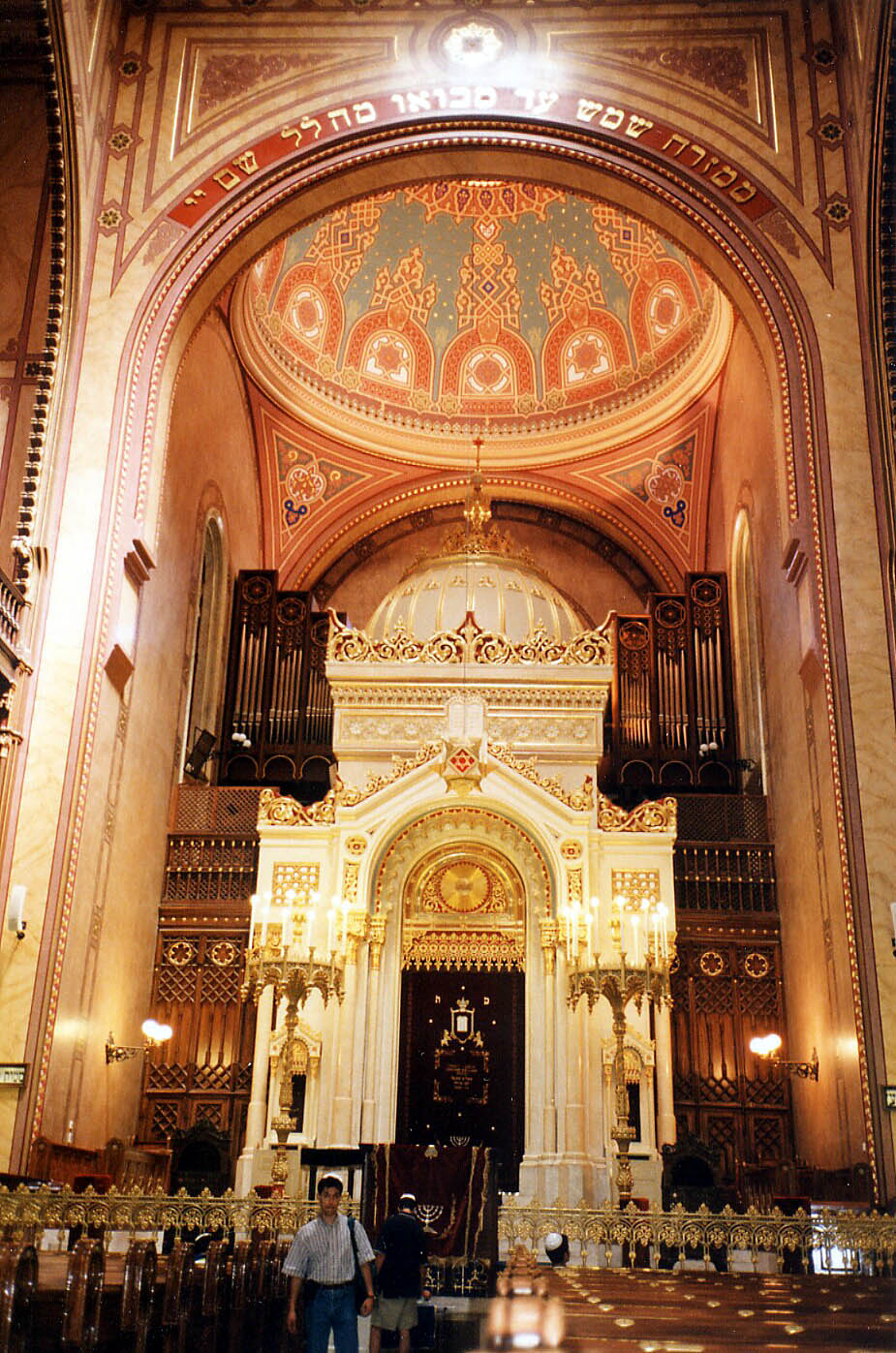
Interior of the Dohány Street Great Synagogue in Budapest. This synagogue, dating from the 1850s, is the largest in Europe, and it is where my parents were married. It belonged formerly to the Neolog movement in Hungarian Judaism, roughly equivalent to Conservative Judaism in North America. It has recently been restored with the help of funds raised by the actor Tony Curtis (born Bernard Schwartz), whose father was from Mateszalka in Szabolcs County. It is located right in the centre of Budapest, with a number of other synagogues and Jewish institutions nearby, including some small kosher stores.
Here is a view of the Dohany Synagogue's exterior. The part on the left houses the Jewish Museum:

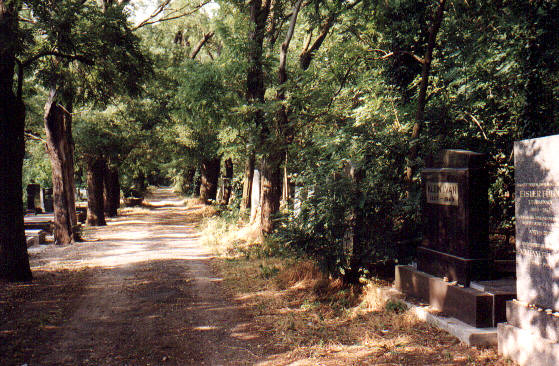
A view of the main Jewish cemetery in Budapest. It is very leafy and in many places it is easy to get lost among the greenery, because you cannot see where you have come from. However, it is also very peaceful and beautiful for the same reason.
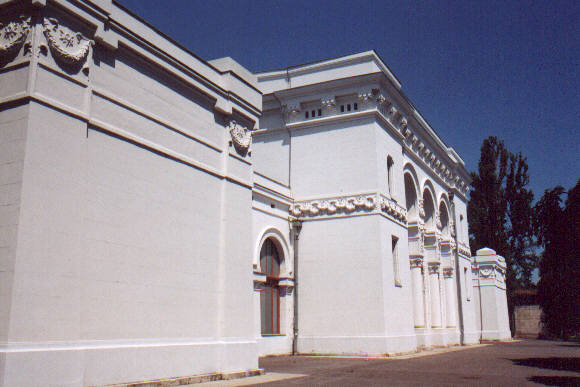
The chapel at the main Jewish cemetery in Budapest. There is an office at the right hand side of the building, where they have a computerized data base of all the names of people buried there (about 600,000), and they can give you a map. Street car no. 37 starts from just off Blaha Lujza square in the centre of Pest, and goes to the cemetery (which is the end of the line, after an even larger Christian cemetery). The destination sign on the streetcar says "Izraelita temeto." It is about a half hour ride. There is a smaller Orthodox Jewish cemetery just after the main cemetery.
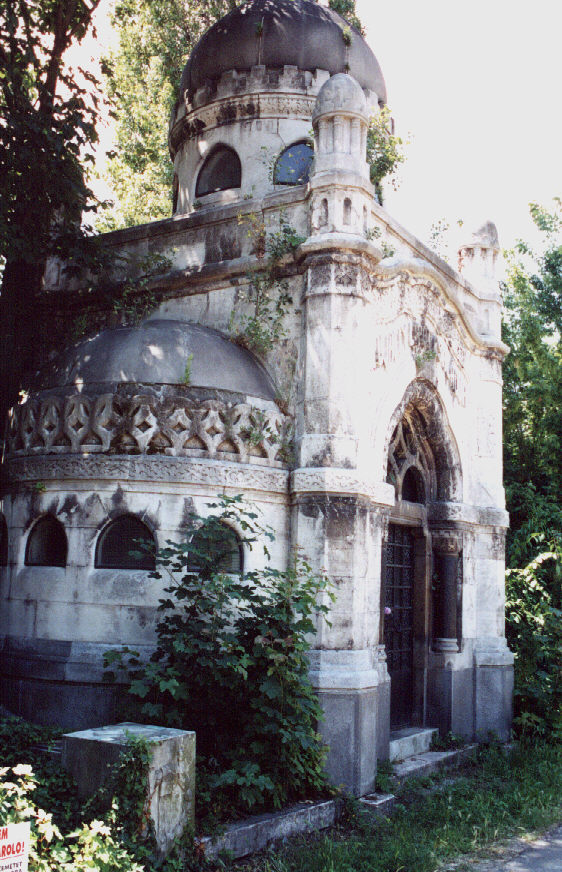
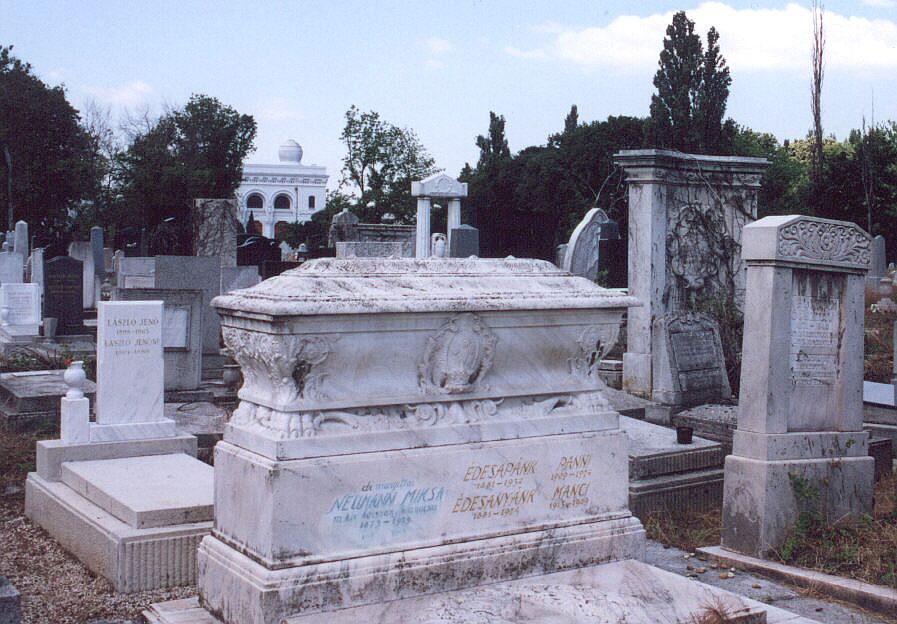
The cemetery has many ornate tombs of a kind not generally seen in Jewish cemeteries in North America.
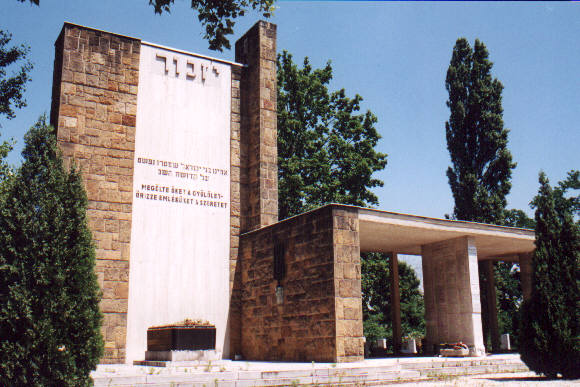
Memorial to victims of the Holocaust at the main Jewish cemetery in Budapest. The inscription in Hungarian translates as "Killed by hatred, their memory is preserved by our love."
Click here to return
to Peter Spiro's home page, which features additional information about
Kisvarda.
To view some of Peter Spiro's more recent digital photographs, available for stock photography purchase, with numerous photos of Jerusalem, Budapest synagogues and other Jewish topics please click here.