 to view my portfolio at istockphoto.com
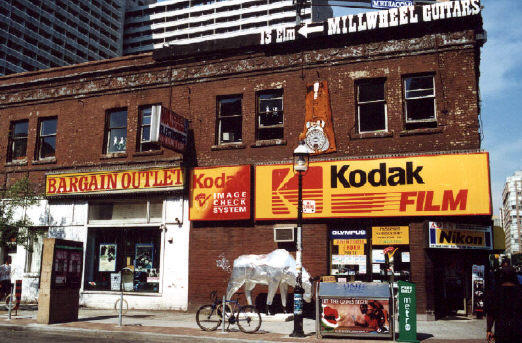
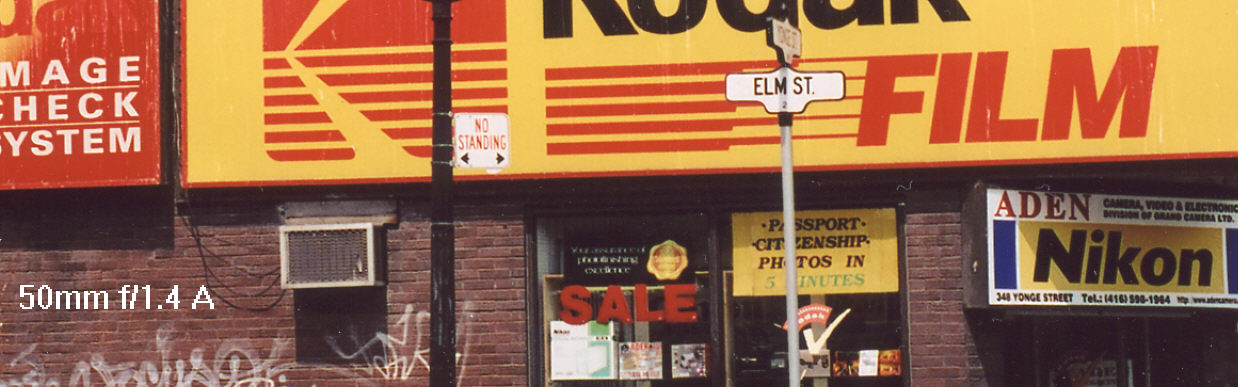
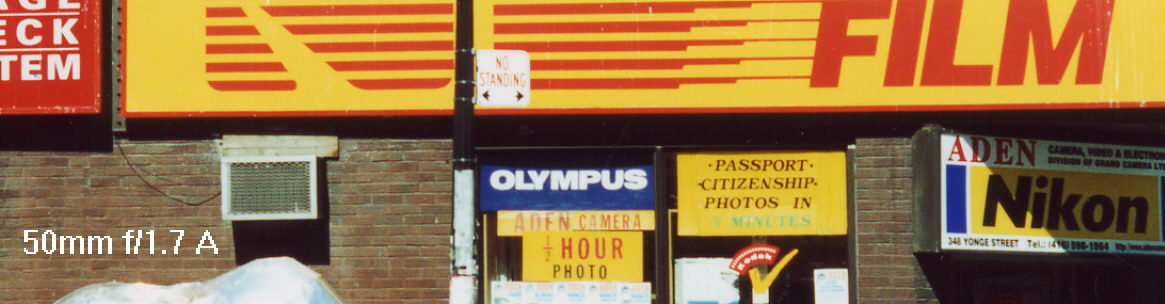
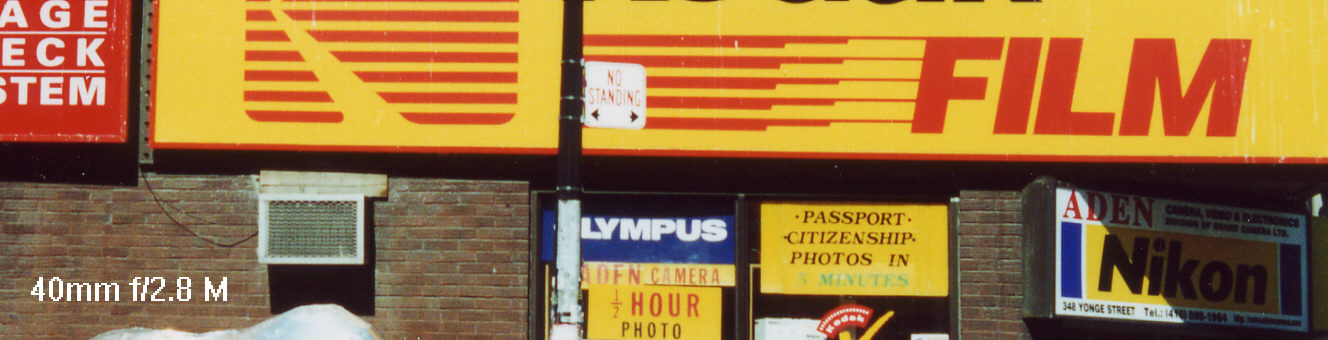
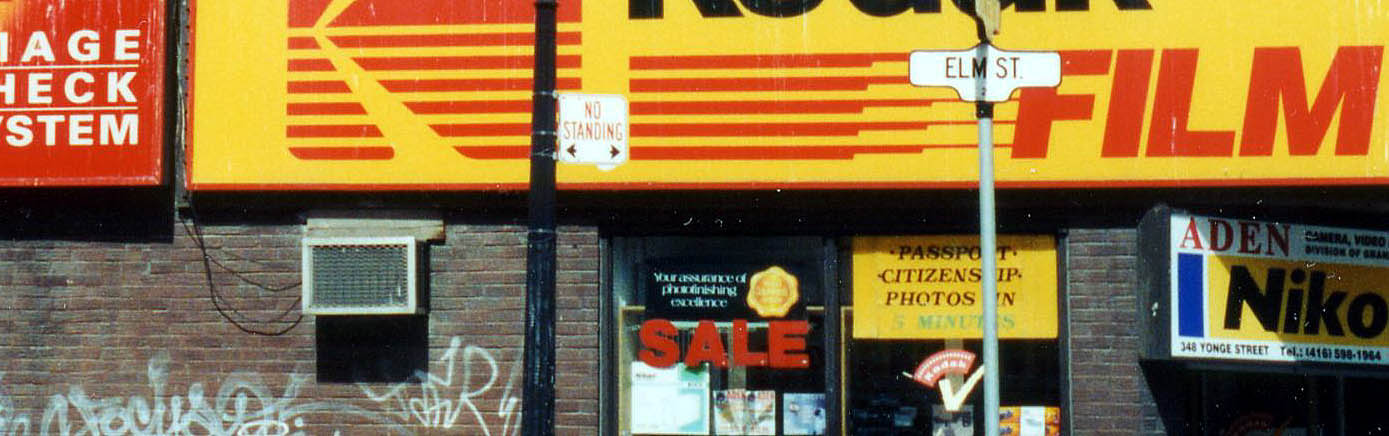
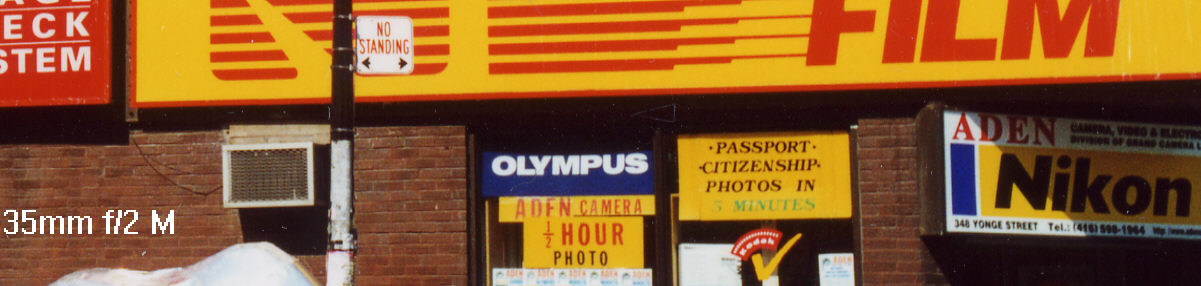
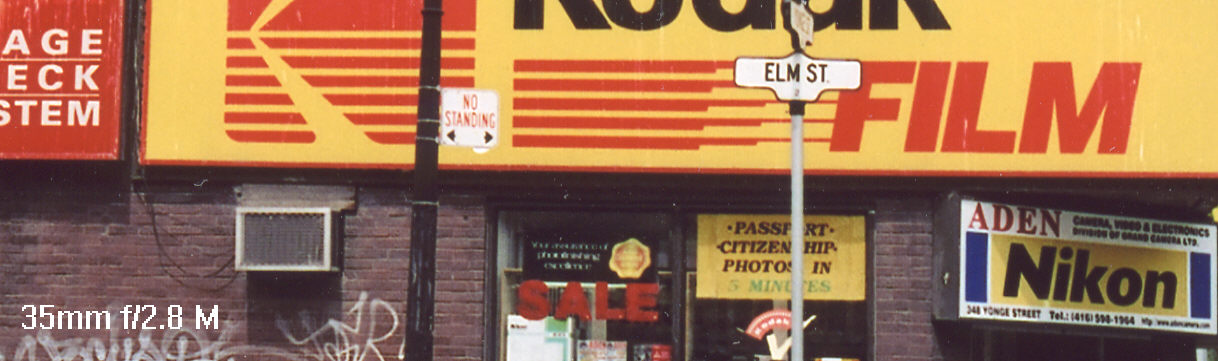
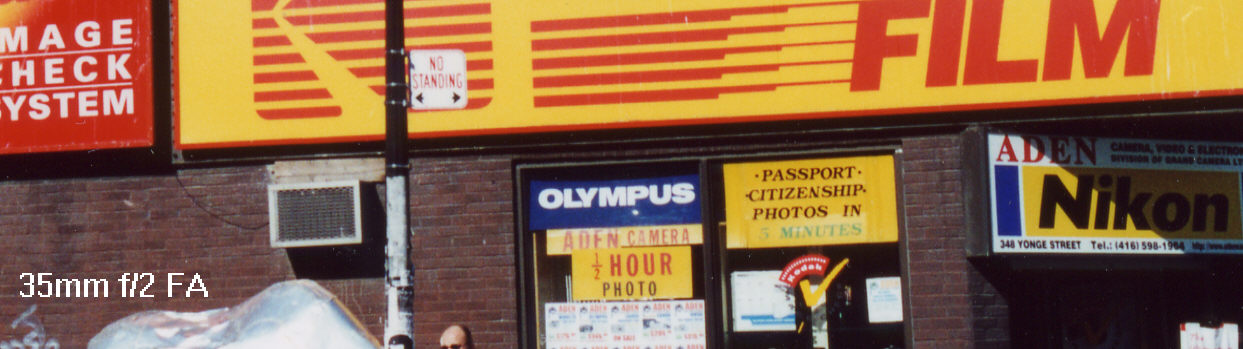
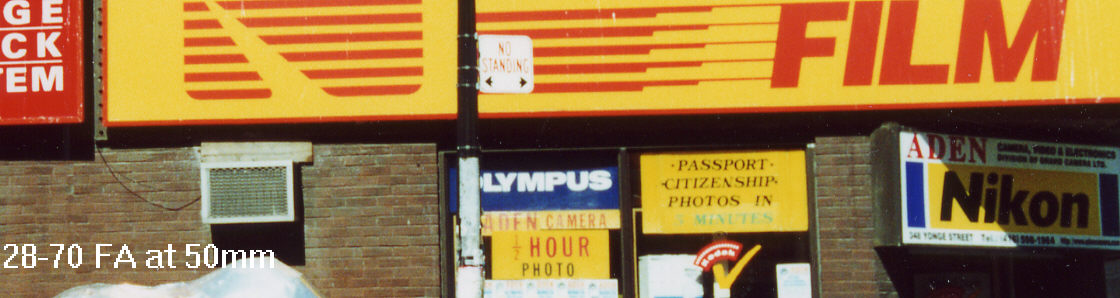
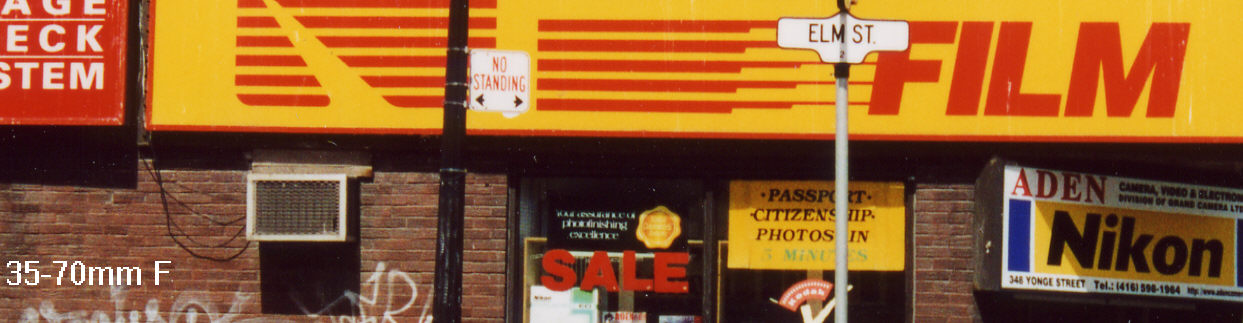
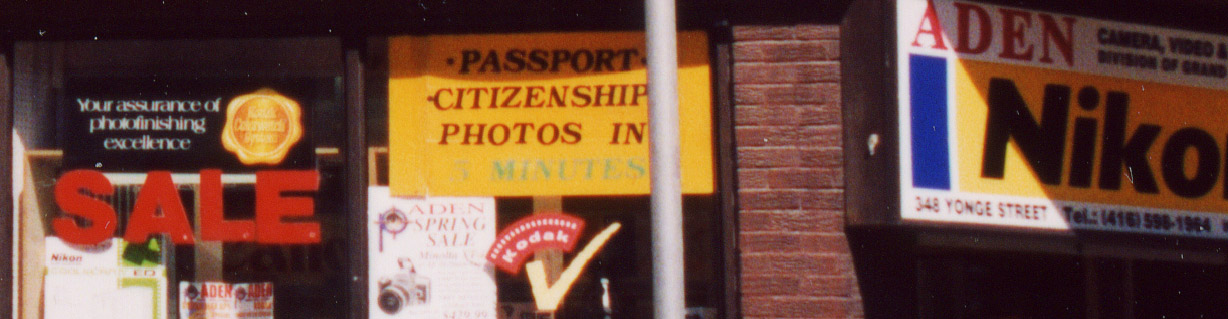
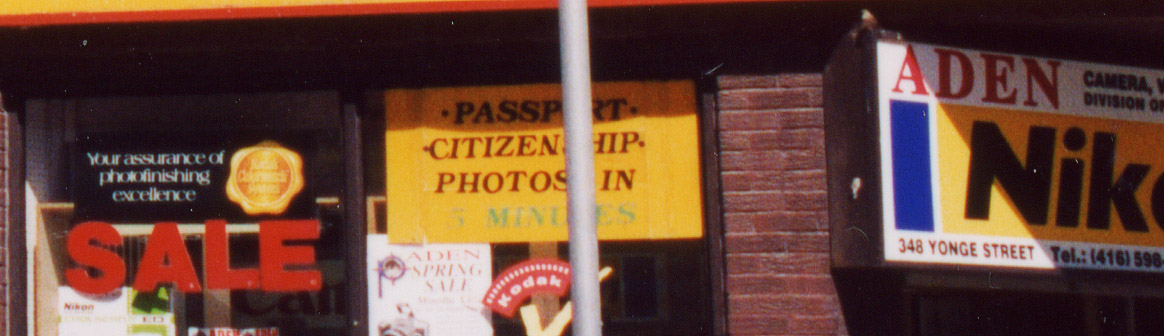
These photos were all taken at the same location with different Pentax lenses at infinity focus. I have enlarged a small segment of the photo to give a sense of what differences, if any, are discernible. This is a useful adjunct to the resolution tests that can be found in magazines and in the pages of some PDML members. Resolution tests are carried out at a distance about 50 times the focal length of the lens (2.5 metres for a 50mm lens), but some lenses are designed to perform better at infinity than at close focus. (An example of this can be found in Herbert Keppler's SLR column in the March 1998 Popular Photography. A Sigma and a Tamron were compared. In the real world shots done at a distance, the Tamron was clearly sharper. However, in a resolution test at 46X focal length, the Sigma performed better).
I deal here mainly with lenses in the focal length range of 35mm to 50mm, because I find that these are the most useful for general picture taking. If I need a shorter or longer focal length than this, I would use a zoom lens rather than a prime. However, a lens in the 35mm to 50mm range can serve in a wide variety of situations, so it can be worthwhile to give up the versatility of the zoom lens for the greater sharpness that a prime gives. When I travel, I will take just two lenses with me, either a 35mm or 50mm prime, plus a zoom. This is both because I want to keep down the weight, and because changing lenses while on the go is not particularly convenient.
The camera was hand held, but the pictures were all taken in bright sunlight at shutter speeds of about 1/1000, so I don't think camera shake would have had any effect. The body used was an MX or Super Program for manual focus lenses, and an MZ-5n for autofocus ones.
The pictures were not all taken on the same day, and so light conditions were not identical. Nor are they all on the same roll of film. The pictures were processed mainly at Aden Camera in Toronto, one of my favorite camera stores (the side of their building also happens to appear in the picture). I generally find that they do a very good job of processing print film, but you can see that there were significant colour variations between one roll and another.
The photos were scanned at 420 DPI for the 35mm lens shots, and at 320 DPI for the 50mm ones, to maintain approximately the same image size. This does, however, give a slight advantage to the second group, since it represents a lesser magnification relative to the negative.
The features I would suggest you look at to compare them are the address "348 Yonge Street" near the right edge of the frame, and the air conditioner near the centre. There are also some significant differences in the apparent sharpness of the letters in the "No Standing" sign, but I think this is caused by glare on this shiny sign due to slight differences in the angle of the sun, rather than by differences in the lenses.
The whole scene from which the test segments are taken can be seen by clicking here.
The lenses were all tested at an f/5.6 aperture, as this is the one where a good lens should be getting close to its optimum, but where differences between the good and the best may still be apparent. As it turned out though, the differences among the prime lenses were slight, and noticeable mainly in slight variations in the sharpness of the lettering at the edge of the picture.
The lenses tested were the SMC Pentax 50mm f/1.4 A, 50mm f/1.7 A, 40mm f/2.8 M (the pancake lens), 35mm f/3.5, 35mm f/2 M, 35mm f/2.8 M, 35mm f/2 FA, the 28-70mm f/4 FA and the 35-70mm f/3.5-4.5 F. The 28-70mm zoom lens was tested at the 50mm focal length position, and the 35-70mm zoom lens at the 35mm position.
My impression of the results:
The 50mm f/1.4 lens lives up to its high reputation, being the best overall. It was probably the sharpest at the centre, with a very clear grille on the air conditioner, and in the corner it is almost as sharp as the 35mm f/2 lenses. The 50mm f/1.7 lens was also very good at the center, but it was clearly beaten at the edge by both of the 35mm f/2 lenses, and perhaps even the 35mm f/3.5 was a shade better there.
The 40mm was as good (or maybe even slightly better than) the 50mm lenses at the centre, but was a little weaker than the f/1.4 and some of the 35mm lenses at the edge. However, it probably qualifies as second best after the f/1.4 lens.
The 35mm f/2 FA was the sharpest at the edge, almost matched by the 35mm f/2 M. The latter was probably a tiny bit sharper at the centre. The f/2 FA is a fine lens, but considering that it is the most expensive lens in this test, its performance to value ratio lags somewhat.
The 35mm f/2.8 M lens is slightly less sharp at the edges than the others, but it is also a very good lens.
The 35mm f/3.5 put in an excellent performance considering that it is much less expensive than the f/2 lenses. It was as sharp as any at the centre, and at the edge it was beaten by only a very small margin by the FA lens.
In addition to its optical excellence, the f/3.5's mechanical design is the best of any Pentax 35mm lens. Unlike the FA and M series lenses, the front element of the lens is recessed, creating less risk of damaging it and reducing the need to put a filter on top of it for protection (something I don't like to do, since it creates one more source of reflections). This also protects it from glare even without a lens shade. While I generally value compact size, Pentax overdid it with some of these lenses. It would have been better to opt for a slightly larger diameter barrel, rather than having the glass right at the front without any protection. The f/3.5 does have a wider barrel, taking a 52mm filter, while all the othere take 49mm filters.
The greatest surprise was the 35-70mm F lens, which put in a terrific performance for a zoom lens, pretty much matching some of the prime lenses in quality. It is true that this is a very narrow range zoom, so it was less of a challenge for Pentax to design its optical formula. Some might disdain a lens with such a narrow range, but of course compared to either a 35mm or 50mm prime it is quite versatile. It is also remarkably compact, being not significantly larger than a 50mm prime lens.
The 28-70 zoom lens has been widely tested as one of the best in its class. At the centre, it was about as a good as the primes, but at the edge it was a bit softer than any of the primes. When the zoom lens is stopped down to f/8 (I haven't scanned that one in), it becomes almost as good (but not quite) as the primes were at f/5.6.
I should note that in the unmagnified 4x6 inch print, all the photos look about identical in the centre. However, even at that size the lower resolution of the zoom lens in the lettering at the edge is visible when you look closely.
I have also compared the 28-70 zoom at 28mm to the SMC Pentax A 28mm lens. A similar observation can be made. In the corners, the zoom is noticeably softer, but in the centre the zoom is almost as good.
Pentax now has two digital SLR models on the market. They should be given credit for maintaining a greater degree of lens compatibility than any other manufacturer. Any K-mount lens made since 1975 can be used to give aperture priority auto-exposure on a Pentax DSLR with an extra push of a button.
Why is this important? For some kinds of photography (still lifes, scenics, architecture), manual focussing is still ideal, and if you are going to focus manually, it is preferable to have a lens that is designed for it. Nothing beats the smooth precision of the focussing ring on a Pentax M or A lens. Autofocus lenses are made with a much looser mechanism, in order to allow the motors to turn them easily. For this reason, the lens elements are often less well aligned, and optical quality is lower as a result. You can put some older Nikon lenses on a Nikon DSLR, but the exposure meter won't function. The superior backwards compatibility is a useful feature of the Pentax DSLRs.
Most recently, I have acquired a Canon Digital SLR camera. I liked Pentax cameras in the age of film, and Pentax has introduced two fine digital SLRs, the *istD and DS, but I felt that the resources of the Pentax system were too limited when it comes to digital, which has more to do with electronics and computers than lenses. However, as an afficionado of nice old metal-bodied manual lenses, I was pleased to discover that adapters are available to use them on Canon digital SLRs. To see how classic manual focus Nikon lenses can be used on Canon DSLRs such as the Digital Rebel (EOS 300D), click here.
To view some of my recent digital photographs, available for stock photography purchase, please click on this icon
to view my portfolio at istockphoto.com
Return to my "Photography
Page".
Copyright 2003 by Peter S. Spiro. Information supplied here is believed to be
accurate, but the author assumes no liability for any costs/lost pictures
incurred from following his advice.