|
Though
flying a microlight around the world is no small feat yet
besides the challenges of Nature there are may more ,those
created by Man were the most troublesome . Like all ventures
of its kind Flight for Life has too been beset by problems
.These ranged from the delay in shipment of the kit by the
US based manufacturer and failed promises of the microlight
's performance and additional design features ,to seeking
sponsors and obtaining clearances .Airborne Innovations of
Texas ,USA the kit manufacturer had to be threatened with
a law suite after it failed to deliver the kit as per the
contract ,only then was an incomplete kit sent .However the
team working in close collaboration and with active support
of the original manufacturer CFM Aircraft and RCS Aviation
both UK based companies had the microlight ready for its first
flight in first week of june ,2001.
Crossing
Karakoram Mountains :
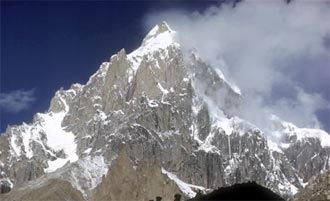
This
will be the first challenge that the pilots will face . The
craggy peaks of the Karakorum Range in south central Asia
reach an average elevation of 6,600 meters (22,000 feet),
making this one of the highest mountain ranges in the world.
The highest peak, K2, soars to 8,611 meters (28,251 feet)
above sea level, making it the second highest peak in the
world. Known for its extremes, the range is covered with some
of the world's largest glaciers .It'll be a first ever attempt
by a 2 seater microlight aircraft to fly across this formidable
mountain range. The route envisages crossing the 15800 feet
high Khunjerab pass along the Karakoram Highway ( also know
as the Silk Highway ) to Kashgar 300miles away into China
. Facing the extreme conditions and with no ground support
it is here that mountain flying skills together with psychological
stamina of the pilots will be under severe test , not to mention
the microlight which will also be at the extreme limits of
its performance .
Eastern
Siberia
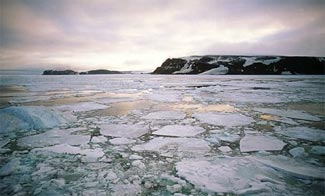
The
flight through the Siberian Tundra and crossing of the Bering
Straits between Siberia and Alaska will yet be another formidable
challenge . The pilots will have to brave the vast and desolate
expanses which cover northeastern third of Asia .There are
few airports and towns spread great distances apart with scarce
aviation facilities and difficult to get suitable fuel .The
unpredictable weather conditions further compounds the difficulties
. However Siberia is the stepping stone for entry into the
American Continent across the freezing Bering sea as the first
major sea crossing of almost 200 miles.
North
Atlantic & Greenland Ice Cap
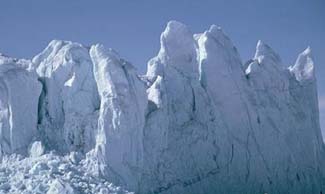
The route across the sparce & harsh Nothern Canada terminates
at the spring board of Broughton Island for the second major
water crossing across the freezing Davis Strait to Sondrestorm
in Greenland. This massive frozen land consists of an interior
ice-covered plateau surrounded by a mountainous, generally
ice-free rim (only in summers). The route traces across the
width of Greenland over the almost 9500 feet high ice cap
to Kuluusk 400 miles away on the east coast . It is at times
difficult to keep orientation due to the continous and featureless
ice cap providing frequent white out conditions . Any emergency
landing here without quick rescue is life threatening . From
Kuluusk in Greenland to Reykjavic in Iceland is the longest
leg , 450 miles over freezing waters and the notoriously unpreditcable
weather of North Atlantic makes it singularly ,the most challenging
leg of the entire adventure. A slight head wind can drastically
reduce the precious range of the microlight . Therefore the
pilots will rely on accurate weather forecasts and meticulous
planning before jumping across the North Atlantic.
|