SpaceX Falcon 1
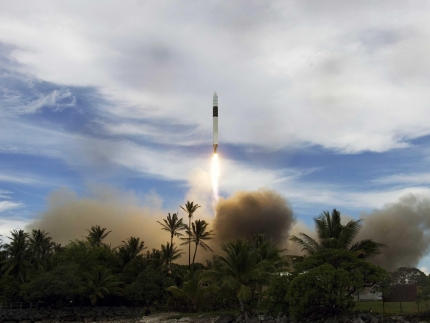
SpaceX is developing a family of launch vehicles for missions to Earth orbit and beyond. SpaceX made history on Sept. 28, 2008, when its Falcon 1 became the first privately developed liquid fuel rocket to orbit Earth.

SpaceX is developing a family of launch vehicles for missions to Earth orbit and beyond. SpaceX made history on Sept. 28, 2008, when its Falcon 1 became the first privately developed liquid fuel rocket to orbit Earth.
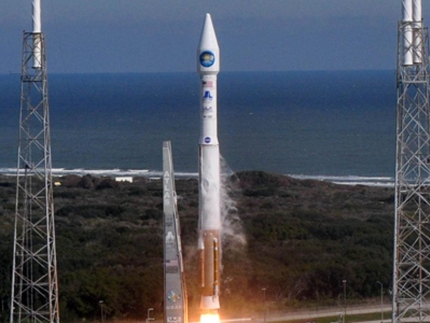
A United Launch Alliance Atlas V rocket launches from the Cape Canaveral Air Force Station in Florida. Atlas rockets have evolved over four decades to become a highly reliable launch vehicle. Using Centaur upper-stage engines that can start and restart in space, the Atlas V rocket can launch spacecraft into low Earth orbits, geosynchronous orbits and even into an interplanetary trajectory.
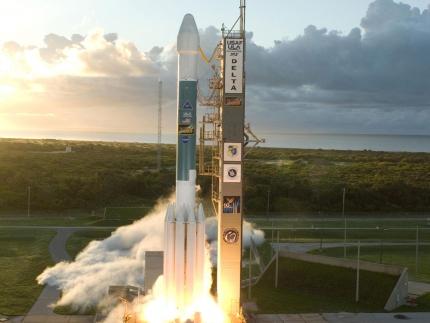
A Boeing Delta II rocket lights its main engine and nine solid-fueled boosters. The Delta launch vehicle program was initiated in the late 1950s by NASA. The Delta II has nearly a 99 percent mission success rate in its 20-year history.
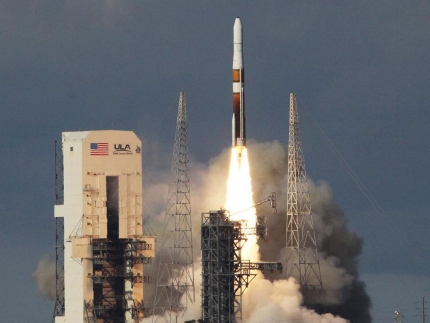
The Delta IV rocket is capable of carrying single or multiple payloads weighing between 4,300 to 12,982 kilograms (9,480 to 28,620 pounds). Once in space, the Delta IV can place spacecraft in polar, sun-synchronous, geosynchronous, geosynchronous transfer and low Earth orbits.
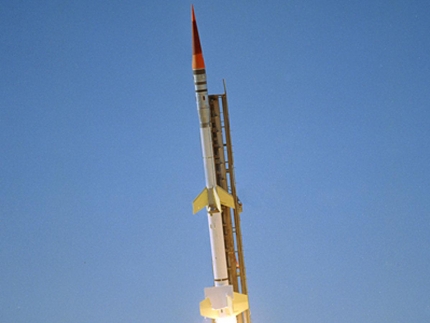
The NASA Sounding Rocket Program is a suborbital spaceflight program used to support space and Earth sciences research activities. The program provides approximately 20-30 flight opportunities per year to space scientists involved in the disciplines of upper atmosphere, plasma physics, solar physics, planetary atmospheres, galactic astronomy, high-energy astrophysics and microgravity research.
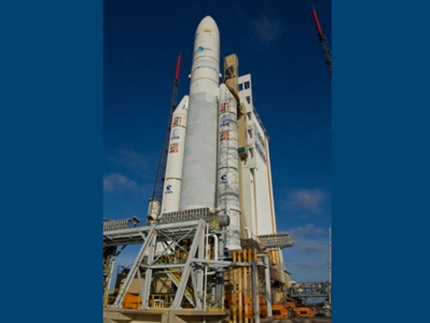
The Ariane 5 prepares to lift off from Ariane Launch Complex Three in French Guiana. Ariane 5, a European Space Agency rocket, has been used to launch satellites for communications, Earth observation and scientific research.