Arsenal History
1886 to 1945
1886 "Royal Arsenal" is Born
In approximately October 1886, the arrival of two Nottingham Forest players Fred Beardsley and Morris Bates was the catalyst that David Danskin from Kirkcaldy in Fife needed to create a works football team at the Woolwich Arsenal. Fifteen players were recruited, and all contributed towards the purchase of their first football. As one of the workshops within the Arsenal was called Dial Square, the name was chosen to represent the team.
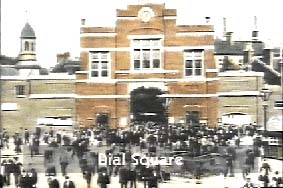
The first game of the new club was against a team called Eastern Wanderers on the 11th December 1886. the game was played on a piece of open ground that someone had found on the Isle of Dogs. Apparently the pitch (if it could be called that) was shapeless with one portion being described as a ditch by some and as an open sewer by others.. Still, history says that Dial Square won the game 6-0. This result filled the players with enthusiasm and resulted in a meeting at the Royal Oak, next to Woolwich Arsenal Station, on Christmas day 1886.
The meeting was called to solve three major problems. These problems were, a shortage of name, kit and somewhere to play. Apparently, no-one was happy with the name Dial Square, and a combination of Royal Oak and Woolwich Arsenal resulted in the regal sounding name Royal Arsenal which was met by approval from all. The decision for choice of kit was almost as easy, Fred Beardsley wrote to Nottingham Forest asking for help. Forest generously sent Beardsley a complete set of red shirts and a ball. Plumstead Common recreation area as home venue was the third decision arrived at on that fateful Christmas day.
1887 Royal Arsenal v Erith
The first official fixture that Royal Arsenal played at Plumstead Common was against Erith. The final result was a 6-1 home victory.
1888 Royal Arsenal move from Plumstead Common to Manor Field
Manor Field is affectionately re-named Manor Ground for purposes of grandness!
1890 Royal Arsenal win their first trophies!
Royal Arsenal won the Kent Senior Cup, the Kent Junior Cup, and more significantly, the London Charity Cup. The latter was concluded with a 3-1 win over Old Westminsters at the Manor Ground in front of 10,000 people.
1891 Royal Arsenal Move again
After the cup successes of 1990, Royal Arsenal decided to move just across Plumstead High Street, to a new ground which already had a stand, terraces and dressing rooms - the Invicta
1891 Name changed to "Woolwich Arsenal"
1893 Greedy Landlord tries to cash in on new success!!
A home crowd of 12,000 people against Scottish Champions Hearts combined with Woolwich Arsenal's election to the Football League (when the size was increased from 12 to 15 teams) resulted in a rent increase from £200 to £350 per annum. Woolwich Arsenal could not afford this exorbitant request, and were left with no alternative but to repurchase the old Manor Ground. They formed a limited liability company with a nominal capital of 4,000 £1.00 shares. In all, 860 people subscribed for 1,552 shares, the largest shareholder (50 shares) was a local coffee house proprietor . With the help of supporters, the team worked throughout the summer to get the ground ready for the Second Division.
1896 Woolwich Arsenal suffer 0-8 defeat at the hands of Loughborough
1900 Woolwich Arsenal get revenge by thrashing Loughborough 12-0
1904 Woolwich Arsenal Promoted!
The arrival of Harry Bradshaw as manager in 1901 resulted in a 4th position, followed by 3rd, and 2nd in 1904 gaining Woolwich Arsenal promotion to the Football League First Division.
1910 Henry Norris Becomes Woolwich Arsenal Manager
1913 Woolwich Arsenal Are Highbury bound....
Woolwich Arsenal relegated after only winning three games all season. Exactly how Highbury came into reckoning when a move was decided upon is not known. In the end though, Woolwich Arsenal paid a massive £20,000 for a mere 21-year lease and agreed not to stage any matches on Good Friday and Christmas Day (due to the property being leased from St Johns College of Divinity)(these restrictions were lifted in 1925 when the club paid another £64,000 to buy the whole site outright). The following year, the serious work started on the ground. The pitch was levelled (the north end had to be raised eleven feet, the south lowered five), a new grandstand was partially built and turnstiles and terracing installed. It cost another £80,000. Cash at the time though was so short that the builder agreed to take a percentage of the gate money until he was paid for his work.....
1914 Name changed from "Woolwich Arsenal" to "Arsenal"
1919 Henry Norris engineers Arsenal Promotion to Division 1 at expense of Tottenham despite being 5th in Division 2! (Gotta Laugh)
In 1919 the Football League decided to extend the First Division from 20 to 22 clubs. The usual procedure had been to simply re-elect the bottom clubs from the previous season and to promote the top clubs from the Second Division. This indeed was what almost everyone assumed (and were told) would happen. By chance, two other London clubs, Chelsea and Tottenham had finished 19th and 20th in the First Division in 1915, with Arsenal finishing 5th in the Second. When the League AGM was convened, Norris' strategy became clear. It must have been agreed with League President John McKenna, a close friend of Norris and the owner of Liverpool in advance (Manchester United came 17th in Division 1 after rigging their last game (2-0) against Liverpool to finish above Chelsea).
Firstly, Chelsea were detached from Tottenham and their position taken separately. There was no vote, and the fact that Chelsea would have finished third from bottom in 1915 had Liverpool beaten United in the fixed match undoubtedly influenced the meeting. MeKenna proposed that they be re-elected on the nod and this was accepted. Then Derby and Preston, first and second in the Second Division in 1914-15, were elected into the First Division without debate. Then came the bombshell. McKenna made a brief speech recommending that Arsenal be given the remaining First Division place because of their service to the league and their longevity , particularly pointing out that Arsenal had been in the League 15 years longer than Tottenham.
To this day, it is impossible to explain what actually went on at that AGM. The arguments for Arsenal's promotion were complete nonsense. The committee took their vote, and Arsenal received 18 votes out of a possible 41, while Tottenham only received 8. Additionally, for many years there were rumours of significant amounts of money changing hands, but to this day, nothing has ever been proven. Hence, Arsenal were promoted from 5th place in the Second Division while neither 4th, or 3rd had a realistic chance in the vote, and Tottenham were relegated...... This moment started a feud between the two clubs that has continued on ever since!
1925 Herbert Chapman becomes Arsenal Manager for 2,000 p.a.
Arsenal advertised their manager's job in "The Athletic News" on 11th May 1925. Herbert Chapman however had already been approached for the job. Henry Norris (by now) the Arsenal Chairman offered him £2,000 a year to take the job, easily the highest salary in the game, and Chapman needed little persuading!
Some of Herberts inovations included Changing "Gillespie Road" underground train station to "Arsenal". This was an amazing coup at the time, because it resulted in millions of tickets, maps and signage being changed and was actually a huge operation. To this day, Arsenal are the ONLY Football team to have a station named after them. Herbert also advocated flood-lighting, artificial pitches and instigated placing numbers on players backs.
1927 Arsenal Appear in the F.A. Cup Final for the first time
On 23rd April 1927, Arsenal met Cardiff City in the F.A. Cup Final at Wembley's Empire Stadium. The team was: Lewis, Parker, Kennedy, Baker, Butler, John, Hulme, Buchan, Brain, Blyth, Hoar. Unfortunately, the visit was not a happy one, as Arsenal were defeated 1-0 with Hugh Ferguson scoring the all important goal for Cardiff. The day goes down in Football history for being the only time that the F.A. Cup has left England.
1930: Arsenal win F.A.cup final for the first time.
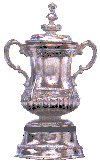
The victory signalled the start of a period when Arsenal completely dominatied English fottball and gained recognition worldwide during a remarkable era.
The Road to the First F.A. Cup
| OPOSITION | ROUND | VENUE | SCORE | SCORERS |
| Chelsea | 3RD | Home | 2-0 | Lambert, Bastin |
| Birmingham City | 4TH | Home | 1-1 | Jack |
| Birmingham City | 4TH (Replay) | Away | 1-0 | Baker |
| Middlesborough | 5TH | Away | 2-0 | Lambert, Bastin |
| West Ham Utd | 6TH | Away | 3-0 | Lambert (2), Bastin |
| Hull City | Semi-Final | Leeds | 2-2 | Jack, Bastin |
| Hull City | Semi Final (Replay) | Aston Villa | 1-0 | Jack |
| Huddersfield Town | Final | Wembley | 2-0 | Lambert, James |
1931 Arseanl Win the Football League Championship for the first time
1932 Arsenal just miss out on League and cup double..
1932 Arsenal open new West Stand
1933 Herbert Chapman's New Shirts
193/4/5 Arsenal win THREE first Division Championships in consecutive years!!
The Final standings for the three glorious Football League championship years were as follows:
| P | W | D | L | F | A | PTS | ||
| Arsenal | 42 | 25 | 8 | 9 | 118 | 61 | 58 | 1932 - 1933 |
| Arsenal | 42 | 25 | 9 | 8 | 75 | 47 | 59 | 1933 - 1934 |
| Arsenal | 42 | 23 | 12 | 7 | 115 | 46 | 58 | 1934 - 1935 |
1934 / 5 Ted Drake breaks Arsenal scoring record.
1935 Highbury Record Attendance set.
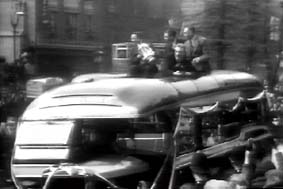
1936 Arsenal WIN the F.A. Cup Final for the second time
The Road to the Second F.A. Cup
1936 Arsenal open new East Stand
1938 The First Division Championship Returns to Highbury
1939 Hollywood comes to North London?!
The last game at Highbury before the Second World War was against Brentford on the 6th May 1939 and Arsenal won 2-0 with goals from Alf Kirchen and Ted Drake, but it was MORE noteable for the fact that it was used to make the film "The Arsenal Stadium Mystery".
The story centres around a footballer who dies by poisoning during a game at Highbury. Scotland Yard investigate, and all the Arsenal and "Trojan" players come under suspicion. The film provides some wonderful footage of the great pre-war Arsenal team, both on and off the pitch. See the ground, dressing rooms and other fascinating "behind-the-scenes" views of the East Stand.
Brentford in unusual change strip, played the fictional part of "The Trojans" and several Arsenal personalities took part in the film, including Cliff Bastin, Tom Whittaker and George Allison.
1939 World War 2 brings League Football to a standstill!
With the close of the 1938-9 season, Arsenal were in the midst of a huge financial crisis. The re-building of the ground in the mid 30's had resulted in a huge debt burden with crippling interest payments. Crowds of 40,000 were required simply to break even.
By August 1939, Arsenal had only £3 and 92 pence (metricised) in the bank. Luckily, the post war football boom between 1945 and 1952 when attendances soared, happily solved the clubs financial problems.
1939 - 45 World War 2 Claims 9 Arsenal Players....
The War was to prove a tragic time for a heavily bombed Highbury. No less than 9 of the 42 professionals on the books in 1939 failed to survive it, the highest loss of any club. The nine players to lose their lives were, Henry Cook, Bobby Daniel, William Dean, Hugh Glass, Leslie Lack, William Parr, Sidney Pugh, Herbie Roberts and Cyril Tooze.