Main Page ana { main } Main English Page

Main Page ana { main } Main English Page
Source by http://www.toursbyatlantis.com
Art & Culture
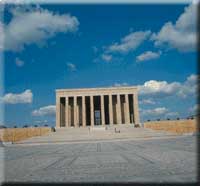
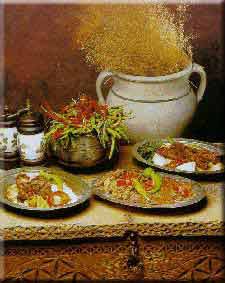
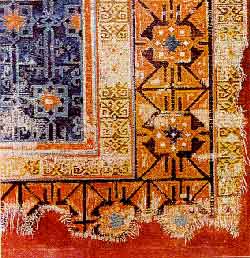
Among the prominent statesmen of the 20th century, few articulated the
supreme importance of culture as did Mustafa Kemal Atatürk, founder of the
Turkish Republic, who stated: "Culture is the foundation of the Turkish
Republic." His view of culture encompassed the nation's creative legacy as
well as the best values of world civilization. It stressed personal and
universal humanism. "Culture," he said, " is a basic element in being a
person worthy of humanity," and described Turkey's ideological thrust as "a
creation of patriotism blended with a lofty humanist ideal."
To create the best synthesis, Atatürk underlined the need for the
utilization of all viable elements in the national heritage, including the
ancient indigenous cultures, and the arts and techniques of the entire world
civilization, past and present. He gave impetus to the study of earlier
civilizations of Anatolia -- including Hittite, Phrygian, Lydian and others.
Pre-Islamic culture of theTurks became the subject of extensive research
which proved that, long before the Seljuk and Ottoman Empires, the Turks had
already created a civilization of their own. Atatürk also stressed the folk
arts and folklore of the countryside as a wellspring of Turkish creativity.
The development of painting, sculpture and the decorative arts had been
arrested by Ottoman officials, who claimed the depiction of the human form
was idolatry, but these arts flourished during Atatürk's presidency. Many
museums were opened and architecture gained new vigor. Classical Western
music, opera and ballet, as well as theater took impressive strides.Several
hundred "People's Houses" and "People's Rooms" all over Turkey gave local
people and youngsters a wide variety of artistic activities, sports and
cultural affairs. Book and magazine publication enjoyed a boom. The Film
industry started to grow. In all walks of cultural life, Atatürk's
inspiration created an upsurge.
Atatürk's Turkey is living proof of this ideal -- a country rich in its own
national culture, open to the heritage of world civilization and at home in
the endowments of the modern technological age.
FOLKLORE AND CUSTOMS
Turkey has very rich folkloric traditions which have been kept alive for
centuries due to the characteristics of Turkish people. Folk music
accompanies Anatolian people every single moment of their lives. Every
individual creates his own folk music suitable for his own situation. People
create their own music, and do not
write it down, but pass it from one to the other, and the "asiklar" (troubadours)
who sing and play this music keep it alive. Turkish folk dance is also very
alive and variant. Each region has its characteristic dance with particular
costumes,
steps, rhythms and instruments. Every region's dance reflects the
characteristics of that region's people. Turkish people are very inventive,
creating new dances for different situations. There are particular dances
for weddings, for harvest or for guest welcoming and so on, "Horon," a very
fluid and swift dance, is particular to the Black Sea Region; "Kasik Oyunu,"
played with
spoons, is performed in from Konya to Silifke; "Kilic-Kalkan" is practiced
in Bursa in memory of the capture of the city by the Ottomans; "Zeybek,"
particular to the Aegean Region, symbolizes courage and heroism.
There are also some folkloric sports which are also occasions for
celebration. They are very typical and traditional, and it is recommended
that you try to witness some of these; you will find
it really interesting. "Grease Wrestling" (yagli gures) is the Turkish
national sport dating from Ottoman times and every year in July wrestling
championships are held in Kirkpinar, outside
Edirne. The contest is made more difficult by the fact that the wrestlers
smear themselves with oil. The army was kept in good physical condition by
this sport. "Cirit" (javelin-throwing) is a fast-paced game played on
horseback. The origin of this sport is in Central Asia, where it was
developed by the soldiers in order
to improve their fighting skills. Riders on fast horses throw short javelins
to teammates who are also on horseback. The most important rule is to catch
the javelin while flying. This game is
mostly performed in Konya and Eastern Turkey.
Turkish folklore is very much varied, there are some celebrated characters
who reflect the peculiarities of Turkish people. Nasreddin Hoca is the best-known
figure who has many legendary
encounters with kings and common people. While seeming to act the fool,
Nasreddin Hoca actually displays the folly of the other.
Stories about Hoca have varied with the years and with the interpretation of
the storytellers. They mostly begin, "One day Hoca..." and go on with his
adventures.
Other important figures in Turkish folklore are Karagoz and his friend
Hacivat. According to the legend, they were working as workmen in the
construction of Bursa Ulu Mosque. Their satiric
jokes made the sultan very angry and anxious about whether Karagoz and
Hacivat could arouse some thoughts about the abuses of the, state in the
minds of ,others, so they were condemned to
death. The construction of the mosque was completed without them, but their
comrades did not forget them and they kept their jokes
alive, telling them over, and over. In time. the adventures of Karagoz and
Hacivat gained a different extension and the traditional Turkish shadow
puppet theater was born. Shadow
puppets cut from camel hide, painted to look like Karagoz and Hacivat are
held against a wide white cloth and operated as a strong light shines from
behind. Karagoz and Hacivat come to life
again and reached, today, also with the addition of some new characters. The
stories include everything about human existence,
from moral plays to the classic encounters between husband and wife.
Unfortunately, the shadow theaters are not seen today
except in a few places and on some special occasions. In Bursa, the Karagoz
Antique Shop sometimes organizes shadow puppet
theater plays and often has modern duplications of Karagoz and Hacivat, for
sale.
Hospitality is one of the cornerstones of the Turkish way of life. Turkish
people are the most gracious and generous hosts as
a result of their natural instincts. In every corner of the country such a
traditional hospitality will meet you. Every individual feels bound to honor
his guest in the best possible manner. They will open their houses to every
guest with a smiling
face and with all their sincerity give the best seat and cook the best food
for their guest. Turkish. people are very understanding
about foreigners' different customs and they try to communicate in order to help visitors according to their code of hospitality.
The mentality of that hospitality is "whatever religion you are from,
whichever country you come from, whatever language you
speak, you are 'God's Guest' ," so you deserve to be welcomed in the best
manner.
Coffee-houses ("kahve") are very specific to Turkish people. Even the
smallest village has at least one "kahve." In old times men used to smoke hubble-bubble pipes ("nargile") while talking about the matters of the day.
You can still smoke "nargile," but only in some of the coffee-houses. If you
ever had a chance to see a
"kahve," especially in Istanbul, do not hesitate to spend some time in that
lovely, authentic place.
Another feature symbolizing the Turkish way of life is the Turkish Baths
("Hamam"). They have a very important place in Turkish daily and historical
life as a result of the emphasis
placed upon cleanliness by Islam. Since Medieval times public bath houses
have been built everywhere and they retain an
architectural and historical importance. The Turkish way of bathing in a
"hamam" is very healthy and refreshing, so do not
forget to visit a "hamam;" you will not regret it!
Funding for Some of the Tour Activities
was provided by Supporters and Atlantis International