| Phosphorescence |
| Introduction: |
 |
 |
| Phosphorescence may sound like an unfamiliar term, but really it is something that is around you every day. Phosphorescence is a type of light that is used in many household items today. However, to fully understand the concept of this mysterious light, it is necessary to first understand luminescence. Light is a form of energy, but in order to create light another energy source had to be added. This energy comes from incandescent light or luminescent light. Luminescence is different from incandescence because it is a form of light created by means other than combustion. This is why it is know as the �cool light�, simply because it can occur at low temperatures. Phosphorescence is one form of luminescence. There is a specific difference between the two, and you will learn about this in the next section. |
| How does it work? |
| To understand how phosphorescence works, one must first understand luminescence. Luminescence occurs when an energy source kicks an electron of an atom from the ground state to the excited state. The atom does not exist in the excited state for long, and when it goes back to the ground state the energy that was absorbed by the atom is released in the form of light. This situation can be expressed metaphorically. Imagine that a rock is picked up using one�s muscles. The elevated rock is now in a position that has greater energy than it would if it was on the ground. Next, imagine that the rock is dropped back to the ground. �THUD!� The energy that the rock had absorbed is now released in the form of sound. This is exactly the same as the concept of luminescence, except that the rock is the electron of an atom, the muscles are an outside energy source, and the sound that was created is a photon of light. You may be wondering how this relates to phosphorescence. Luminescence and phosphorescence are very similar. The only difference is that the amount of time that the electron stays in the excited state is much longer with phosphorescence. This means that the light is �time released,� or in other words the light continues even after the energy source has ceased. Representing the situation metaphorically with the rock, it as if the rock is placed on a table. The rock doesn�t fall back to the ground until time has passed. With luminescence the electron remains in the excited state for about 1/1000 of a second. However, with phosphorescence the electron might stay in the excited state for as long as a few hours. |
| When and by whom was it discoverer? |
| Phosphorescence was first noticed in the 17th century, but it wasn�t until the 19th century that research began. A German physicist by the name of Philipp Lenard spent forty years of his life studying phosphorescence. Lenard theorized that when energy is absorbed by a phosphorescent material, some of the elections are displaced. The electrons are trapped in potential troughs, and are not released until temperature related energy fluctuations. The release of the electron is when the light is produced. |
| Significances of Phosphorescence: |
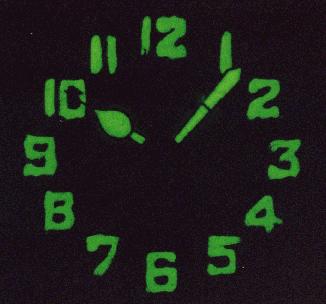
| Phosphorescent products are very popular today. There are some very practical uses, and of course sometimes phosphorescence is simply used for fun. One place that you often find a phosphorescent substance is on watches. By simply exposing the watch to a light for a few seconds, you are able to read it in the dark for hours to come. Also, this same type of material is used in many bedrooms. Lots of people imitate the stars by using phosphorescent stickers. When you turn out the lights to go to rest it is like sleeping under the stars. |
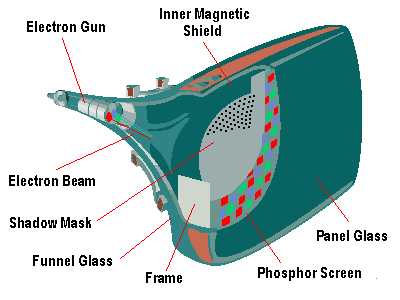
| Possibly the most important use of a phosphorescent material is in televisions. A material called phosphor is coated on the screens of TV�s. An electron gun in the back of the TV shoots out an electron beam. This beam is not a visible ray until it hits the phosphor screen. When the screen is exposed to the beam, the phosphor glows colorfully, allowing us to watch our favorite TV show. Televisions are used world wide, and if it wasn�t for phosphorescence, there would not be any TVs. One might have thought that phosphorescence was something that did not apply to them, when really it is a part of their every day. |