
Early in the 18th Century, pioneers of English, German and Scotch-Irish background began settling in the Appalachian Mountains. Because of mountainous isolation, they were untouched by outside progress. Dance was handed down to younger generations and so developed their own Appalachian music and dancing which was untouched by modern influence. This dance is clogging.
There were 2 influences - our ancestors brought steps with them that resembled the Irish Jig and the Scottish Highland dancing. Appalachian pioneers adopted it early in their history and added some dance steps from the Indians native to that part of the country. They called it Flatfootin' or Buck Dancing.
Clog is an Irish word applied to the Slipstep (Reel Tones) meaning to dance to rhythm and time. It is also a Gaelic word for time or timedancing.
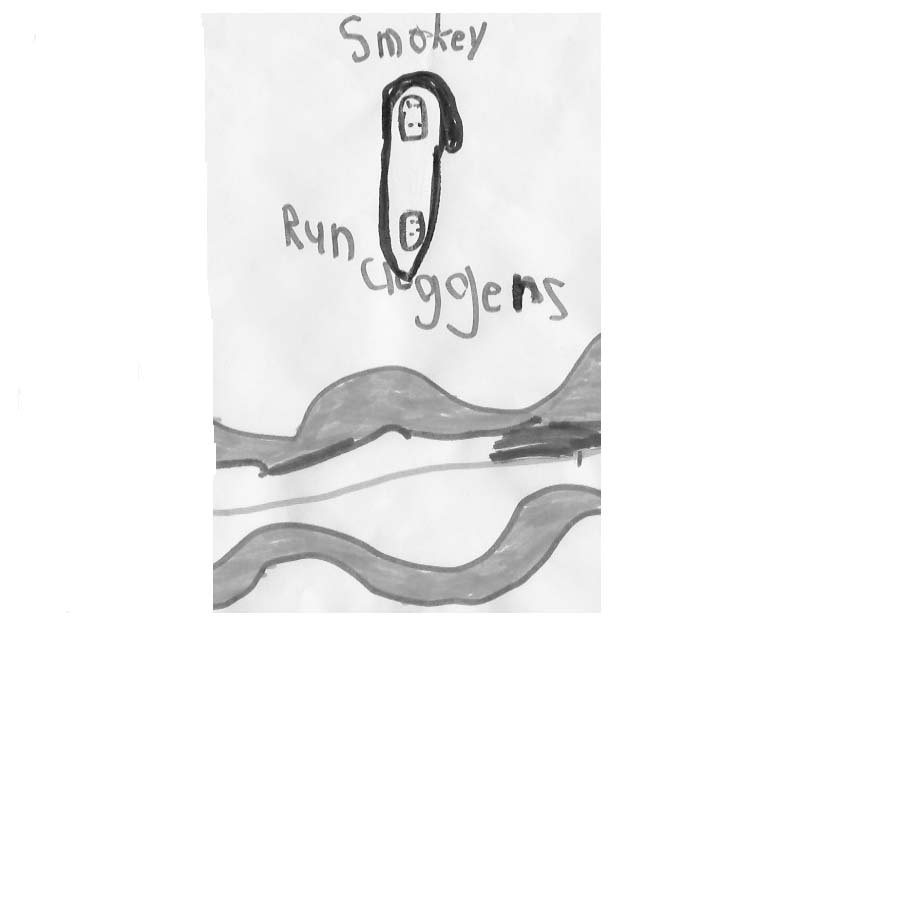
Similarities are numerous. For example, an Irish step called the "treble" is almost identical to the Clogging "triple." (The artwork pictured at the upper left was drawn by one of my first little cloggers when I told her that the name Smokey Run came from a creek named Smokey Run just outside Rockwood, Tn., in the Eagle Furnace community.)
