
By Andy Smircich, Homer, Alaska
My first experience with a Supercub was in 1996, as a CFI trainee in Albuquerque, New Mexico. The flight school where I was getting my CFI had a 1964 PA-18-150 in the fleet, so I added that to my training while I was getting other ratings. Once I flew it, I never looked back. Before long I was pushing all my prospective students into taking their primary instruction in the cub instead of the 172, citing the improved knowledge they would get of real airplanes. It seemed I was spending all my income from the flight school renting the cub in my spare time. I knew I had to have one.
I was fairly close to buying a 180 HP cub from Oklahoma that had been used in powerline patrols, but it had 25,000 hours on it. I wanted something a little bit fresher than that. As I shopped around, I came upon the Smiths’ ad in Trade-a-Plane. I had no experience building or fixing anything, but I was 27 years old and full of overconfidence. So I decided to start building one, and I ordered my kit from Nick. It would be kit number six out of their facility.
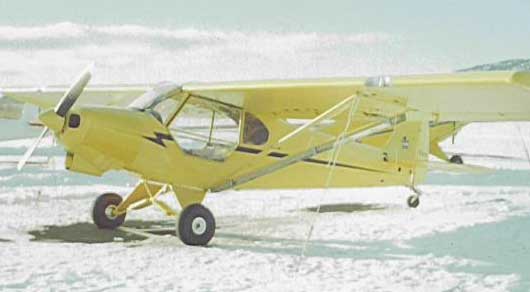
They promised about a six-month delivery after I sent my deposit, so I had some time to get ready. I knew the basic premise of lefty-loosey, righty-tighty, but little else. I started helping out with the maintenance of the flight school cub so I could get all the experience I could with the airplane. I was doing oil changes, spark plugs, compressions, wheel bearings, and all the other repetitive tasks that go along with operating an airplane. This gave me a little bit of an idea how to work with airplanes, and a lot of ideas on how a cub is put together.
Around this time I also decided to return to Alaska, where I had been born and raised. I rolled this all in to the project and made plans to pick up the kit from Nick while driving north on my move up. I got a job at a small air taxi in Homer, and I rented a U-Haul. If I had that part to do over, I would have just bought a truck instead, as the U-Haul fees in March added up to over $5000 just to drive up. Nick had sold a pair of wings to Paul Flint in Anchorage, so I agreed to carry them up there with my kit to help him out. That U-Haul was packed pretty tightly with the two sets of wings, fuselage, and other various odds and ends that went with the kit. My dad rode along with me to keep me company, and five days later we were unloading the truck in Alaska.
At first I didn’t really tear into the project. I was a new pilot in an old operation, and I didn’t feel it was appropriate to walk onto the job saying, “This is great here, where can I put my cub project?” But in a few months I got to know the owner, Larry Thompson, better, and he was agreeable to letting me work on the plane in his hangar. I suppose having a pilot in the hangar 14 hours a day even when he’s not flying might have some merit, or perhaps he just wanted to help me out. Either way I couldn’t have done this project without that setup. I had experienced mechanics around who didn’t mind loaning me their tools. I was able to work on it during even the shortest breaks between flights. And I had access to two or three cubs parked out on the ramp that I could go look at when I got stuck. One mechanic called me the “Piper Peeper” as I would constantly wander out onto the ramp with a ruler in my hand. I don’t know who any of those cubs belonged to, they came and went from the area frequently. But that was a big help to the project.
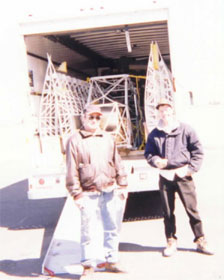 I really got down to work in the winter of 2000.
There was a much shorter flying day, and I got my best work done pulling
all-nighters after everyone went home. No one bothered me and I could
really focus. I figure I averaged forty hours a week of building the kit
during the 20 month project. I started on the fuselage, and spent most of
that time figuring out how everything was to go together. Then I started
covering it, and the fumes chased everyone out of the entire building. I
tried doing it all at night, but the building, including the offices,
would still be full of fumes the next morning. Finally, I relocated the
project to a hangar one building over where no one worked on a regular
basis. I have video of pulling the covered fuselage out of the loft where
I covered it with a forklift and a pulley. Its still pretty scary watching
myself riding on the forklift with the fuselage from about 25 feet above
the hangar floor. But since we didn’t drop it or me, I started in on the
wings.
I really got down to work in the winter of 2000.
There was a much shorter flying day, and I got my best work done pulling
all-nighters after everyone went home. No one bothered me and I could
really focus. I figure I averaged forty hours a week of building the kit
during the 20 month project. I started on the fuselage, and spent most of
that time figuring out how everything was to go together. Then I started
covering it, and the fumes chased everyone out of the entire building. I
tried doing it all at night, but the building, including the offices,
would still be full of fumes the next morning. Finally, I relocated the
project to a hangar one building over where no one worked on a regular
basis. I have video of pulling the covered fuselage out of the loft where
I covered it with a forklift and a pulley. Its still pretty scary watching
myself riding on the forklift with the fuselage from about 25 feet above
the hangar floor. But since we didn’t drop it or me, I started in on the
wings.One thing I should mention about this project is that mine was the first Smith kit that flew. This meant there were a few things that didn’t quite fit right. We were learning together. I picked up the phone at least weekly in those days to ask questions about things that didn’t go on the way I thought they should. More than half the time, it was my fault, I was trying to put a part on backwards or upside down. The other half Nick was very good about coming up with a solution that would get me going again on the project. Quite a few times he sent new parts out to replace the ones that I couldn’t fit. They really stood behind their kit. And in retrospect the delays were minimal.
Once I got to the wings I was really moving on the project. I had learned a thing or two about building an airplane and I got those wings prepped and covered in short order. I built up some flaps and ailerons and covered those too. My engine came from Aerosport Power, all ready to bolt on. So before long I contrived an elaborate arrangement of manpower and forklifts to put the wings on it. Once the project was seemingly done, I figured out that all the final details of the assembly were quite time consuming. There were a lot of things to check and re-check. And of course some paperwork with the FAA. Tony Accurso from the Anchorage FSDO had been by to see the project while it was underway, and he helped make the paperwork portion very easy.
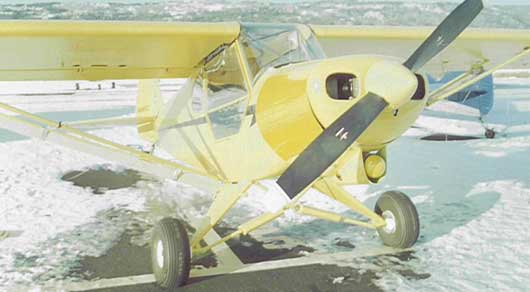
On February 13, 2002, I took off in my cub for the first time. The performance was incredible. I still had a number of things to work on during the test flight period, some of which really embarrass me that I didn’t do it right the first time. But all in all it was and is a very solid airplane. Fortunately, I never stopped building it. I decided I needed bigger tires right away, so with that the brakes had to be modified, which just recently was completed. My cargo area turned out to be inadequate, so I designed and built a fiberglass belly pod and strapped it on. I added an electric artificial horizon for all those late night flights I do. I’m sure I’ll come up with other improvements to make on it as I keep flying. I have a little over 200 hours on it now. It’s extremely reliable and maintenance free, except when I decide to improve it. I am very proud of the experience and wouldn’t trade it for anything.