

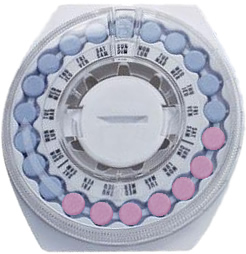
The Pill
The Pill is an oral contraceptive, taken once daily, to add hormones to a woman's body that decrease the chances of her becoming pregnant.
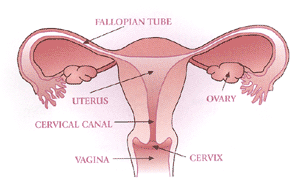
A menstral cycle occurs monthly in most women and is due to the change in hormones of her body. A period is a cycle which begins when bodily chemicals and proteins send messages to the brain, (these are called neurotransmitters,) which then instructs the ovaries (sacks that contain eggs and are attached to the fallopian tubes) to release estrogen. Estrogen is the hormone which begins the development of the egg while it is still inside the ovary. That ovary then releases releases the egg, a process known as ovulation. Estrogen then fills the uterus with blood vessels, which progesterone matures and prepares for pregnancy. If the woman does not become pregnant as the egg travels down the fallopian tubes and into the uterus, the egg dies. The level of both estrogen and progesterone decrease, resulting in a weakened uteral lining. The cells of this lining break apart, releasing the blood of this cycle.
How the Pill Works
The body naturally contains both progesterone and estrogen. The production of these two hormones increases during ovulation and potential fertilization of an egg. When the pill is being taken, this high hormonal level remains constant. The pill works at three level to assure up to 99.9% effectiveness.
1. prevention of ovulation (body releasing an egg)
2. can cause the mucus of the cervix to become thick and act as a barrier against sperm
3. can affect the uterus lining so that it prevents (in most cases) the embryo
- must be taken daily
- if one day is missed, the pill's effectiveness decreases for up to a month
- can be less effective when taken with other drugs (especially antibiotics)
- bacterial infections become more likely as the vagina is not being regularly cleansed by the menstal cycle and because the immune system is weakened
- a woman's own production of estrogen and progesterone is suppressed and can result in infertility for some women
- increases a woman's chance of developing pelvic inflammatory disease (an infection of the fallopian tubes, which can result in sterility) according to the American Life League, Inc.
- makes women more susceptable to AIDS/ HIV because the immune system is weakened
- infertility (the inability of a woman to ever become pregnant)
- cervical cancer
- shrinking of the womb
- mood changes/ swings and depression
- breast cancer
- blood clots
- birth defects in children concieved
- stroke, heart attack
- weight gain, tender breasts
- is immediately effective when taken within 6 days after the beginning of a woman's period or after an abortion, if starting the pill at other times in the menstral cycle, it can take up to 1 month to be fully effective
- is 97-99.9% effective in preventing pregnancy
- suppresses period while on the pill
- within 6 months of being off of the pill, most women are fertile without complication
- is simple
- releases the same hormones that a woman's body does: estrogen and progesterone
- side effects usually cease after 2-3 months of being on the pill
- lowers a woman's chance of developing oravian cancer, endometrial cancer, and pelvic inflammatory disease (an infection of the fallopian tubes, which can result in serility) according to Feminist Women's Health Care
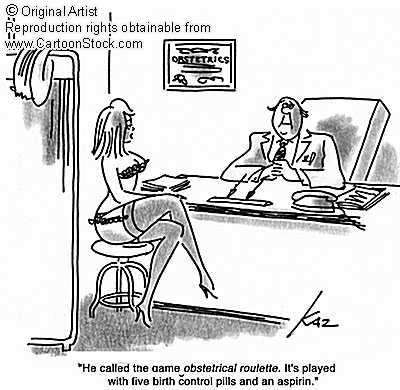
The Pill offers women the choice to have sex without a great worry of pregnancy. This contraceptive method is 97-99.9% effective. Therefore, people may use condoms less often than if the Pill was not in existence because both protect against pregnancy. However, the fact that the Pill does nothing to prevent sexually transmitted diseases (STD's) means that condoms are still very important to completely safe sex.
I think that the Pill may have relaxed some former ideas about sex for many people for my generation and even that before us. It is possible that the very existance of the Pill encourages people to have sex at a younger age because the Pill could provide a false sense of security surrounding the whole issue. The idea of using the Pill as emergency contractption also encourages this relaxed feeling towards unprotected sex.
At the same time, the Pill has provided the option of prevention for those who do not wish to become pregnant, but do not want to have an abortion either.
American Life League, Inc. (1997). Birth Control: The Pill. <http://www.all.org/issues.bc01.htm.>
(9/12/04).
Feminist Women's Health Care. (2002). The Pill - Oral Contraceptives.
<http://www.fwhc.org/birth-control/thepill.htm.> (9/12/04).
Miller, Dr. Leslie. (2003). No Period. <http://www.noperiod.com/.> (9/14/04).
www.cartoonstock.com