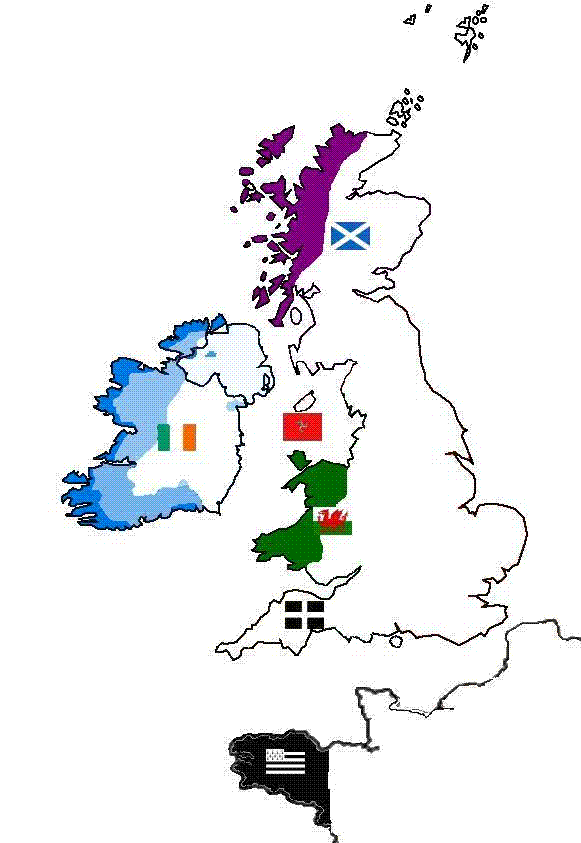
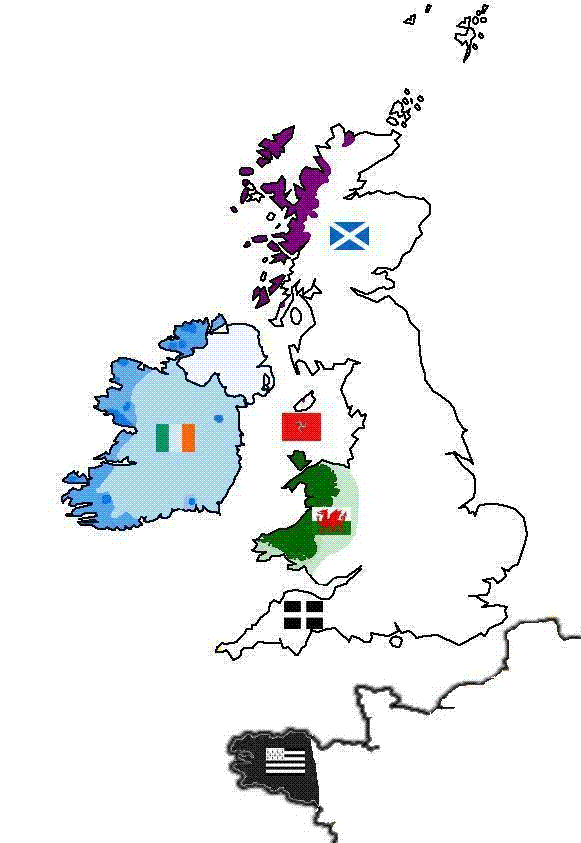
All Celtic languages, including the extinct Manx and Cornish, have seen renewed interest, with all languages but Breton having official recognition (although Scotland only achieved this in 2005 and Wales in 1993). Cornish has been successfully revived and is now and EU minority language, as is Manx (which gained its first Gaelic primary school in 1990). All areas have taken up interest in the Celtic music, art, dance, and the culture that is millenia old and is a distinguishing feature shared by them. The Celtic Tiger in Ireland has encouraged immigration has turned one of the poorest nations in Europe into on of the richest. All areas talk of independence, and television and radio have helped to cement the languages place in the world.
However, despite these good points, the Celtic languages are still critically endangered with Newfoundland Irish recently having been declared extinct and only 500-1000 native speakers of Cape Breton Gaelic remaining. Brittany's language and its Celtic culture have been repressed since the French Revolution, with any language but French being against the constitution. As such, Breton schools are not funded by the government and signs in Breton are illegal (until recently so was flying the Breton flag).
Wales saw heartbreak in this century as it was denied the right to have a Welsh-only radio programme. In protest one man went on hunger strike and the government only capitulated with him on his deathbead. This was not the worst tragedy, however, as in 1965 a Welsh monoglot community was evicted and submerged to make a resevoir water supply for Liverpool. Most of these Celtic speakers were moved to English only areas where they quickly lost their language. As a result the Welsh blockaded their settlements and effectively promoted the language through making it a political issue.
Though the Celts have constantly faced conquest, repression, humiliation, and exile they have managed to survive throughout the centuries and have outlasted many of their invaders. Though the fragments of the once massive Celtic cultural empire now law within just a few places in the world, it is in these small outcrops they they will hopefully continue to thrive.