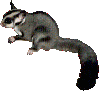
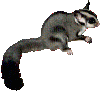
Hi!!! and Welcome to my own home page of Gizmo and Zimba. first of all i would like
to introduce my self ,iam Gizmo and my girlfriend is Zimba,we are two adorable
Sugar Gliders own by my mastter RiKKy. He gives us lots of love,attention and care for us,also he gives us this great delicious food. |
We like to eat all kinds of fruits ,baby food,yougurt,veggies,etc,etc. and or favorite
meal is Meal Worms yummmmmmmmy :-) we like to come out and play at 1:00am with RiKKy,his a great friend to be with,we like him so much.mean while here are some of our great pictures of me as Gizmo and my girlfriend Zimba ,enjoy and have a nice Glider day. |
Welcome... To my own Web Page :-) here is a little information about ,us known as "SURGAR GLIDERS" A sugar glider is an Australian marsupial (girls have pouches, like kangaroos), but I look much more like a flying squirrel. I can't actually fly, but I can glide from high places by using the membrane between my ankles and wrists. My species has become a new fad in "Pocket Pets". This site is meant to help new sugar glider |
A DAY IN GIZMO AND ZIMBA LIFE Because I am noctural, my day begins around 1:30AM. I sleep all day and at night
I spend exuberant amounts of time running around my cage like a lunatic. I tend
to run through my food which is mostly soft, sweet, sticky stuff - what a mess
for ((RiKKy))! hes the one who cleans the mess that we do in our house(cage).
Here's some things you might find in my bowl: crickets or mealworms vanilla yogurt "leadbeaters mix" (more about that later) hawaiian delight baby food red grapes the insides of cherry tomatoes blueberries tofu mushed with honey peas (skinned of course, mixed with yogurt) broccoli dipped in something sweet apples apple or grape juice You see, I should to eat at least 40% veggies, 25% protien, 20% fruits and 15% grains (leadbeaters) a day. But I tend to be a picky eater. I may like something this week, but not next. |
How to love me...(it's not hard) I am a social creature, who longs for the attention and companionship of a parter, either of my own species or of a caring human. Humans need to spend at least two hours playing with me every night or in the early morning. I am hard to play with at night because I am such a busy-body. Therefore, it is a good idea to spend some time bonding with me during the daylight hours while I am sleeping...I'm drowsy then and enjoy sleeping in a pouch or pocket close to you (a bandana clipped inside RiKKy's shirt works great as a pouch and I get to smell and hear him all day). Don't worry, there's very little chance I'll wake up much...I enjoy my sleep. The more time I spend with you, the better. When RiKKy first got me I used to make this awful sound they call "CRABBING". I resemble the sound of a small chainsaw when I do this and stick my arms way up in |
the air to scare anyone away. Sometimes I bark like a dog too, but not very often,
it usually means I'm looking for some attention. |
Introduction Sugar gliders are tiny marsupials that are native to New Guinea and Australia. They inhabit open forests, where they live in trees as family units. Sugar gliders move from tree to tree using their gliding membrane that extends from their forepaws to their ankles. In this respect only, they resemble the American flying squirrel. Their furry tail helps serve as a rudder and is somewhat prehensile. Free-ranging sugar gliders are omnivorous. Their natural diet in the winter includes the �sugary� sap of various eucalyptus trees. During the rest of year, they are primarily insectivorous, feasting on moths, beetles, insect larvae and spiders. Fruit is not a major component of the free-ranging diet. Being a marsupial, sugar gliders bear young that complete their development in an external pouch. Before purchasing a sugar glider inquire about state and local laws regarding ownership and obtain proper permits or licenses. |
What to Expect from Your Sugar Glider Sugar gliders make interesting pets. They are about the size of a hamster with soft fur. They are very social animals and are best kept with at least one other sugar glider. If kept alone, they require considerable playing attention and social interaction with their owners. Being nocturnal, their eyes are very large, and they prefer dim lighting. They have specialized incisors designed to gouge trees to extract sap, so they need branches to chew. They have several distinctive vocalizations from alarm yaps and hisses to low barking groans, screams and high squeaks |
Is Your Sugar Glider a Male or a Female? Check the lower abdomen for a pouch opening in the female or for the fur-covered testicles in the male; the bifurcated (forked) penis is located at the base of the tail. Males develop a scent gland on the forehead that they may rub on the female�s chest. Males also have anal glands and scent glands on the chest. Both sexes scent-mark territory in a freshly cleaned enclosure |
What Do Sugar Gliders Do All Day? Sugar gliders sleep during the day and are active at night. Relative to other animals, their cage should be extremely large, at least 24� x 24� x 48� with many branches and perches for exercise. They should be let out of their cage every evening for supervised play with their owners. During the day they need a wooden nest box in which to sleep |
Are Sugar Gliders Tame? Sugar gliders should be socialized by the breeder when they are very young. They usually are not provoked to bite, although they may investigate fingers with their mouth. Tame sugar gliders bond with their owners and like to ride around in pockets |
What Should Your Sugar Glider Eat? Sugar gliders should be fed a diet appropriate for insectivorous/carnivorous animals (at least 50% of total intake, particularly if they are active breeders) along with sources of fruit sugars, preferably in the form of a sap or nectar (Leadbeater's Mix). Feed fresh portions in the evening. In the absence of a very large variety of insects, a zoo formula insectivor can be used, but several various pet-industry raised (pet industry quality fed a commercial cricket diet or enriched feed or the owner should dust all insects with complete vitamin powder) insects including mealworms (large & small), crickets, waxworms, moths, spiders, etc., need to be offered. Portion size for one sugar glider is roughly a tablespoon of insects and a tablespoon of nectar. This may be increased or decreased depending of the activity level, reproductive or growth conditions. If fruit is fed as a treat, small bits of a variety should be chopped together to decrease the ability of the glider to pick out only the favorite parts, and a small amount of multiple vitamin/mineral powder mixed through as well. It might be advisable to add bee pollen dusted over any fruit given. It is not proven that commerical lorikeet nectars are adequate. Leadbeater's Mix (50% of overall diet, fed in evening) = 1 glider portion 150 ml warm water 150 ml honey 1 shelled hard-boiled egg 25 grams high protein baby cereal 1 tsp vitamin/mineral supplement Mix warm water and honey. In separate container, blend egg until homogenized; gradually add honey/water, then vitamin powder, then baby cereal, blending after each addition until smooth. Keep refrigerated until served. |
Sugar Gliders are Marsupials Sugar gliders breed relatively easy in captivity. The female will increase scent marking to indicate breeding readiness to the male. The gestation period is only 16 days, at which time the infants make their way to the pouch where they attach to a nipple and stay for two months. Ten days after they emerge from the pouch they open their eyes. They wean a month after that, but remain in the parental nest. Males help with the care and feeding of the babies. |
What Your Veterinarian Looks For in a Healthy Sugar Glider Bright eyes Moist, pink nose Pink gums and mucus membranes Ability to grip with all four feet Clear ear canals Smooth fur coat Good elasticity of gliding membrane |
How to Keep Your Sugar Glider Healthy, Happy and Safe! Purchase a captive-raised animal because they are usually healthier, of known age, and have adapted as a companion animal. Take your sugar glider to an exotic animal veterinarian for a physical examination and fecal check for parasites. Keep environmental temperature around 70�F. Frequently clean enclosure and nest box so feces and urine won't accumulate. Feed fresh food portions in the evening. Provide fresh water every day in a crock (elevated off the floor of the cage to prevent contamination) or sipper bottle. Provide branches from nontoxic trees such as apple or citrus for climbing and chewing. |
Housing for your sugar glider should... be as large as possible, at least 2 cubic feet in size. have wire sides with spacing no more than 1 inch square to prevent escape. have wire bottom and pull out tray for easy cleaning. include a tamper-free cage door lock. provide nest boxes that are attached high in the cage. have shredded paper towels or recycled newspaper pelleted bedding material to line nest box. have food and water crocks located to prevent contamination (not underneath branches). |
It is important to prevent sugar gliders access to... excessive fat in the diet (peanuts, seeds). chocolate, refined sugars. processed human foods with preservatives. pesticides. cedar shavings. branches from toxic trees. bright lights or direct, unfiltered/unshaded sunlight. excessive heat, coolness. dogs and cats. unsupervised handling by small children. unsupervised freedom in the home. |