~ India ~
Timeline: Ancient India
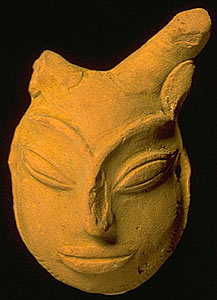
~3300 to 1300 B.C.E. Indus Valley Civilization includes the cities of Mohenjo-Daro and Harappa.
~2000 B.C.E. Aryans arrive in India. First attack on outlier villages around Baluchistan.
~2000 to 500 B.C.E. Composition of the Vedas.
~1000 to 800 B.C.E. Events of the great epics the Ramayana and the Mahabarata are thought to have occurred.
~800 to 500 B.C.E. Composition of the Upanishads, one of the oldest and greatest of Hindu philosophic literature.
~600 B.C.E. Aryans capture Ganges River valleys and northern plains.
~563 Birth of Gautama Buddha.
516 B.C.E. Persia enters northwestern India.
327 to 323 B.C.E. Alexander the Great invades India and rules until his death.
~322 B.C.E. Chandragupta Maurya (disciple of Brahmin Chanakya who wrote the Arthashastra) establishes the Mauryan Empire after first battling, then negotiating with the Greeks, marrying one of their daughters.
~298 to 273 B.C.E. Reign of his son Bindusara who extends the Mauryan empire over nearly the entire sub-continent.
273 to 232 B.C.E. Considered the greatest Mauryan emperor, Ashoka's successful campaigns culminate in the annexation of Kalinga (modern Orissa).
~230 B.C.E. to A.D. 225 Satavahana, or Andhra, Dynasty rules over most of central India.
185 to 151 B.C.E.: Mauryan Empire, Brithadratha the last ruler killed, overthrown by Pushyamitra Sunga (Shunga) who started the Shunga Dynasty in Magadha.
185 B.C.E. to A.D. 320 Invasion of Bactrians, Parthians, Shakas, and Kushans. Old Silk Route established.
~75 to 30 B.C.E. Kanva Dynasty
A.D. 1 to 300 Chola, Pandya, and Chera Dynasties in southern India produce renowned poetic literature in the Tamil language.
65 B.C.E. to A.D. 250 Deccan and South India: construction of Ajanta and Ellora cave temples. Isolation of the southern kingdoms ended.
A.D. 320 to 530 Gupta Empire, founded by Chandragupta I, in northern India, considered the "golden age" for Hindu art, science, and literature.
~A.D. 535 Huns and other groups invade northern India, defeating the Gupta Empire.
~A.D. 550 to 1200 The Chalukyas and Rashtrakutas build empires that control the whole of central India.
~A.D. 600 to 900 Pallava and Pandya Dynasties dominate southern India.
A.D. 612 The Huns are defeated by Harshavardhan; he recovers almost the entire area that had been the Gupta Empire.
A.D. 647 Harshavardhan's death. His Empire starts disintegrating.
A.D. 647 to 1206 Northern India disintegrates into a collection of independent kingdoms.
~A.D. 711 Muslims begin incursions into India.
~A.D. 900 to 1200: Chola Empire unites southern India. Art, literature, and commerce flourishes.