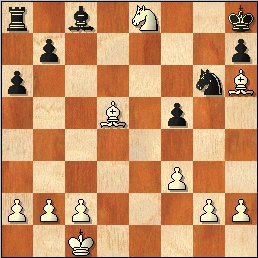
1.e4 Nc6 2.d4 e5 3.dxe5 Nxe5 4.Nc3 Bb4?! The Nimzowitsch Defence is not the most theoretical of openings, but I can't find a record of this move in my vast opening book collection. White appears to gain the bishop pair reasonably painlessly. 5.Qd4 Qe7 6.Bf4 Bxc3+ 7.Qxc3 d6 8.0-0-0 8.Bb5+, forcing the king to take up residence in the centre, is probably best, even at the expense of the bishop pair. 8...a6 9.Nf3 Ng6 Sacrificing the g-pawn is as good a sign as any that the black opening has fallen to pieces. I doubt we will see many master games with 4...Bb4 (or 1...Nc6, for that matter). 10.Qxg7 Qf6 11.Qxf6?! Missing the most accurate continuation. 11.Bh6! is a well known trick in these type of positions. 11...Nxf6 12.Be3 Nxe4 So black recoups his pawn, but he still has a shattered pawn structure, dodgy king and the white bishop pair to deal with. 13.Bd3 d5 14.Rhe1 0-0 15.Bh6 Re8?! Black should try 15...Nxf2 16.Bxf8 Kxf8 here, as this would be the best way to try and stir up trouble. The text should fall victim of a neat tactic, but it would appear that both sides missed it. 16.Ng5 White has to see a resource a way along the line to push home his advantage after this move. Instead, 16.Bxe4 dxe4 17.Rxe4! takes advantage of the weak black back rank in more incisive fashion. 16...f5 17.f3 Nf6 18.Rxe8+ Nxe8 19.Re1 [The winning line that neither side appreciated was 19.Bc4! when, although 19...dxc4 20.Rd8 is that old back rank problem again, the answer after 19...c6 is particularly elegant: 20.Rxd5!! cxd5 21.Bxd5+ Kh8 22.Nf7+ Kg8 23.Nd6+ when black must give up a piece with 23...Be6 24.Bxe6+ Kh8 25.Nxf5!, where white will force further gains by re-routing his h6-bishop along the diagonal. Trying to hang onto material gets mated after 23...Kh8 24.Nxe8 which deserves a Diagram