Rooter
Western Hognose
Heterodon nasicus nasicus
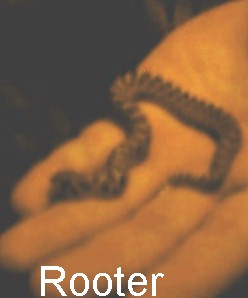
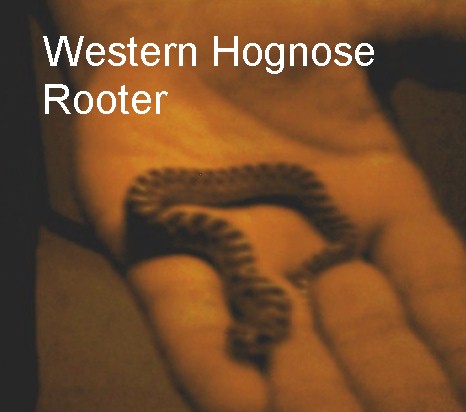
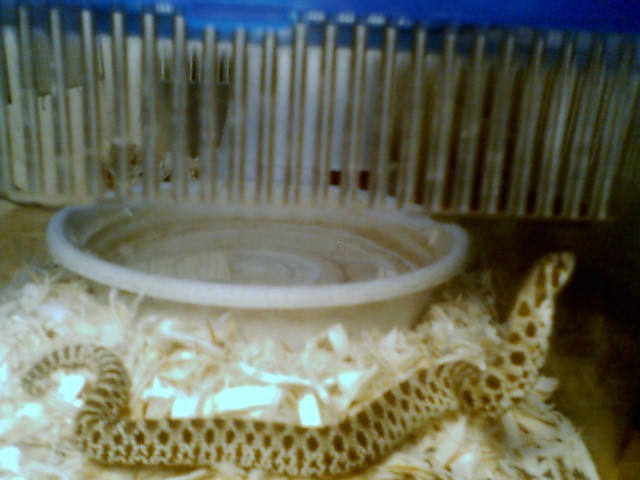
Rooter was an unexpected addition to our collection last spring. We
came across him at a herp show in Kansas City, and Misty fell in love with
him. The first two pictures are a bit fuzzy, but give you an idea of
his size when we got him. He was definitely just a baby.
Hognose are frog and toad specialists, but the Western Hognose is not
as picky as his Eastern cousin. Westerns will eat mice without much
problem, and Rooter has never refused a pinkie or now fuzzy.
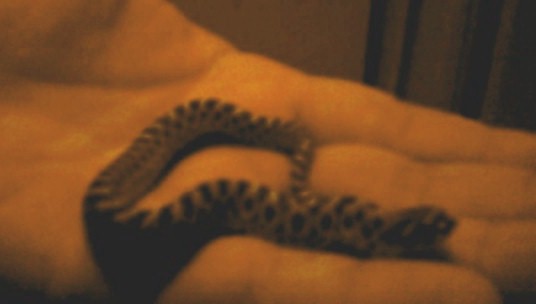
Hognose love to burrow, and are bluff experts. When threatened they
will puff up and hiss. They seem to think they can make you believe
they are a cobra. Their markings are also similar to a rattlesnake,
and more than one person has been fooled by a quick glance. Their upturned
snout and the unique shape of their head make it easy to identify them in
the wild. If their bluff doesn't work, they will roll over and play
dead, even letting their tongue hang out and musking so they smell dead. Rooter
has never played dead, but we have encountered plenty of puffing and hissing.
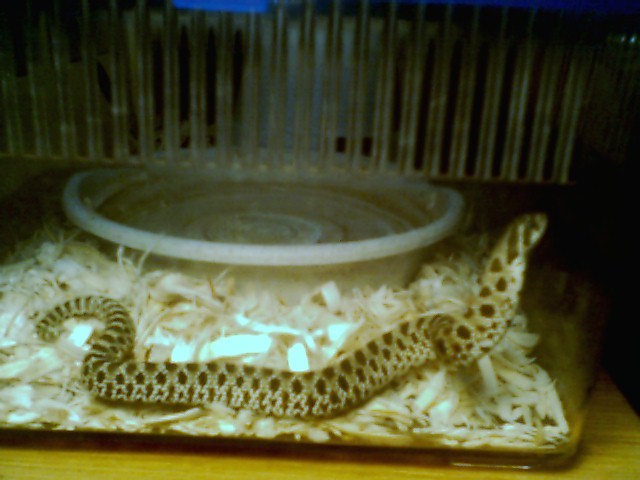
Rooter is now quite a bit bigger than he was in the spring. These
last two pictures are the most recent, and show off his markings well. Here
he is trying to strike a cobra pose.
We will get a shot of his belly soon. Western Hognose have a solid
black belly that really stand out from their dorsal pattern. Rooter
is a great little snake, and will stay small all his life. Most Western
Hognose only grow to around 18-24 inches long. They make a great addition
to any herpers collection.
A note on keeping Hognose. Their has been
much discussion about whether or not they are venomous. They do have
rear fangs. However, only an adult is large enough to even get his rear
fangs onto a human hand. There are rearfanged snakes that are extremely
venomous, such as the Boomslang. However, it appears that Hognose are
nowhere near the Boomslang. Most experts will agree that Hognose do
have a mild venom, or at least their saliva is toxic. However, not
everyone who has been bit has had a reaction to the bite. The only people
who should be concerned about a Hognose bite are those who have a history
of allergies to bee stings, etc., or those with impaired immune systems.
For a complete discussion and explanation of the
"venomous hognose" question, you can check out the following link.