All rights reserved. Used by permission.
Chiropractic
Spinal adjusting has been traced back to the times of Hippocrates.
The first chiropractic adjustment was given by D.D. Palmer in 1895.
An estimated 20 million people visit doctors of chiropractic in the United States each year.
Chiropractic is a wellness care. While chiropractors assist many people who have suffered injuries or have been involved in car accidents, chiropractic care is concerned with the patients overall well-being and promotion of good health
This picture on the left is an example of the phase three of Vertebral Subluxation--where severe spine degeneration is observed.
Learn more about it by looking at the X-rays below.


Gray's Anatomy, the bible of anatomy used in every medical school and science-graduate studies, clearly explains how the nervous system regulates EVERY cell, organ, and systems in human body. Interference or disturbances to the flow of information from the brain to the cell/organ and vice versa will produce changes in homeostasis, producing cellular dysfunctions in a long run and eventually disease takes place. This is no rocket science and this is where chiropractic comes in and work wonders. It is not the chiropractor that brings health, but it is the person's innate/inborn ability to maintain health, that is being restored. A doctor of chiropractic simply facilitates the body in achieving its true state of health by maintaining homeostasis. (Homeostasis, is maintained in the body by the nervous system and the endocrine system.)
The conditions which doctors of chiropractic address are as varied and as vast as the nervous system itself. All chiropractors use a standard procedure of examination to diagnose a patient's condition and arrive at a course of treatment. Doctors of chiropractic use the same time-honored methods of consultation, case history, physical examination, laboratory analysis and x-ray examination as any other doctor. In addition, they provide a careful chiropractic structural examination, paying particular attention to the spine.
The examination of the spine to evaluate structure and function is what makes chiropractic different from other health care procedures. Your spinal column is a series of movable bones which begin at the base of your skull and end in the center of your hips. Thirty-one pairs of spinal nerves extend down the spine from the brain and exit through a series of openings. The nerves leave the spine and form a complicated network which influences every living tissue in your body.
Accidents, falls, stress, tension, overexertion, and countless other factors can result in a displacements or derangements of the spinal column, causing irritation to spinal nerve roots. These irritations are often what cause malfunctions in the human body. Chiropractic teaches that reducing or eliminating this irritation to spinal nerves can cause your body to operate more efficiently and more comfortably.
Chiropractic also places an emphasis on nutritional and exercise programs, wellness and lifestyle modifications for promoting physical and mental health. While chiropractors make no use of drugs or surgery, Doctors of chiropractic do refer patients for medical care when those interventions are indicated. In fact, chiropractors, medical doctors, physical therapists and other health care professionals now work as partners in occupational health, sports medicine, and a wide variety of other rehabilitation practices. (Reference: http://www.chiroweb.com)

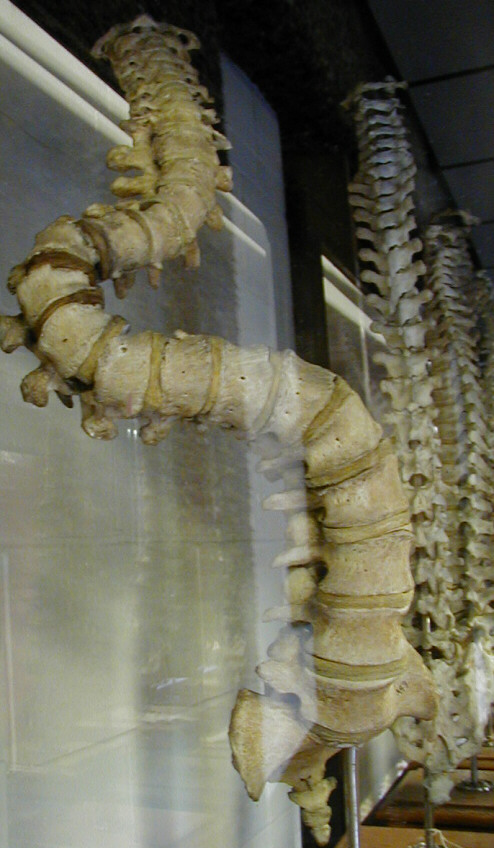


Researchers recognize several phases of spinal decay.
Normal curves and proper disc spacing allow normal function of the spine and nervous system.

Loss of normal curves and nervous system dysfunction result from uncorrected spinal trauma. Usually seen as the misalignment and malfunction of the spine.
Normal spinal motion, curves, and disc spacing are altered.
Because the body is so adaptable, this early phase can exist without the warning of pain or other symptoms.
If left uncorrected, the degeneration continues
Cost-effectiveness of Chiropractic
This section is maintained by Frank M. Painter, D.C.
Send all comments or additions to: [email protected]
In the treatment of musculoskeletal disorders, despite the fact that most studies have not properly factored in such patient characteristics as severity and chronicity and lack the complete assessment of all direct costs and most indirect costs, the bulk of articles reviewed demonstrate lower costs for chiropractic. 9 This pattern is consistently observed from the perspectives of workers' compensation studies, 10-15 databases from insurers, 16-18 or the analysis of a health economist employed by the provincial government of Ontario. 19-20 Other studies have suggested the opposite [that chiropractic services are more expensive than medical], 5,21,22 but these contain significant flaws 21 which have been refuted. 23
The cost advantages for chiropractic for matched conditions appear to be so dramatic that Pran Manga, the aforementioned Canadian health economist, has concluded that doubling the utilization of chiropractic services from 10% to 20% may realize savings as much as $770 million in direct costs and $3.8 billion in indirect costs.20 When iatrogenic effects [yet to be discussed] are factored in, the cost advantages of spinal manipulation as a treatment alternative become even more prominent. In one study, for instance, it was shown that for managing disc herniations, the cost of treatment failures following a medical course of treatment [chymopapain injections] averaged 300 British pounds per patient, while there were no such costs following spinal manipulation. 24 Imagine how failed back surgery might compare. Finally, in no cost studies to date have legal burdens been calculated, which one would expect should be heavily advantageous for chiropractic health management.
FROM: Testimony to the Department of Veterans Affairs' Chiropractic Advisory Committee; George B. McClelland, D.C., Foundation for Chiropractic Education and Research: March 25, 2003
Other Cost-Effectiveness Studies
Cost Comparison of Chiropractic and Medical Treatment of Common Musculoskeletal Disorders: A Review of the Literature After 1980
Topics in Clinical Chiropractic 1999; 6 (2): 57�68
A total of 5 prospective and 19 retrospective studies was identified. Twelve of the 24 studies were published since 1994. Sixteen of the 24 studies' average total costs favored chiropractic treatment.
10 Cost Per Case Comparison of Back Injury Claims of Chiropractic Versus Medical Management for Conditions With Identical Diagnostic Codes
J Occup Med 1991 (Aug); 33 (8): 847�852
This workers� compensation study conducted in Utah compared the cost of chiropractic care to the costs of medical care for conditions with identical diagnostic codes. The study indicated that costs were significantly higher for medical claims than for chiropractic claims. The sample consisted of 3062 claims or 40.6% of the 7551 estimated back injury claims from the 1986 Workers' Compensation Fund of Utah. For the total data set, cost for care was significantly more for medical claims, and compensation costs were 10-fold less for chiropractic claims.
11 Disabling Low Back Oregon Workers' Compensation Claims. Part I: Methodology and Clinical Categorization of Chiropractic and Medical Cases
J Manipulative Physiol Ther 1991 (Mar-Apr); 14 (3): 177�184
The two provider groups differed in the proportion of claimants who had physical factors contributing to low back compromise. DC claimants were less likely than MD claimants to have sought initial treatment in the emergency room, more likely to have a history of chronic, recurrent low back pain and more likely to have suffered exacerbation episodes. These differences suggest a greater level of chronicity among chiropractic claimants.
12 Disabling Low Back Oregon Workers' Compensation Claims. Part II: Time Loss
J Manipulative Physiol Ther 1991 (May); 14 (4): 231�239
for claimants with a history of chronic low back problems, the median time loss days for MD cases was 34.5 days, compared to 9 days for DC cases. It is suggested that chiropractors are better able to manage injured workers with a history of chronic low back problems and to return them more quickly to productive employment.
14 A Comparison of Chiropractic, Medical and Osteopathic Care for Work-related Sprains and Strains
J Manipulative Physiol Ther 1989 (Oct); 12 (5): 335�344
For those who received care from DCs (n = 266), the mean number of compensated days lost from work was at least 2.3 days less than for those who were treated by MDs (n = 494; p less than 0.025) and at least 3.8 days less than for those who were treated by DOs (n = 102; p less than 0.025). Consequently, much less money in employment compensation was paid, on the average, to those who saw DCs.
15 An Analysis of Florida Workers' Compensation Medical Claims for Back-related Injuries
Journal of the American Chiro Association 1988; 25 (7): 50�59
This study of 10,652 Florida Workers� Compensation cases was conducted by Steve Wolk, Ph.D. , and reported by the Foundation for Chiropractic Education and Research. It was concluded that �a claimant with a back-related injury, when initially treated by a chiropractor versus a medical doctor, is less likely to become temporarily disabled, or if disabled, remains disabled for a shorter period of time; and claimants treated by medical doctors were hospitalized at a much higher rate than claimants treated by chiropractors.� The analysis focused on the cost of treatment, frequency of compensable injuries (an injury which disables an individual for more than seven days, resulting in wage compensation benefits), and frequency of hospitalization for workers' compensation claim patient (end of reference).
16 A Comparison of the Cost of Chiropractors Versus Alternative Medical Practitioners
Richmond, VA: Virginia Chiropractic Association, 1992
A 1992 study conducted by L.G. Schifrin, Ph.D., provided an economic assessment of mandated health insurance coverage for chiropractic treatment within the Commonwealth of Virginia. As reported by the College of William and Mary, and the Medical College of Virginia, the study indicated that chiropractic provides therapeutic benefits at economical costs. The report also recommended that chiropractic be a widely available form of health care. This paper is unavailable through PubMed or the Mantis database.
17 Chiropractic and Medical Costs of Low Back Care
Med Care 1996 (Mar); 34 (3): 191�204
This study compares health insurance payments and patient utilization patterns for episodes of care for common lumbar and low back conditions treated by chiropractic and medical providers. Using 2 years of insurance claims data, this study examines 6,183 patients who had episodes with medical or chiropractic first-contact providers. Multiple regression analysis, to control for differences in patient, clinical, and insurance characteristics, indicates that total insurance payments were substantially greater for episodes with a medical first-contact provider.
18 Costs and Recurrences of Chiropractic and Medical Episodes of Low-back Care
J Manipulative Physiol Ther 1997 (Jan); 20 (1): 5�12
Total insurance payments within and across episodes were substantially greater for medically initiated episodes. Analysis of recurrent episodes as measures of patient outcomes indicated that chiropractic providers retain more patients for subsequent episodes, but that there is no significant difference in lapse time between episodes for chiropractic vs. medical providers. Chiropractic and medical patients were comparable on measures of severity; however, the chiropractic cohort included a greater proportion of chronic cases.
19 The Effectiveness and Cost-Effectiveness of Chiropractic Management of Low-Back Pain
Richmond Hill, Ontario: Kenilworth Publishing, 1993
A major study to assess the most appropriate use of available health care resources was reported in 1993. This was an outcomes study funded by the Ontario Ministry of Health. The study was conducted by three health economists led by University of Ottawa Professor Pran Manga, Ph.D. The report of the study is commonly called the Manga Report. The Manga Report overwhelmingly supported the efficacy, safety, scientific validity, and cost-effectiveness of chiropractic for low-back pain. Additionally, it found that higher patient satisfaction levels were associated with chiropractic care than with medical treatment alternatives. On the evidence, particularly the most scientifically valid clinical studies, spinal manipulation applied by chiropractors is shown to be more effective than alternative treatments for LBP. Many medical therapies are of questionable validity or are clearly inadequate.
20 Enhanced Chiropractic Coverage Under OHIP as a Means for Reducing Health Care Costs, Attaining Better Health Outcomes and Achieving Equitable Access to Health Services
Report to the Ontario Ministry of Health, 1998
Expenditure to improve access to chiropractic services, and the changed utilization patterns it produces, will lead to very substantial net savings in direct and indirect costs. Direct savings to Ontario's health care system may be as much as $770 million, will very likely be $548 million, and will be at least $380 million. The corresponding savings in indirect costs - made up of the short and long term costs of disability - are $3.775 billion, $1.849 billion and $1.255 billion.
21 Comparing the Costs Between Provider Types of Episodes of Back Pain Care
Spine 1995 (Jan 15); 20 (2): 221�227
There were 1020 episodes of back pain care made by 686 different persons and encompassing 8825 visits. Chiropractors and general practitioners were the primary providers for 40% and 26% of episodes, respectively. Chiropractors had a significantly greater mean number of visits per episode (10.4) than did other practitioners. Orthopedic physicians and "other" physicians were significantly more costly on a per visit basis. Orthopedists had the highest mean total cost per episode, and general practitioners the lowest.
23 [Letter to the editor regarding] Comparing the Costs Between Provider Types of Episodes of Back Pain Care
Spine 1995 (Dec); 20 (23): 2595�2596
Based on the proliferation of more recent studies that have selected (by means of provider codes) a patient population that is narrower, yet more homogeneous, I conclude that the burden of proof for the higher cost of chiropractic healthcare without hospital services remains on the authors of this article. There appears to be too many questions raised by this study that, if they remain unanswered, prevent it from becoming a major addition to the chiropractic literature.
24 Single-blind Randomised Controlled Trial of Chemonucleolysis and Manipulation in the Treatment of Symptomatic Lumbar Disc Herniation
Eur Spine J 2000 (Jun); 9 (3): 202�207
In this study it was shown that for managing disc herniations, the cost of treatment failures following a medical course of treatment [chymopapain injections] averaged 300 British pounds per patient, while there were no such costs following spinal manipulation.
State of Texas Workers' Compensation Study ~ 2003
In 2002, the Texas Chiropractic Association (TCA) commissioned an independent study to determine the use and effectiveness of chiropractic with regard to workers' compensation, the results of which were published in February. According to the report, Chiropractic Treatment of Workers' Compensation Claimants in the State of Texas, chiropractic care was associated with significantly lower costs and more rapid recovery in treating workers with low-back injuries. They found: Lower back and neck injuries accounted for 38 percent of all claims costs. Chiropractors treated about 30 percent of workers with lower back injuries, but were responsible for only 17.5 percent of the medical costs and 9.1 percent of the total costs. These findings were even more intertesting: The average claim for a worker with a low-back injury was $15,884. However, if a worker received at least 75 percent of his or her care from a chiropractor, the total cost per claimant decreased by nearly one-fourth to $12,202. If the chiropractor provided at least 90 percent of the care, the average cost declined by more than 50 percent, to $7,632.
University of Saskatchewan Study ~ 1985
In 1985 the University of Saskatchewan conducted a study of 283 patients �who had not responded to previous conservative or operative treatment� and who were initially classified as totally disabled. The study revealed that �81% ... became symptom free or achieved a state of mild intermittent pain with no work restrictions� after daily spinal manipulations were administered.
American Health Policy Report ~ 1992
A 1992 review of data from over 2,000,000 users of chiropractic care in the U.S., reported in the Journal of American Health Policy, stated that �chiropractic users tend to have substantially lower total health care costs,� and �chiropractic care reduces the use of both physician and hospital care.�
British Medical Journal ~ 1990
A study conducted by T.W. Meade, a medical doctor, and reported in the June 2, 1990, British Medical Journal concluded after two years of patient monitoring, �for patients with low-back pain in whom manipulation is not contraindicated, chiropractic almost certainly confers worthwhile, long-term benefit in comparison with hospital outpatient management.� More importantly, this article contradicts other articles which maintained that spinal adjusting (manipulation) was only effective for "acute" low back pain. This article found: The benefit is seen mainly in those with chronic or severe pain. Introducing chiropractic into NHS practice should be considered.
British Medical Journal ~ 1995
In the follow-up study to the Meade 1990 BMJ article mentioned above, (August 5, 1995 , British Medical Journal) the author states: At three years the results confirm the findings of an earlier report that when chiropractic or hospital therapists treat patients with low back pain as they would in day to day practice those treated by chiropractic derive more benefit and long term satisfaction than those treated by hospitals.
Washington HMO Study
In 1989, a survey administered by Daniel C. Cherkin, Ph.D., and Frederick A. MacCornack, Ph.D., concluded that patients receiving care from health maintenance organizations (HMOs) within the state of Washington were three times as likely to report satisfaction with care from chiropractors as they were with care from other physicians. The patients were also more likely to believe that their chiropractor was concerned about them.
Patient Disability Comparison
A 1992 article in the Journal of Family Practice reported a study by DC Cherkin, Ph.D., which compared patients of family physicians and of chiropractors. The article stated �the number of days of disability for patients seen by family physicians was significantly higher (mean 39.7) than for patients managed by chiropractors (mean 10.8).� A related editorial in the same issue referred to risks of complications from lumbar manipulation as being �very low.�
Stano Cost Comparison Study
A study by Miron Stano, Ph.D., reported in the June 1993 Journal of Manipulative and Physiological Therapeutics involved 395,641 patients with neuromusculoskeletal conditions. Results over a two-year period showed that patients who received chiropractic care incurred significantly lower health care costs than did patients treated solely by medical or osteopathic physicians.
Gallup Poll ~ 1991
A 1991 demographic poll conducted by the Gallup Organization revealed that 90% of chiropractic patients felt their treatment was effective; more than 80% were satisfied with that treatment; and nearly 75% felt most of their expectations had been met during their chiropractic visits.
Bone spurs and abnormal bony growths distort the shape and function of the vertebrae.
Recognized on x-ray views of the spine by visible bone spurs and rough edges of the vertebrae.
Soft tissues, such as discs and ligaments degenerate from the lack of normal joint movement.
Again, pain or other symptoms maynot be present.


After years of neglect, the improperly functioning spinal joints often fuse together.
A lifetime of neglect may cause the eventual fusion of the malfunctioning joints.
Atrophy, permanent nerve damage, and soft tissue degeneration are prevalent.
Reduced mobility and impaired nervous system function diminish one's quality of life
Why there are so much growth in chiropractic?
Several important influences have coincided to produce the expansion. First of all, there is a shift in models of health care. The dominant paradigm is moving away from a focus primarily on the treatment of diseases toward one that emphasizes improving function and quality of life. As another recent and informative report forecasting the changes in health care in the United States by the Institute for the Future notes,9 health care is moving away from a curative model to one that focuses on other important goals of health care including health promotion, health maintenance and functional restoration. This same document identifies consumer demand as a driving force in compelling traditional medicine to expand the breadth of its model to incorporate a broader scope of health care, stating, "Perhaps an obsession with disease has unintentionally relegated health to a position of secondary importance ... The view of health should be expanded to encompass mental, social, and spiritual well-being ... Led by health-conscious seniors and a generation of baby boomers, the medical establishment is confronting a mandate to move beyond the curative model to become engaged in preserving health and preventing illness and disease."
Other recent national surveys confirm the patient demand for wellness care. Astin,PhD, reported in the Journal of the American Medical Association10 that one of the most common reasons that 42% of American adults use alternative care is that "the treatment promotes health rather than just focusing on illness."
Chiropractic offers a model that focuses on the positive dimensions of health. As Coulter,PhD, reports:11 "The goal of chiropractic is correction of dysfunction with relief of pain, restoration of function and enhancement of well-being. The role of the chiropractor is health promotion. Chiropractic offers holistic, personalized, conservative care, using low risk procedures. The concern is for the whole person, not the limb or the case."
Click to learn more and read the rest of the report.
click the link below to enter the curriculum of Palmer College of Chiropractic:
D.C. Curriculum