Body Position
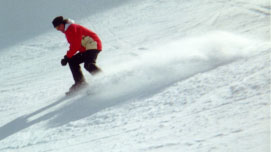
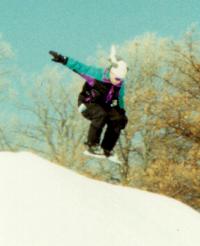
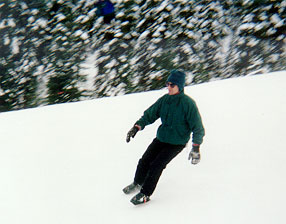
Feet should be shoulder width apart, with knees bent and flexible at all times. Your upper body should remain upright and centered over your hips. Keep your arms comfortable, but down low at your sides or parallel to the ground for balance.
Weight Distribution
Place your weight over the middle to back of the skates. For soft snow or powdery conditions, sit farther back. On harder packed snow, you can center your weight over your skates. By producing more speed, you will build momentum and it will be easier to make turns while maintaining your balance.
Step Two: Making Turns
Option A: Similar to skis and in-line skates, transfer your weight to the downhill skate to turn. Your body should be positioned into the direction of the turn you wish to make, putting the skate on its edge.
Option B: Lift both toes simultaneously and pivot your body in the direction you wish to turn while on your heels. Toes of skates should be literally off the snow surface with the heels remaining flat.
Step Three: Stopping
Keep your weight evenly distributed over both skates. Bend your knees and shift your weight, applying pressure to the uphill edges of the skates while turning parallel to the hill (hockey stop).
"Playing Dead"
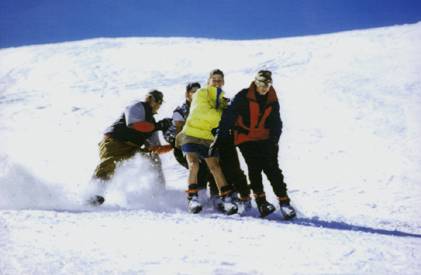
As you practice turning, you'll probably master another trick: Playing dead! Wiping out is half the fun of getting started. First laugh, then position skates across the hill, and push your body up using your arms. Keep knees bent until you are ready to stand. Redirect your skates down hill and resume skating.