Cover sheet
Title
Compulsory Community And Involuntary Outpatient Treatment For People With Severe Mental Disorders
Reviewers
Kisely S, Preston N, Campbell L
Dates
Date edited: 07/08/2003
Date of last substantive update: 25/07/2003
Date of last minor update: 22/05/2003
Date next stage expected 04/06/2004
Protocol first published: Draft only
Review first published: Draft only
Contact reviewer
Dr Steve R Kisely
Professor of Health Outcomes
Department of Psychiatry
Dalhousie University
9th floor, Abbie J Lane Building, Queen Elizabeth II Centre
5909 Veteran's Memorial Lane
HALIFAX
Nova Scotia CANADA
B3H 2E2
Telephone 1: +1 902 473 7356
Facsimile: +1 902 473 4887
E-mail: [email protected]
URL: http://geocities.yahoo.com/skisely
Contribution of reviewers
Steve Kisely - formulated the review question, initially developed the search strategy and wrote the first draft of the protocol.
Neil Preston - reviewed and provided comments on the search strategy and protocol.
Intramural sources of support
Health Outcomes Unit, Capital District Health Authority,
Halifax, CANADA
Dalhousie University, Halifax, CANADA
Fremantle Hospital, AUSTRALIA
University of Western Australia, AUSTRALIA
Extramural sources of support
None
What's new
Dates
Date review re-formatted: / /
Date new studies sought but none found: / /
Date new studies found but not yet included/excluded: / /
Date new studies found and included/excluded: / /
Date reviewers' conclusions section amended: / /
Date comment/criticism added: / /
Date response to comment/criticisms added: / /
Text of review
Synopsis
Abstract
Background
There is controversy as to whether compulsory community treatment for
psychiatric patients reduces health service use, or improves clinical outcome
and social functioning. Given the widespread use of such powers in North
America, the United Kingdom and Australasia, it is important to assess the
benefit and potential harms of this type of legislation
Objectives
To examine the clinical and cost effectiveness of compulsory community
treatment for those with severe mental illness, in terms of patient outcome or
health service use.
Search strategy
We searched the Cochrane Schizophrenia Group register to 2003, Science Citation
Index, references of all identified studies and contacted the first author of
each included study.
Selection criteria
All relevant randomised controlled clinical trials of compulsory community
treatment for those with severe mental illness.
Data collection & analysis
Studies were reliably selected, quality assessed and data extracted. Data were
excluded where more than 50% of participants in any group were lost to follow
up. For binary outcomes a fixed effects risk ratio (RR) and its 95% confidence
interval (CI) was calculated. Where possible, the weighted number needed to
treat/harm statistic (NNT/H), and its 95% confidence interval (CI), was also
calculated. For continuous outcomes, endpoint data were preferred to change
data. Non-skewed data from valid scales were synthesised using a weighted mean
difference (WMD). If statistical heterogeneity was found by Mantel-Haenszel
chi-square test, random effects models were used.
Main results
We identified nine papers, although eight of these reported different aspects
of the same RCT . All were of court-ordered treatment in the United Sates
(Outpatient Commitment (OPC)). We found little evidence for the effectiveness
of compulsory community treatment in any of the main outcome indices: health
service use, costs, patient outcomes, mental state, quality of life or
satisfaction. In the area of costs, there is no information at all, while in
the remainder it was not possible to establish any statistically significant
improvement in outcome for subjects on compulsory community treatment. The only
exception was in the area of criminal victimisation. In terms of numbers needed
to treat, it would take 100 OPC orders to prevent one readmission, 25 to
prevent one episode of homelessness and 500 to prevent one arrest. Even in the
case of victimisation where a statistically significant result was found, it
would take five OPCs to prevent one episode of victimisation (5.29
(95%CI=5.16-5.41))
Reviewers' conclusions
Compulsory community treatment does not reduce health service use, costs or
forensic contacts on the currently available data. Neither is there evidence
that it improves quality of life or satisfaction for patients or carers. It is
difficult to conceive of another group in society that would be subject to a
measure that curtails the freedom of 100 individuals to avoid one admission, or
of 500 to avoid one arrest. Community treatment orders may not be an effective
alternative to assertive community treatment programmes and we require further
studies to establish whether it is intensity of treatment or its compulsory
nature that may affect outcome. Evaluation of a wide range of outcomes should
be included if this type of legislation is introduced.
Background
Enforced treatment for those with severe mental disorders whilst they remain in the community is used many countries, including: Australia, New Zealand, Israel, the United Kingdom, and the United States (Wilk 1988, Torrey 1995, McIvor 1998; Kanter 1995). In the United States more than half the states have some form of compulsory community treatment (Torrey 1995), and in Australasia similar provisions exist in Victoria, Western Australia, New South Wales, and New Zealand (Torrey 1995, Dedman 1990, Mulvany 1993). Initiatives in the United Kingdom have included extended leave for patients leaving hospital and a 'supervision register' (Holloway 1996, Sensky 1991). A recent UK policy document 'Reforming the Mental Health Act' outlining proposed legislation contains provisions for compulsory treatment in the community, although there will still be no powers to give medication forcibly outside a clinical setting (Dept of Health 2000).
Supporters of this approach suggest that it is less restrictive to compulsorily treat someone in the community than to subject them to repeated hospital admissions (Pinfold 2001). They also argue that it is effective in bringing stability to the lives of people with severe mental illness (O'Reilly 2001). Opponents of compulsory community treatment fear treatment and support will be replaced by a greater emphasis on control, restraint and threat (Pinfold 2001). Compulsion may be used as an alternative to intensive case management or assertive community treatment, which may be all that is needed (Swartz 1995). Compulsory community treatment may also adversely effect the therapeutic alliance with patients and drive them away from services (Pinfold 2001), although the limited data to date do not suggest that this has happened (O'Reilly 2001).
The range of different interventions and ways of reporting frequency of use make it difficult to estimate how often compulsory community treatment is used. The situation is complicated by the fact that in some jurisdictions different forms of communist treatment such as extended release and involuntary outpatient treatment exist in parallel. The available information indicated that these interventions are used sparingly. Canadian and Australian studies of community treatment orders suggest a prevalence of 5 to 15 per 100,000 of the general population (O'Reilly 2000, Preston 2002). In the United States, involuntary outpatient treatment was used in approximately 3 per 100,000 of the general population, 9.8% of new outpatient admissions and 7.1% of continuing outpatients (Ridgely 2001). However, use of involuntary outpatient treatment does vary. Survey data from respondents in 13 states and the District of Columbia indicated they used it commonly or very commonly, while in a further 21 States, use was rare or very rare. Some of this variation may be explained the use of alterative provisions such as extended release (Torrey 1995).
Studies indicating limited but improved outcomes in terms of readmission to hospital, length of stay, and adherence to treatment have often not controlled for selection bias, variations in treatment, and differing criteria for compulsory treatment in the community (McIvor 1998). In South Carolina duration of psychosis was an important determining factor for compulsory treatment in the community (Schied-Cook 1987). In the United Kingdom, extended leave has been used as a proxy for compulsory treatment in the community and researchers have identified both recent dangerousness and non-adherence as determining factors for being placed on this provision (Sensky 1991). Community treatment orders in New South Wales are mostly used for unmarried male patients with schizophrenia (Vaughan 2000). Involuntary outpatient treatment in many American states does not include the power to give medication forcibly in a community setting, but community treatment orders in Australasia do. In addition, studies often do not include a control group to take into account the possibility that participants were recruited when particularly disturbed and that subsequent reductions in hospital use may be due to other factors. In one study with a control group of patients not subject to a compulsory treatment order, the control group showed a similar reduction in time in hospital (Bursten 1986).
In the United Kingdom the extended leave provision of the Mental Health Act has been evaluated as a proxy for the community treatment order, although it does not cover compulsory treatment in the community. One group of researchers found that extended leave improved adherence, reduced time spent in hospital, and reduced levels of dangerousness in comparison with a control group of patients of similar age, sex, and diagnosis (Sensky 1991). The introduction of supervised discharge meant that a patient could be conveyed to a designated location for medical treatment, occupation, or training but was still not obliged to accept treatment; this legislative measure has never been formally evaluated.
Even when studies have used controls, it is difficult to know whether to attribute the health gain to the order or to non-specific effects of increased contact with healthcare professionals (Torrey 1995, Geller 1998, Swartz 1995, Swartz 1999a). A research group found that although patients randomised to prolonged involuntary community treatment had reduced hospital readmissions and bed days, it was difficult to separate out how much of the improvement was due to compulsory treatment and how much to intensive community management (Swartz 1999). In the case of non-randomised designs, a further difficulty is ensuring that the control group is as severely ill as the group placed on a community treatment order (Vaughan 2000).
In summary, it remains unclear whether compulsory community treatment can improve patient outcome or reduce health service use. Given the widespread use of such powers in North America, Israel, the United Kingdom and Australasia, it is important to assess the benefit and potential harms of this type of legislation
Objectives
To examine the clinical and cost effectiveness of compulsory community
treatment for those with severe mental illness, in terms of patient outcome or
health service use.
Criteria for considering studies for this review
Types of studies
Whilst randomised studies remain the least biased method of evaluating effects
of all types of intervention, there are certain situations where conventional
randomised studies might be inappropriate, difficult or impossible to conduct (Gilbody 2002). For example, questions relating to
health policy and the organisation and delivery of care for those with serious
mental disorder might require the randomisation of clinical teams, hospitals,
geographical areas or even whole healthcare systems. Adapting the randomised
study to these situations involves the conduct of 'clustered randomised
trials'. There are specific issues regarding the appropriate conduct and analysis
of such studies, particularly the statistical implications of the similarity
between individuals in clusters (Gilbody 2002).
Where mental health policy - particularly legislative mental health policy - is
implemented at a national level, then randomisation within a country is very
difficult to achieve. Similarly, if clusters are so large (e.g. whole
healthcare systems) then it might be impossible on a practical level to
generate or recruit sufficient numbers of clusters to conduct a sufficiently
powered or well-balanced randomised trial. Non-randomised designs are used to
evaluate such interventions. The Cochrane Effective Practice and Organisational
Change (EPOC) group suggests that non-randomised controlled clinical trials
(CCTs), controlled before and after (CBA) studies and interrupted time series
analyses (ITS) should be considered in the absence of randomised evidence (Bero 1998). There is currently a Cochrane Non-Randomised
Studies Methods Group (NRSMG) that is seeking to publish guidelines on the use
of non-randomised data in Cochrane reviews (Bero 1998).
In the interim, non-randomised studies will only be included in reviews in
cases where randomised studies are impossible to conduct. The inclusion of
non-randomised data should be clearly justified within a review and in
collaboration with the reviewer's contact editor. The interpretation and
analysis of such studies will be conducted in collaboration with the Cochrane
EPOC group (Bero 1998). Meta-analysis and the mixing
of randomised and non-randomised evidence will not be attempted within this
review.
This review is restricted to randomised controlled trials (RCTs). A future review will consider controlled clinical trials (CCTs), controlled before and after studies (CBAs) and interrupted time series (ITS) designs.
Types of participants
We included adults with severe mental illnesses (mainly schizophrenia and schizophrenia-like
disorders; bipolar disorder; or depression with psychotic features), however
diagnosed, who were managed in a community setting. Substance abuse was not
considered to be a severe mental disorder in its own right, however studies
were eligible if they dealt with people with both diagnoses, that is those with
severe mental illness plus substance abuse.
Types of interventions
1. Compulsory Community Treatment
For an intervention to be accepted as compulsory community treatment it must be
described in the trial using the following terms: community treatment order,
involuntary outpatient treatment, involuntary outpatient commitment, extended
leave, extended release or supervised discharge.
Extended leave provisions or supervised discharge apply at the time of discharge from compulsory in-patient treatment. They are used in New Hampshire (Torrey 1995), Canada (Gray 2001) and Great Britain (Sensky 1991), and give mental health professionals the right to return patient to hospital against their wishes if they do not comply with treatment. Community treatment orders are used in Canada (Gray 2001) and Australia (Vaughan 2000, ) and give mental health professionals the right to place an individual on an order, whether they are in hospital or not. This is in contrast to extended leave or supervised discharge, which only apply to patients who are being discharged from inpatient care (Gray 2001). Community treatment orders are designed to divert people from possibly having to be admitted as inpatients. In addition, unlike leave, the individual may not have to meet the same criteria for treatment as an inpatient (Gray 2001). In Australia, it can include the power to force medication in the community (Preston 2002). Involuntary outpatient treatment or commitment is the preferred term in the United States and covers court-ordered community treatment (O'Reilly 2001). In this case, a judge, not a health care professional decides on the appropriateness of the order.
2. Standard care
The care that a person would normally receive had they not been included in the
research trial.
Types of outcome measures
The principle outcome measures were classified under two categories: health
service outcomes and patient level outcomes (dichotomous outcomes are at the
top of each list)
Health service outcomes
1 Health service contact and utilisation
1.1 Remaining in contact with psychiatric services
1.2 Loss to follow up
1.3 Admission to hospital
1.4 Time to seeing psychiatrist
1.5 Mean days spent in hospital per month
2. Costs
2.1 Direct costs
2.2 Indirect costs
2.3 Total costs
Patient level outcomes
3. Social functioning
3.1 General
3.2 Specific - imprisonment, police contact and arrests
3.3 Specific - employment
3.4 Specific - accommodation status
4. Mental state
4.1 General
4.2 Specific - psychopathology
5. Quality of life
4.1 General
4.2 Self esteem
6. Satisfaction
6.1 Number of needs for care
6.2 Patient satisfaction
6.3 Carer satisfaction
7. Death (suicides, all causes).
Highly specific outcomes (such as, for example, 'sense of safety') were not reported because multiple testing of sub-components of outcome scales carries a risk of Type I errors (finding a difference when none was present). Outcomes relating to the process of the interventions themselves, such as number of out-patient visits, were not reported.
Outcomes were divided into short-term (less than three months) medium term (3-12 months) and long term (more than one year) following the introduction of compulsory community treatment.
Search strategy for identification of studies
See: Cochrane Schizophrenia Group search strategy
The following strategies were used, without language restriction.
1. Electronic searching
1.1 Cochrane Schizophrenia Group's Register (May 2003) was searched using the
phrase:
[((community* AND treatment* AND order*) OR (involuntary* AND outpatient*
AND treatment*) OR (involuntary* AND outpatient* AND commitment*) OR
(extended* AND leave*) in Title or (*community* AND *treatment* AND *order*) OR
(*involuntary* AND *outpatient* AND *treatment*) OR (*involuntary* AND
*outpatient* AND *commitment*) OR (*extended* AND *leave*) or (*supervised*
AND *discharge*) in title, abstract, index terms of REFERENCE] or
Involuntary Commitment in intervention of STUDY)]
The Schizophrenia Groups trials register is based on regular searches of BIOSIS
Inside; CENTRAL; CINAHL; EMBASE; MEDLINE and PsycINFO; the hand searching of
relevant journals and conference proceedings, and searches of several key grey
literature sources. A full description is given in the Group's module
1.2. Cochrane Library (Issue 2 2003)
[(exp Commitment of Mentally Ill/ or (community NEAR treatment NEAR order)
or (involuntary NEAR outpatient NEAR treatment) or (involuntary NEAR
outpatient NEAR commitment) or (extended NEAR leave) or (supervised NEAR
discharge)]
1.3 BIOSIS (1985 to July 2003)
[(Commitment AND Mentally AND Ill or (extended AND leave) or (community AND
treatment AND order) or (involuntary AND outpatient AND treatment) or
(involuntary AND outpatient AND commitment) or (extended AND leave) or
(supervised AND discharge) or (mandatory AND programs))]
1. 4 CINAHL (1982 to July 2003)
The Cochrane Schizophrenia Group's phrase for randomised controlled Trials
was used and combined with:
[(exp Involuntary Commitment/ or exp Hospitalization/ or (extended adj1
leave) or (community adj2 treatment adj2 order) or exp "NONCOMPLIANCE
(NANDA)"/ or (involuntary adj3 outpatient adj3 treatment) or (involuntary
adj3 outpatient adj3 commitment) or (supervised adj2 discharge) or
(mandatory adj3 programs) or (extended adj3 leave))
1.5 EMBASE 1980 to July 2003
The Cochrane Schizophrenia Group's phrase for randomised controlled Trials
was used and combined with:
[(exp Commitment of Mentally Ill/ or (extended adj1 leave) or (community
adj2 treatment adj2 order) or (involuntary adj3 outpatient adj3 treatment)
or (involuntary adj3 outpatient adj3 commitment) or (extended adj3 leave) or
(supervised adj2 discharge) or (mandatory adj3 programs))
1.6. MEDLINE (1966 to July 2003)
The Cochrane Schizophrenia Group's phrase for randomised controlled Trials
was used and combined with:
[(exp Commitment of Mentally Ill/ or jurisprudence/ or exp mandatory
programs/ or (extended adj1 leave) or (community adj2 treatment adj2 order)
or (involuntary adj3 outpatient adj3 treatment) or (involuntary adj3
outpatient adj3 commitment) or (extended adj leave) or (extended adj3 leave)
or (supervised adj2 discharge))
1.7. PSYCINFO 1872 TO July 2003
The Cochrane Schizophrenia Group's phrase for randomised controlled Trials
was used and combined with:
[(exp outpatient commitment/ or exp Legal Processes/ or exp "Commitment
(Psychiatric)"/ or exp Psychiatric Hospitalization/ or exp Laws/ or exp
Involuntary Treatment/ or (community adj2 treatment adj2 order) or
(involuntary adj3 outpatient adj3 treatment) or (involuntary adj3 outpatient
adj3 commitment) or (extended adj3 leave) or (supervised adj2 discharge) or
(mandatory adj3 programs))]
1.8 SCISEARCH - Science Citation Index
Each of the included studies was sought as a citation on the SCISEARCH
database. Reports of articles that had cited these studies were inspected in
order to identify further trials.
1.9 Google - Internet search engine
We searched the Internet with a simple search strategy to identify any relevant
publications using the following terms: community treatment order, involuntary
outpatient treatment, involuntary outpatient commitment, extended leave,
extended release or supervised discharge.
2. Reference searching
The references of all identified studies (including those rejected from the
review) were also inspected for more studies.
3. Personal contact
The first author of each included study and known experts in the field were
contacted for information regarding unpublished trials and extra data on the
published trials. The principle investigator of the two groups who conducted
RCTs in this area kindly confirmed that we had all the relevant papers.
Methods of the review
1. Selection of trials
Two reviewers (SK, LAC) independently inspected the citations identified from
the search. Potentially relevant abstracts were identified and full papers
ordered and reassessed for inclusion and methodological quality. Any
disagreement was discussed and reported. Where the two reviewers disagreed
about the inclusion of a study, disagreements were resolved by consensus of
opinion, and a third reviewer (NP) consulted if they could not be resolved.
Where resolution was not possible the author was contacted to obtain more
information and clarification. In order to prevent any bias, we printed out a
list of all titles and abstracts excluding the author's names, institutions,
and journal titles. The article was rejected if the title and abstract
contained sufficient information to determine that the article did not meet the
inclusion criteria. A record of all rejected papers and the reasons for
rejection was kept.
2. Assessment of quality
Trials were allocated to three quality categories, as described in the Cochrane
Collaboration Handbook (Clarke 2002) by each
reviewer, again, working independently. When disputes arose as to which
category a trial was allocated resolution was attempted by discussion. When
this was not possible, and further information was necessary, data were not
entered into the analyses and the study was allocated to the list of those
awaiting assessment. All non-randomised studies were retained for inclusion in
the companion review to the current review.
3. Data management
3.1 Data extraction
SK and NP independently undertook data extraction. Any disagreement was
discussed, the decisions documented and, where necessary, the authors of the
studies contacted to help resolve the issue.
3.2 Losses to follow up, and intention to treat analysis
The paper should give an adequate description of the loss of its participants
in terms of the number of withdrawals, dropouts, and protocol deviations. Where
more than 35% of those originally randomised have been lost to follow-up, the
data were not presented in this review. We performed a sensitivy analysis on
whether studies used intention-to-treat analysis, and for adequate descriptions
of reasons for dropout.
4. Data analysis
4.1 Binary data
For binary outcomes a standard estimation of the risk ratio (RR) and its 95%
confidence interval (CI) was calculated. The number needed to treat statistic
(NNT) was also calculated. If heterogeneity was found (see section 5), then a
decision was made about whether a quantitative synthesis (meta-analysis) was
the appropriate method of summarising this body of research and a random
effects model was used.
4.2 Continuous data
4.2.1 Skewed data: continuous data on clinical and social outcomes are often
not normally distributed. To avoid the pitfall of applying parametric tests to
non-parametric data the following standards were applied to all data before
inclusion: (a) standard deviations and means were reported in the paper or were
obtainable from the authors; (b) when a scale started from a finite number
(such as zero), the standard deviation, when multiplied by two, was less than
the mean (as otherwise the mean was unlikely to be an appropriate measure of
the centre of the distribution - Altman 1996).
Endpoint scores on scales often have a finite start and end point and this rule
can be applied to them.
4.2.2 Summary statistic: for continuous outcomes a weighted mean difference (WMD) between groups was estimated. Again, if heterogeneity was found (see section 5), then a decision was made about whether a quantitative synthesis (meta-analysis) was the appropriate method of summarising this body of research and a random effects model was used.
4.2.3 Valid scales: continuous data from rating scales were included only if the measuring instrument had been described in a peer-reviewed journal and the instrument was either a self report or completed by an independent rater or relative (not the therapist).
4.2.4 Endpoint versus change data: where possible endpoint data were presented and if both endpoint and change data were available for the same outcomes then only the former were reported in this review.
4.2.5 Cluster trials: studies increasingly employ 'cluster randomisation' (such as randomisation by clinician or practice) but analysis and pooling of clustered data poses problems: Firstly, authors often fail to account for intra class correlation in clustered studies, leading to a 'unit of analysis' error (Divine 1992) - whereby p values are spuriously low, confidence intervals unduly narrow and statistical significance overestimated - causing type I errors (Bland 1997, Guilford 1999). Where data were presented corrected by a design effect (see below) data were pooled with non-cluster studies.
Where data are reported as if from a non-cluster randomised study, and the analyses were based on the numbers of individuals, with no account taken of the clustering effect, the reviewers sought statistical advice from the MRC Biostatistics Unit, Cambridge, UK. Dr Julian Higgins advised that the binary data as presented in the report should be divided by a 'design effect' and that this was calculated using the mean number of families in the groups (m) and the intraclass correlation co-efficent (ICC) [Design effect = 1+(m-1)*ICC]. The reviewers tried to contact the authors of the study for the ICC but have had no response so assumed this to be 0.1 (Ukoumunne 1999).
Where clustering was not accounted for in primary studies, we presented continuous data in a table, with an (*) symbol - to indicate the presence of a probable unit of analysis error. Subsequent versions of this review will seek to contact first authors of studies to seek intra-class correlation co-efficients of their clustered data and to adjust for this using accepted methods (Guilford 1999).
5. Test for heterogeneity
A Chi-square test was used, as well as visual inspection of graphs, to
investigate the possibility of heterogeneity. A significance level less than
0.10 was interpreted as evidence of heterogeneity. If heterogeneity was found
then a decision was made about whether studies were sufficiently similar in
terms of their participants, interventions and outcomes to justify 'pooling'.
If we felt pooling to be justified, data were re-analysed using a random
effects model to see if this made a substantial difference. If it did, the
studies responsible for heterogeneity were not added to the main body of
homogeneous trials, but summated and presented separately and reasons for
heterogeneity investigated.
6. Addressing publication bias
In our protocol we stated that data from all included studies would be entered
into a funnel graph (trial effect against trial size) in an attempt to
investigate the likelihood of overt publication bias (Egger
1997). Because there were never more than two studies for each outcome, we
were unable to address publication bias given the small number of studies we
identified.
7. Sensitivity analyses
In our protocol we also stated that we would investigate potential sources of
heterogeneity including: i) different variations of types of intervention (e.g.
community treatment orders, involuntary outpatient treatment, involuntary
outpatient commitment or supervised discharge), and ii) variations in
methodological quality such as intention-to-treat analysis adequate descriptions
of reasons for dropout (high versus low methodological quality). Because there
were never more than two studies for each outcome, and all were of court
-ordered compulsory community treatment , we could not undertake sensitivity
analyses as described in our protocol for type of intervention or quality of
study.
8. General
Where possible, reviewers entered data in such a way that the area to the left
of the line of no effect indicated a favourable outcome for compulsory
treatment.
Description of studies
See Tables of Excluded Studies and Included studies.
Excluded studies
36 studies were considered for inclusion. Of these, 26 studies were excluded.
Seven were reviews that did not contain primary data or were not intervention
studies. Of the 19 intervention studies that were excluded, 7 did not have any
control group. The remaining 12 were not randomised controlled trials. These 12
reported the results of a wide range of interventions including extended leave
provisions or supervised discharge (Sensky 1991),
community treatment orders (Vaughan 2000; Preston 2002) and court ordered outpatient commitment Geller 1998; Greeman 1985;
Hiday 1987; Hiday 1989). A
further study was excluded as it reported outcomes relating to the outpatient
commitment namely the number of out-patient visits for medication review,
counselling and case management (Wagner 2003). One
study is awaiting assessment (Steadman 1998a),
although it appears to report the same data as another paper of the same study
(Steadman 2001)
Included studies
Seven relevant papers reporting the results of randomised controlled trials
(RCTs) were identified.
Interventions and Analysis
Although nine papers were identified, eight of these reported different aspects
of the same RCT of Outpatient Commitment (OPC) in North Carolina. The ninth
paper reported the results of a second trial of Outpatient Commitment (OPC) in
New York State (Steadman 2001). There were
therefore no RCTs of interventions other than court ordered compulsory
treatment. Both studies were restricted to patients who were being discharged
from hospital into the community. The provisions of outpatient commitment were
similar in both states. In addition, the control groups in both studies
received case management and outpatient contact as clinically indicated.
Although both studies reported differences in outcomes at 11 to 12 month
follow-up, the North Carolina papers also included:
1) A non-random post hoc analysis of the intervention group based on duration
of involuntary outpatient commitment
2) Follow-up of an additional non-randomised group of patients with a recent
history of violence who were placed on OPC.
Follow-up periods
All papers reported similar follow-up periods of up to 12 moth follow-up. Only
the North Carolina papers reported the results of intermediate periods of
follow-up at 4 and eight months.
Outcome measures
Outcome measures that were common to both the North Carolina and New York
studies were readmission rates, compliance with medication, the presence of
forensic history and homelessness. The New York study reported the results of
standardised assessments of quality of life and psychiatric symptoms but did
not include standard deviations. These have been requested from the authors.
The North Carolina study reported outpatient use and criminal victimisation.
Although we stated in the protocol that we would look at mortality rates, cost
effectiveness and satisfaction of patients or carers, none of the papers we
identifies reported on these measures.
Methodological quality of included studies
1. The concealment of randomisation:
A - indicates adequate concealment
B - indicates uncertainty about whether allocation was adequately concealed
C - indicates the allocation was definitely not adequately concealed
D - indicates the score was not assigned
As regards concealment of the randomisation method, all trials were rated B.
2. The description of the randomisation method:
A - correct randomised method described
B - randomised method described but incorrect (e.g. every alternate patient
given the control treatment)
C - randomised method not described
A correct randomisation method was described in the New York study. In the remainder, a description of the randomisation method was not provided
3. Control of selection bias after treatment assignment:
A - intention to treat analysis
B - analysis by treatment received only
All papers controlled for selection bias by using an intention to treat analysis.
4. Blinding - the quality of blinding would be rated according to the
following scale:
A - blinding of outcome assessor and the participant
B - blinding of outcome assessor only
C - blinding not done
Both the North Carolina and New York studies used self-report measures for at
least some of the outcomes, which are effectively self-blinding. In the case of
other assessments both studies were rated C.
In the protocol for this study we stated we would group outcomes into short term (within 12 weeks of the start of therapy), medium term (between 13 to 24 weeks after the beginning of therapy), and long-term (more than 24 weeks after the start of therapy). As only the North Carolina papers re[ported the results of intermediate periods of follow-up at one and five months, we have only used outcomes at 11 to 12 month follow-up.
Data reporting
Eight of the studies included in this review reported different aspects of the same RCT of Outpatient Commitment (OPC) in North Carolina. Different papers reported various aspects of the study with no-one paper giving the full picture of numbers of subjects screened, discharged to another facility or home before randomisation, deemed unsuitable by the treating team, not meeting exclusion criteria or lost to follow-up. In addition RCT from North Carolina was supplemented by follow-up of an additional non-randomised group of patients with a recent history of violence who were also placed on OPC. It was sometimes difficult to disentangle the results of the RCT from the non-ramdomised study. In one paper from the North Carolina study (Swartz 2002), data from randomised and non-randomised studies were not presented separately. Another study only reported percentages rather than absolute numbers of follow-up subjects ( Swartz 1999b). We contacted the authors of the study who kindly confirmed that at follow-up there were 114 controls, 102 OPC subjects and 46 non-randomised subjects.
Results
Although seven papers were identified, six of these reported different aspects of the same RCT of Outpatient Commitment (OPC) in North Carolina. This meant that for each outcome of interest, we were only able to combine the results of the New York study (Steadman 2001) with one of the series of papers from the North Carolina study. Relevant data were entered into the REVMAN analysis programme
Health service outcomes
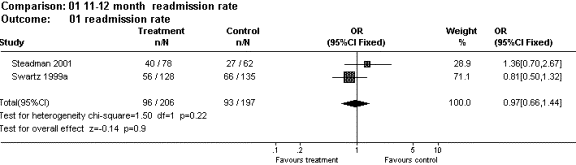
There was no statistical difference in the readmission rate between OPC and control groups at 11-12 month follow-up . This finding was not sensitive to the type of model used, with the fixed effect model estimating the relative risk to be 0.99 (95% CI=0.8-1.2), and the random effects model 1.00 (95% CI=0.8-1.3).
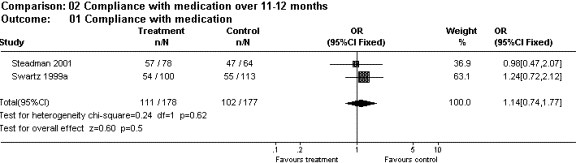
Similarly, there was no statistical difference in compliance with medication between the OPC and control groups over the 11-12 months of follow-up . This finding was not sensitive to the type of model used, with the fixed effect model estimating the relative risk to be 1.05 (95% CI=0.9-1.2), and the random effects model 1.04 (95% CI=0.9-1.2).
Patient level outcomes
General
Only the New York study measures social functioning using mean scores from
standardised instruments although standard deviations were not included. There
were no statistically significant differences between the OPC and control
groups on the Global Assessment of Functioning at 11 month follow-up.
Forensic
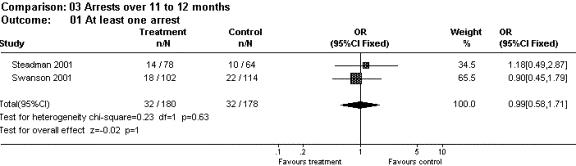
There was no statistical difference in the overall arrest rate between OPC and
control groups at 11-12 month follow-up . This finding was not sensitive to the
type of model used, with the fixed effect model estimating the relative risk to
be 1.00 (95% CI=0.6-1.6), and the random effects model 0.99 (95% CI=0.6-1.6).
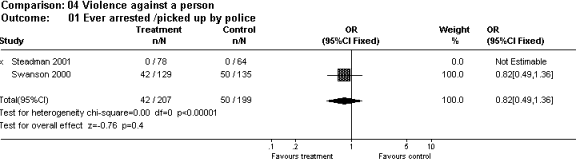
The same was true for arrests or being picked up by the police for violence
against a person: the relative risk using either model was 0.88
(95%CI=0.6-1.22). However, we could not include the New York study in the
analysis of violence against others as no arrests occurred in either the OPC or
control group.
Homelessness
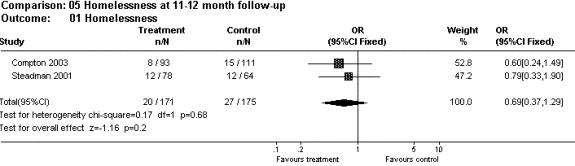
There was no statistical difference in being homelessness between OPC and
control groups over the follow-up period of 11 to 12 months . This finding was
not sensitive to the type of model used, with both models estimating the
relative risk to be 0.73 (95% CI=0.4-1.2). However, the North Carolina study
had a high attrition rate with only 62% (n=204) of the original 331 subjects in
the randomised trial being re-interviewed at 12 month follow-up.
Mental state
Only the New York study measured psychiatric symptoms using mean scores from standardised instruments although standard deviations were not included. There were no statistically significant differences between the OPC and control groups on the Positive and Negative Symptom Scale at 11 month follow-up.
Quality of life.
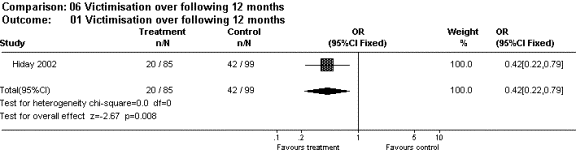
Only the New York study measured quality of life using mean scores from standardised instruments, although standard deviations were not included. There were no statistically significant differences between the OPC and control groups on the Lehman Brief Quality of Life Interview at 11 month follow-up. One of the studies from North Carolina reported the results of an index of self-reported criminal victimisation corroborated by information from case managers and other informants (Hiday 2002). This included whether subjects had been a victim once or more of either violent or non-violent crime. Subjects on OPC were significantly less likely to have been victimised over the 12 month follow-up than controls (RR=0.56 (95%CI=0.3-0.9)).
Perceived coercion
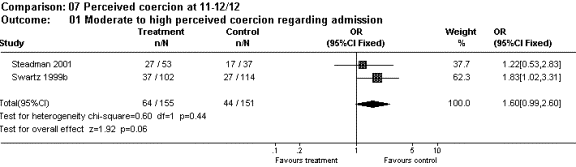
Although both the New York and North Carolina studies perceived coercion reported as measured by the MacArthur Modified Admission Experience survey (MAES), different versions and subscales were used. In general, the New York study reported no significant differences in coercion as regarding admission, medication or treatment between OPC and control groups. By contrast, the two reports of the North Carolina study did report that perceived coercion was significantly higher in the OPC subjects. It should be noted that in one paper from the North Carolina study (Swartz 2002), data from randomised and non-randomised studies were not presented separately. The other only reported percentages rather than absolute numbers of follow-up subjects ( Swartz 1999b). We contacted the authors of the study who kindly confirmed that at follow-up there were 114 controls, 102 OPC subjects and 46 non-randomised subjects. It was only possible to analyse quantitatively the results of the 5-item version of the MacArthur Modified Admission Experience survey (MAES) covering outpatient treatment. Subjects on OPC were more likely to report coercion at 12 month follow-up than controls, this result only just failing to reach statistical significance (relative risk of 1.6 ( 95%CI=1.00-2.6) using either the fixed effect or random effects model) .
Numbers needed to treat.
We calculated numbers needed to treat (NNT), including 95% confidence interval, using the methodology of Cook (Cook 1995). We only calculated 95% confidence intervals for NNT when the relative risk for the result was significant (Mulrow 1994). In terms of numbers needed to treat, it would take 100 OPC orders to prevent one readmission, 25 to prevent one episode of homelessness and 500 to prevent one arrest. Even in the case of victimisation, where a statistically significant result was found, it would take five OPCs to prevent one episode of victimisation (5.29 (95%CI=5.16-5.41))
Additional analyses
All the papers from the North Carolina study reported the results of a non-random post hoc analysis of the intervention group based on duration of involuntary outpatient treatment . In two, this was supplement with a follow-up of an additional non-randomised group of patients with a recent history of violence who were placed on CCT (Swartz 2001a; Hiday 2002). These suggested that OPC of greater than 180 days duration was associated with improved outcomes in terms of readmission rate, compliance with medication, homelessness and forensic history. However, such analyses are subject to bias and confounding that randomised trials are designed to minimise (Hotopf 1999). For instance, analysis of subjects who have been not randomly assigned to OPC groups of less than, and more than, 180 days may reflect a bias where OPC was selectively extended when it seemed to be helping the patient (Szmukler 2001).
Heterogeneity
All tests for heterogeneity were statistically non-significant at the p < or = 0.1 level and there was no difference in the results using the fixed effect or random effects models.
Sensitivity analyses & publication bias
Because there were never more than two studies for each outcome, and all were of court -ordered compulsory community treatment, we could not undertake sensitivity analyses as described in our protocol for type of intervention (e.g. community treatment orders, involuntary outpatient treatment, involuntary outpatient commitment or supervised discharge) or quality of study. Similarly, we were unable to address publication bias given the small number of studies we identified. All studies had an attrition rate of less than 35% and contained at least some data that used intention to treat analysis.
Discussion
In spite of the widespread use of compulsory community treatment and the continued controversy as to its effectiveness, we were struck by the limited number of studies that have been conducted in this area. We have therefore attempted to draw modest conclusions, based on available evidence, and to highlight areas requiring further study, rather than draw conclusions that may not be based on evidence of high quality.
This review revealed little evidence for the effectiveness of compulsory community treatment in any of the main outcome indices: health service use, costs, patient outcomes, mental state, quality of life or satisfaction. In the area of costs, there is no information at all, while in the remainder it has not been possible to establish a statistically significant improvement in outcome. We were surprised by the lack of data on psychosocial outcome as measured by standardised instruments. Although seven papers were identified these represented only two RCTs, and both were of court-ordered outpatient commitment in the United States. Problems included had small numbers of participants and questions concerning methodological quality. This illustrates the difficult task of using RCTs to study the effect of such legislation.
In the case of the North Carolina study, different papers reported various aspects of the study such as numbers of subjects screened, discharged before randomisation, deemed unsuitable by the treating team, not meeting exclusion criteria or lost to follow-up. In addition, the RCT from North Carolina was supplemented by follow-up of an additional non-randomised group of patients with a recent history of violence who were also placed on OPC. It was sometimes difficult to separate the results of the RCT from the non-randomised study..
In the case of the New York study (Steadman 2001), there was a relatively small number of subjects and the suggestion that members of the control group and their case managers thought that they were actually on OPC (NASMHPD 2001). These factors would minimise any effect of the intervention.
There are also considerable difficulties in undertaking randomised controlled trials in this area. One of these is selection bias as patients with a history of violence were explicitly excluded from both RCTs. This limits their applicability as recent dangerousness, particularly violence against others, is often the reason for compulsory treatment in hospital or the community (Lansing 1997; Sensky 1991). There is also a risk of bias when outcome data are not assessed blind to group status and the results of non-randomised subjects or post hoc analyses are included in papers.
Proponents of compulsory community treatment argue that it is less coercive than the alternatives of compulsory treatment to hospital or imprisonment (Pinfold 2001). However, our findings suggest that compulsory community treatment remains an unproven way of reducing either. It may also have harmful effects. In two papers from North Carolina, perceived coercion was significantly higher in the OPC group, although these findings must be treated with caution given methodological problems with both papers and the non-significant result from the New York study. On the other hand, higher perceived coercion in the OPC group was one of only two findings in this meta-analysis to reach, or almost reach, statistical significance. This may have implications for the subsequent therapeutic alliance between patients and mental health services, in spite of claims to the contrary (O'Reilly 2001).
It could be argued that compulsory community treatment arises from, and propagates, the erroneous belief that people with mental illness are somehow more dangerous than the rest of society (Steadman 1998b). No other group would be subject to a measure that curtails the freedom of 100 individuals to avoid one admission, or of 500 to avoid one arrest. Even where changes in outcome have been shown such as decreased criminal victimisation (Hiday 2002), we still don't know whether these are due to the legislative framework, or greater intensity of contact.(McIvor 1998; McIvor 2001)
Reviewers' conclusions
Implications for practice
There is no evidence to support the claims made for compulsory community treatment that make it so attractive for legislators. It does not reduce health service use, costs or forensic contacts. Neither is there evidence that it improves quality of life or satisfaction for patients or carers. Nevertheless, governments in jurisdictions such as Nova Scotia and Great Britain are actively considering similar legislation. In Britain this will increase the circumstances in which someone might be assessed and subjected to compulsory treatment and reduce the opportunities for discharge. It will be particularly difficult to be discharged from a community as opposed to inpatient treatment order. (Moncrieff). There are several dangers to this. Aside from the effect on individual liberties, such initiatives give the impression that legislators are addressing the needs of patients and carers while doing very little at all. Legislation in this area may detract from the introduction of interventions that are of benefit to individuals with severe mental disorder such as Assertive Community Treatment (Marshall 2003a), but which are more expensive than legislative solutions to the problem.
Clinicians, patients and carers should question the rationale for compulsory community treatment and advocate more effective treatments. Health service planners who wish to reduce hospital admissions should consider alternative such as Assertive Community Treatment. (Marshall 2003b)
Implications for research
In spite of the widespread use of compulsory community treatment it is remarkable that the vast majority of research had been of court-ordered community treatment (outpatient commitment) in the United States. There are much less data, and no RCTs, of other forms of compulsory community treatment. Further research into the effectiveness of compulsory community treatment. We were also surprised by the lack of data on psychosocial outcome as measured by standardised instruments. Another interesting finding was the absence of any work from outside the English-speaking world even though our literature search was not restricted to publications in English. We don't know whether this is due to publication bias or because such legislation is either absent or accepted without controversy
We require further studies to establish whether it is intensity of treatment or its compulsory nature that may affect outcome. Further research may also determine whether there are particular types of patient or legislative framework that give the best outcomes. Studies should use well-validated instruments to measure outcome, and should also collect and report categorical and 'count' data, such as days in hospital. Data should be in a form that can easily be incorporated into a systematic review with means and standard deviations (or standard errors) of all continuous outcome variables.
Given the difficulties of conducting RCTs in this area, it has been argued that further studies using this methodology may not be feasible (Bindman 2002). The analysis of routine administrative datasets may be an alterative strategy less subject to bias. Use of epidemiological sampling frames that cover all patients placed on compulsory community treatment helps minimise selection or follow-up bias (Preston 2002). In particular, they allow the inclusion of subjects with a history of violence who were explicitly excluded from both RCTs. The difficulty of such studies is the identification of suitable controls and quasi-experimental designs comparing subjects from jurisdictions with similar health systems but where one allows compulsory community treatment and the other does not, may be an answer. We plan a further review to consider controlled clinical trials (CCTs), controlled before and after studies (CBAs) and interrupted time series (ITS) designs using clinical or epidemiological data.
In addition to quantitative research, qualitative techniques may give additional insights into the effect of compulsory community treatment on patients, carers and health care professionals (O'Reilly 2001). We may also need to consider the place of compulsory community treatment in the range of coercive measures used to improve compliance with treatment, and look at additional outcomes such as risk reduction (Bindman 2002).
If governments continue to introduce this type of legislation, without further evidence for effectiveness, some evaluation of outcome using some, or all, of these strategies should at least be included.
Acknowledgements
SK and LAC are employed by Dalhousie University and the Health Outcomes Unit of Capital District Health Authority, Halifax, Canada
Potential conflict of interest
Nil
Characteristics of included studies
|
Study |
Methods |
Participants |
Interventions |
Outcomes |
Notes |
Allocation concealment |
|
Compton 2003 |
One of the eight papers reporting the North Carolina RCT. |
See Swartz 1999a except that follow-up data were collected on only 77% of the sample (n=204). |
See Swartz 1999a |
Self reported homelessness corroborated by family and case
manager over 12 month period defined as: |
One of the eight papers reporting the North Carolina RCT.
There was no statistical difference between the OPC and control groups in
terms of homelessness events at any f/up period (4, 8 and 12 months). |
B |
|
Hiday 2002 |
One of the eight papers reporting the North Carolina RCT. |
See Swartz 1999a. |
See Swartz 1999a |
Self-reported criminal victimisation as measured by
responses to |
One of the eight papers reporting the North Carolina RCT. OPC subjects significantly less likely to have had any criminal victimisation than controls (23.5% v 42.4%) |
B |
|
Steadman 2001 |
The New York RCT |
Inclusion criteria: |
'Enhanced service package' with intensive outpatient commitment including involuntary medication, but only for those patients found by the court to lack the capacity to give informed consent (n=39)Control group: Enhanced service package alone. Enhanced service package included inpatient assessment, a comprehensive discharge treatment plan in which patients participated, case mx and oversight by OPC co-ordinating plan. |
Number of hospital admissions and lengths of stay from
routine data, number of arrests and most serious charge from Criminal Justice
Services in subsequent 11/12 |
The New York RCT. There was no statistical difference
between the OPC and control groups in number of admissions or bed-days.
However both groups showed a significantly lower admission rate (from 87% to
54% for OPC and from 80% to 42% for controls). Study was restricted to
patients discharged from hospital not those already living in the community.
There was a higher prevalence of dual diagnosis in the OPC group. Patients
and staff were unclear as to the difference between the two study groups.
There was a high attrition rate particularly for the f/up self-report
assessments of medication compliance, quality of life, psychiatric symptoms,
perceived coercion and homelessness. |
B |
|
Swanson 2000 |
One of the eight papers reporting the North Carolina RCT.
See Swartz 1999a. |
See Swartz 1999a except that 12-month follow-up data were collected on only 82% of the sample (n=216). 53 (16%) had withdrawn, 7 (2%) had died and 9 (3%) could not be located |
See Swartz 1999a. Involuntary outpatient commitment. (n=102).Control group(n=114) |
Composite index of violence over the 12 month f/u from
patient, family and case manager of whether patient had been Medication adherence as measured from three interview sources: subject, case manager and collateral informant. Out-patient services use |
One of the eight papers reporting the North Carolina RCT. See Swartz 1999a.The study found no significant difference in the prospective rate of violence between the two randomly assigned groups: 32.3% in the OPC group v. 36.8% in the control group. In post hoc analysis, there was a significantly lower incidence of violent behaviour occurred in subjects with 6 months' OPC. Lowest risk of violence was associated with extended OPC combined with regular outpatient services, adherence to prescribed medications and no substance misuse. |
B |
|
Swanson 2001 |
One of the eight papers reporting the North Carolina RCT. |
See Swartz 1999a. This paper also gives additional details of the numbers screened before entry into the North Carolina study and subsequent randomisation. A total of 1039 sequential admissions were screened. Apart from refusal to consent, other reasons included OPC not being ordered by the court (28%), patients diagn or level of functional impairment not meeting exclusion criteria (17%), discharged to another facility or home before randomisation (13%), deemed unsuitable by the treating team (1%) and history of serious violent crime (5%). Differences between screened-out and eligible subjects were for the latter to be statistically older and more likely to be African American and female. Both groups had similar proportions of psychotic (70%) and mood disorders(30%) |
See Swartz 1999a |
See Swartz 1999a. |
One of the eight papers reporting the North Carolina RCT. |
B |
|
Swartz 1999a |
Description of randomisation method not provided.
Concealment of allocation uncertain. Blinding uncertain. Intention to treat
analysis for comparison of CCT and controls. Each group followed up by
periodic interview (4, 8 and 12 months) . The RCT was supplemented by |
Inclusion criteria: |
Involuntary Outpatient Commitment (OPC) criteria were 1) the presence of serious mental illness, 2) the capacity to survive in the community with available supports, 3) a clinical history indicating a need for treatment to prevent deterioration that would predictably result in dangerousness, and 4) a mental status that limits or negates the individual's ability to make informed decisions to seek or to comply voluntarily with recommended treatment. Once a civil court hearing has determined the appropriateness of outpatient commitment, an initial commitment period of up to 90 days is allowed. Forced medication is not permitted. If a patient fails to adhere to the recommended treatment, the responsible clinician may request that law officers escort the patient to the community provider for examination and persuasion to accept treatment. With repeated non-adherence, the clinician may petition for involuntary outpatient commitment. (n=129).Control group were released from outpatient commitment by notifying the court (n=135) |
Any psychiatric or substance abuse readmission to hospital during the 12 month follow-up period. Specific hospital outcome measures included the total number of psychiatric hospital admissions, any admissions (zero versus one or more), and total hospital days during the study year. |
One of the eight papers reporting the North Carolina RCT.
Patients with a history of serious violence not included in the RCT. |
B |
|
Swartz 1999b |
One of the eight papers reporting the North Carolina RCT. |
See Swartz 1999a. |
See Swartz 1999a. |
Perceived coercion as measured by the |
One of the eight papers reporting the North Carolina RCT. Total MAES scores were significantly higher in the OPC group for both 15-item and 5-item versions. |
D |
|
Swartz 2001a |
One of the eight papers reporting the North Carolina RCT. |
See Swartz 1999a. |
See Swartz 1999a. |
See Swartz 1999a. |
One of the eight papers reporting the North Carolina RCT. The study found no significant difference in the rate of treatment adherence between the two randomly assigned groups: 54.0% in the OPC group v. 49.5% in the control group. In a post hoc analysis including the non-randomised violent subjects, those who underwent OPC of >180 days showed greater compliance with medication and other treatment |
B |
|
Swartz 2002 |
One of the eight papers reporting the North Carolina RCT. |
See Swartz 1999a |
See Swartz 1999a. |
See Swartz 1999a. |
One of the eight papers reporting the North Carolina RCT. Total MAES scores were significantly higher in the OPC group (including the non-randomised subjects) compared to controls (5.51 v 3.8, p=0.002) |
B |
Characteristics of excluded studies
|
Study |
Reason for exclusion |
|
Bindman 2002 |
Review of studies. No primary data. |
|
Borum 1999 |
Not an RCT |
|
Bursten 1986 |
Controlled study but not an RCT. |
|
Fernandez 1990 |
No controls |
|
Geller 1998 |
Controlled study but not an RCT. |
|
Greeman 1985 |
Controlled study but not an RCT. |
|
Hiday 1987 |
Controlled study but not an RCT. |
|
Hiday 1989 |
Controlled study but not an RCT. |
|
Hiday 1999 |
Not an RCT. |
|
Kanter 1995 |
Not an RCT. A review of the American experience with involuntary outpatient commitment to determine the appropriateness of its application in Israel. Identifies issues that should be considered in applying involuntary outpatient commitment in Israel, including a call for further research to ascertain fully the potential benefits of IOC |
|
Lidz 1999 |
No primary data. Describes the five-nation study in Scandinavia of the impact of different legal systems and systems of care on perceived coercion but does not give any results |
|
Miller 1982 |
No controls |
|
Munetz 1996 |
No controls |
|
NASMHPD 2001 |
Review of studies. Not an RCT. |
|
NHPF 2000 |
Review of studies. Not an RCT. |
|
O'Keefe 1997 |
No controls |
|
Preston 2002 |
Controlled study with large sample covering a whole jurisdiction
and therefore no selection bias. |
|
Ridgely 2001 |
Review of studies conducted in the United States. No primary data. |
|
Rohland 1998 |
Controlled study but not an RCT. |
|
Sensky 1991 |
Controlled study but not an RCT. |
|
Swartz 1997 |
Not an RCT. A review of ethical aspects of conducting an RCT in this area |
|
Swartz 2001b |
No primary data. Review of work which had been published elsewhere |
|
Van Putten 1988 |
No controls |
|
Vaughan 2000 |
Controlled study but not an RCT. |
|
Wagner 2003 |
RCT but only reported on an outcomes relating to the process of compulsory community treatment/outpatient commitment: the number of subsequent out-patient visits. |
|
Zanni 1986 |
No controls |
References to studies
References to included studies
Compton 2003 {published data only}
Compton SN,Swanson JW, Wagner HR, Swartz MS,Burns BJ,Elbogen EB. Involuntary outpatient commitment and homelessness in persons with severe mental illness. Mental Health Services Research 2003;5(1):27-38.
Hiday 2002 {published data only}
Hiday VA, Swartz MS, Swanson JW, Borum R, Wagner HR. Impact of outpatient commitment on victimization of people with severe mental illness. American Journal of Psychiatry 2002;159:1403-1411.
Steadman 2001 {published data only}
Steadman, H. J., Gounis, K., Dennis, D., Hopper K, Roche B, Swartz M, Robbins P. Assessing the New York City Involuntary Outpatient Commitment Pilot Program. Psychiatric Services 2001;52(3):330-336.
Swanson 2000 {published data only}
Swanson, J. W., Swartz, M. S., Wagner, H. R, Burns BJ. Involuntary out-patient commitment and reduction of violent behaviour in persons with severe mental illness. British Journal of Psychiatry 2000;174:324-331.
Swanson 2001 {published data only}
Swanson JW, Borum R, Swartz MS, Hiday VA, Ryan Wagner H, Burns BJ. Can involuntary outpatient commitment reduce arrests among persons with severe mental illness? Criminal Justice & Behavior 2001;28(2):156-189.
Swartz 1999a {published data only}
Swartz MS, Swanson JW, Wagner HR, Burns BJ, Hiday VA, Borum R. Can involuntary outpatient commitment reduce hospital recidivism? Findings from a randomised trial with severely mentally ill individuals. American Journal of Psychiatry 1999;156:1968-75.
Swartz 1999b {published data only}
Swartz MS, Hiday VA, Swanson JW, Wagner HR, Borum R, Burns B. Measuring coercion under involuntary outpatient commitment. Initial findings from a randomised controlled trial. Research in Community and Mental Health 1999;10:52-77.
Swartz 2001a {published data only}
Swartz MS, Swanson JW, Ryan Wagner H, Burns BJ, Hiday V A. Effects of involuntary outpatient commitment and depot antipsychotics on treatment adherence in persons with severe mental illness. Journal of Nervous and Mental Disease 2001;189(9):583-592.
Swartz 2002 {published data only}
<Empty>
References to excluded studies
Bindman 2002 {published data only}
<Empty>
Borum 1999 {published data only}
Borum R, Swartz M, Riley S, Swanson J, Hiday VA, Wagner R. Consumer perceptions of involuntary outpatient commitment.Psychiatr Serv. 1999 Nov;50(11):1489-91.
Bursten 1986 {published data only}
Bursten P. Post-hospital mandatory outpatient treatment. American Journal of Psychiatry 1986;143:1255-1258.
Fernandez 1990 {published data only}
Fernandez GA, Nygard S. Impact of involuntary outpatient commitment on the revolving-door syndrome in North Carolina. Hosp Community Psychiatry 1990;41(9):1001-4.
Geller 1998 {published data only}
Geller J, Grudzinskas AJJ, McDermeit M, Fisher WH, Lawlor T. The efficacy of involuntary outpatient treatment in Massachusetts. Administration Policy and Mental Health 1998;25:271-85.
Greeman 1985 {published data only}
Greeman M, McClellan T. The impact of a more stringent commitment code in Minnesota. Hospital Community Psychiatry 1985;36(9):990-992.
Hiday 1987 {published data only}
Hiday VA, Scheid-Cook TL. The North Carolina experience with outpatient commitment: a critical appraisal.Int J Law Psychiatry. Int J Law Psychiatry 1987;10(3):215-32.
Hiday 1989 {published data only}
Hiday VA, Scheid-Cook TL. A follow-up of chronic patients committed to outpatient treatment.Hosp Community Psychiatry. 1989 Jan;40(1):52-9.
Hiday 1999 {published data only}
Hiday nV, Swartz M, Swanson J, Borum R, Wagner HR. Criminal victimisation of persons with severe mental illness.. Psychiatric Services 1999;50(1):62-68.
Kanter 1995 {published data only}
Kanter A, Aviram U. Israel's Involuntary Outpatient Commitment Law:Lessons from the American Experience. Israel Law Review 1995;29(4):565-635.
Lidz 1999 {published data only}
Lidz CW. Coercion in psychiatric care: what have we learned from research? Journal of the American Academy of Psychiatry & the Law 1998;26(4):631-637.
Miller 1982 {published data only}
Miller R, Fiddleman P. Outpatient commitment: treatment in the least restrictive enviroment? Hospital Community Psychiatry 1984;35(2):147-151.
Munetz 1996 {published data only}
Munetz MR, Grande T, Kleist J, Peterson G. The effectiveness of outpatient civil commitment. Psychiatric Services 1996;47(11):1251-3.
NASMHPD 2001 {published data only}
Medical Directors Council of NASMHPD. Technical Report on Involuntary Outpatient Commitment. http://www.nasmhpd.org/Involuntary_Outpatient_Commitment.pdf 2001.
NHPF 2000 {published data only}
National Health Policy Forum. Outpatient Commitment in Mental Health: Is Coercion the Price of Community Services? Page 1. No. 757 ISSUE BRIEF 2000;(757):www.nhpf.org/pdfs_ib/IB757_OutptMentalH_7-11-02.pdf.
O'Keefe 1997 {published data only}
O'Keefe C, Potonza DP, Mueser KT. Treatment outcomes for severly mentally ill patients on conditional discharge to community-based treatment. J Nerv Ment Dis 1997;185(6):409-11.
Preston 2002 {published data only}
Preston N, Kisely S, Xiao J. Assessing the outcome of compulsaory psychiatric treatment in the community: epidemiological study in Western Australia. BMJ 2002;324:1244-49.
Ridgely 2001 {published data only}
Ridgely S, Borum R, Pertila J. The effectiveness of involunary outpatient treatment. Empiral evidence and the experience of 8 States. California: RAND, 2001.
Rohland 1998 {published data only}
Rohland BM. The role of outpatient commitment in the management of persons with schizophrenia.. Iowa Consortium for Mental health, 1998:1-11.
Sensky 1991 {published data only}
Sensky T, Hughes T, Hirsch S. Compulsory psychiatric treatment in the community. I. A controlled study of compulsory community treatment with extended leave under the Mental Health Act: special characteristics of patients treated and impact of treatment. British Journal of Psychiatry 1991;158:792-9.
Swartz 1997 {published data only}
Swartz MS,Burns BJ, George LK, Swanson J, Hiday VA, Borum R, Wagner HR. The ethical challenges of a randomized controlled trial of involuntary outpatient commitment. Journal of Mental Health Administration 1997;24(1):35-43.
Swartz 2001b {published data only}
Swartz MS, Swanson JW, Wagner HR, Burns BJ, Hiday VA, Borum R. A randomised controlled trial of outpatient commitment in North Carolina. Psychiatric Services 2001;52(3):325-329.
Van Putten 1988 {published data only}
Van Putten R, Santiago J, Berren M. Involuntary outpatient commitment in Arizona: a retropsective study. Hospital Community Psychiatry 1988;39(9):953-8.
Vaughan 2000 {published data only}
Vaughan K, McConaghy N, Wolf C, Myhir C, Black T. Community treatment orders: relationship to clinical care, medication compliance, behavioural disturbance and readmission. Australian and New Zealand Journal of Psychiatry 2000;34:801-8.
Wagner 2003 {published data only}
Wagner H R, Swartz MS, Swanson JW Burns BJ. Does involuntary outpatient commitment lead to more intensive treatment? Psychology, Public Policy, & Law 2003;9(1/2):145-158.
Zanni 1986 {published data only}
Zanni G, DeVeau L. Inpatient stays before and after outpatient commitment. Hopsital Community Psychiatry 1986;37(9):941-42.
References to studies awaiting assessment
Steadman 1998a {published data only}
Steadman H. Research Study of the New York City Involuntary Outpatient Commitment Pilot Program. New York: Policy Research Associates, 1998.
* indicates the primary reference for the study
Other references
Additional references
Altman DG, Bland JM. Detecting skewness from summary information. BMJ 1996;313:1200.
Bero L, Grilli R, Grimshaw J, Oxman A.. The Cochrane Effective Practice and Organisation of Care Group (EPOC) Module. In: The Cochrane Library, Issue 4, 1998. Oxford: Update Software.
Bland JM, Kerry SM. Trials randomised in clusters - statistical notes. BMJ 1997;315:600.
Bursten 1986
Bursten P. Post-hospital mandatory outpatient treatment. American Journal of Psychiatry 1986;143:1255-1258.
Clarke M, Oxman AD. Cochrane Collaboration Handbook. Oxford: Update Software.
Cook RJ, Sackett DL. The number needed to treat: a clinically useful measure of treatment effect.. BMJ 1995;310:452-4.
Dedman P. Community treatment orders in Victoria, Australia. Psychiatric Bulletin 1990;14:462-64.
Department of Health. Rerforming the Mental Health Act 2000.
Divine GW, Brown JT, Frazer LM. The unit of analysis error in studies about physicians' patient care behavior. Journal of General Internal Medicine 1992;7:623-29.
Egger M, Davey Smith G, Schneider M, Minder CE. Bias in meta-analysis detected by a simple, graphical test Bias in meta-analysis detected by a simple graphical test by a simple, graphical test. BMJ 1997;315:629-34.
Geller 1998
Geller J, Grudzinskas AJJ, McDermeit M, Fisher WH, Lawlor T. The efficacy of involuntary outpatient treatment in Massachusetts. Administration Policy and Mental Health 1998;25:271-85.
Gilbody SM, Whitty PA. Improving the delivery and organization of mental health services: beyond the conventional RCT. British Journal of Psychiatry 2002;180:13-18.
Gray J, O'Reilly R. Clinically significant differences among Canadian mental health acts. Canadian Journal of Psychiatry 2001;46:315-21.
Gulliford MC, Ukoumunne OC, Chinn S. Components of variance and intraclass correlations for the design of community-based surveys and intervention studies: data from the Health Survey for England. American Journal of Epidemiology 1999;149:876-83.
Holloway F. Supervised discharge - paper tiger? Psychiatric Bulletin 1996;20:193-4.
Hotopf M, Churchill R, Lewis G. Pragmatic randomised controlled trials in psychiatry. Br J Psychiatry 1999;175:217-23.
Lansing, A. E., Lyons, J. S., Martens, L. C., et al. The treatment of dangerous patients in managed care. Psychiatric hospital utilization and outcome. General Hospital Psychiatry 1997;19(2):112-8.
Marshall M, Lockwood A. Assertive community treatment for people with severe mental disorders. In: The Cochrane Library, Issue 3, 2003. Oxford: Update Software..
Marshall M, Gray A, Lockwood A, Green R.. Case management for people with severe mental disorders. In: The Cochrane Library, Issue 3, 2003. Oxford: Update Software.
McIvor R. The community treatment order: clinical and ethical issues. Austrailian and New Zealand Journal of Psychiatry 1998;32:223-8.
McIvor R. Care and compulsion in community psychiatric treatment work. Psychiatric Bulletin 2001;25:369-70.
Moncrieff. The politics of a new Mental Health Act. Br J Psychiatry 2003;183:8-9.
CD Mulrow, JA Cornell, CR Herren, A Kadri, L Farnett, C Aguilar. Hypertension in the elderly. Implications and generalizability of randomized controlled trials. Journal of the American Medical Association 1994 272:1932-8. Journal of the American Medical Association . 1994;272:1932-8.
Mulvany J. Comulsory community treatment: implications for community health workers. Australian Journal of Mental Health Nursing 1993;2:183-9.
O'Reilly R, Keegan D, Elias J. A survey of the use of community treatment orders by psychiatrists in Saskatchewan.. Canadian Journal of Psychiatry 2000;45:79-81.
O'Reilly R. Does involuntary out-patient treatment work? Psychiatric Bulletin 2001;25:371-74.
Pinfold V, Bindman J. Is compulsory community treatment ever justified? Psychiatric Bulletin 2001;25:268-70.
Preston 2002
Preston N, Kisely S, Xiao J. Assessing the outcome of compulsaory psychiatric treatment in the community: epidemiological study in Western Australia. BMJ 2002;324:1244-49.
Ridgely S, Borum R, Petrilla J. RAND Corporation. 2001.
Schied-Cook TL. Commitment of mentally ill to outpatient treatment. Community Mental Health 1987;23:183-9.
Sensky 1991
Sensky T, Hughes T, Hirsch S. Compulsory psychiatric treatment in the community. I. A controlled study of compulsory community treatment with extended leave under the Mental Health Act: special characteristics of patients treated and impact of treatment. British Journal of Psychiatry 1991;158:792-9.
Steadman HJ, Mulvey EP, Monahan J, Robbins PC, Appelbaum PS, Grisso T, Roth LH, Silver E.. Violence by people discharged from acute psychiatric inpatient facilities and by others in the same neighborhoods. Arch Gen Psychiatry. 1998 May;55(5):393-401. 1998;55(5):393-401..
Swartz MS, Burns BJ, Hiday VA, George LK, Swanson J, Wagner HR. New directions in research on involuntary outpatient commitment. Psychiatric Services 1995;46:381-5.
Swartz MS, Swanson JW, Wagner HR, Burns BJ, Hiday VA, Borum R. Can involuntary outpatient commitment reduce hospital recidivism? Findings from a randomised trial with severely mentally ill individuals. American Journal of Psychiatry 1999;156:1968-75.
Szmukler G, Hotopf M. Effectiveness of Involuntary Outpatient Commitment. Am J Psychiatry 2001;158(4):653-4.
Torrey EF, Kaplan RJ. A national survey of the use of outpatient commitment. Psychiatric Services 1995;46:778-84.
Ukoumunne OC, Gulliford MC, Chinn S, Sterne JAC, Burney PGJ. Methods for evaluating area-wide and organisation-based interventions in health and health care: a systematic review. Health Technology Assessment 1999;3(5):iii-92.
Vaughan 2000
Vaughan K, McConaghy N, Wolf C, Myhir C, Black T. Community treatment orders: relationship to clinical care, medication compliance, behavioural disturbance and readmission. Australian and New Zealand Journal of Psychiatry 2000;34:801-8.
Walker AM, Martin-Moreno JM, Artalejo FR. Odd man out: a graphical approach to meta-analysis. American Journal of Public Health 1988;78:961-6.
Wilk RJ. Implications of involuntary outpatient commitment for community health agencies. American Journal of Orthopsychiatry 1988;58:580-91.
Comparisons and data
01 11-12 month readmission rate
01.01 readmission rate
|
Study ID |
Treatment n |
Treatment N |
Control n |
Control N |
|
Steadman 2001 |
40 |
78 |
27 |
62 |
|
Swartz 1999a |
56 |
128 |
66 |
135 |
02 Compliance with medication over 11-12 months
02.01 Compliance with medication
|
Study ID |
Treatment n |
Treatment N |
Control n |
Control N |
|
Steadman 2001 |
57 |
78 |
47 |
64 |
|
Swartz 1999a |
54 |
100 |
55 |
113 |
03 Arrests over 11 to 12 months
03.01 At least one arrest
|
Study ID |
Treatment n |
Treatment N |
Control n |
Control N |
|
Steadman 2001 |
14 |
78 |
10 |
64 |
|
Swanson 2001 |
18 |
102 |
22 |
114 |
04 Violence against a person
04.01 Ever arrested /picked up by police
|
Study ID |
Treatment n |
Treatment N |
Control n |
Control N |
|
Steadman 2001 |
0 |
78 |
0 |
64 |
|
Swanson 2000 |
42 |
129 |
50 |
135 |
05 Homelessness at 11-12 month follow-up
05.01 Homelessness
|
Study ID |
Treatment n |
Treatment N |
Control n |
Control N |
|
Compton 2003 |
8 |
93 |
15 |
111 |
|
Steadman 2001 |
12 |
78 |
12 |
64 |
06 Victimisation over following 12 months
06.01 Victimisation over following 12 months
|
Study ID |
Treatment n |
Treatment N |
Control n |
Control N |
|
Hiday 2002 |
20 |
85 |
42 |
99 |
07 Perceived coercion at 11-12/12
07.01 Moderate to high perceived coercion regarding admission
|
Study ID |
Treatment n |
Treatment N |
Control n |
Control N |
|
Steadman 2001 |
27 |
53 |
17 |
37 |
|
Swartz 1999b |
37 |
102 |
27 |
114 |
Notes
Unpublished CRG notes
Exported from Review Manager 4.2 beta
Exported from Review Manager 4.2
Published notes
Amended sections
Cover sheet
Background
Selection criteria for this review
Search strategy
Methods of the review
Other references
Contact details for co-reviewers
Mr Neil J Preston
Research Psychologist
Mental Health Services
Fremantle Hospital
Alma Street Centre
Alma Street
Fremantle
WA AUSTRALIA
6009
Telephone 1: +61 8 9431 2884
E-mail: [email protected]
Secondary contact person's name: Neil Preston
Leslie-Anne Campbell
Project Co-ordinator
Health Outcomes Research Unit
Capital Health District Authority
Centre for Clinical Research, West Annexe, Mackenzie Building
5790 University Avenue
Halifax
Nova Scotia CANADA
B3H 2E2
Telephone 1: +1 902-473-7458
Facsimile: +1 902-473-4546