| About Me S.J.Pawar |
 |
 |
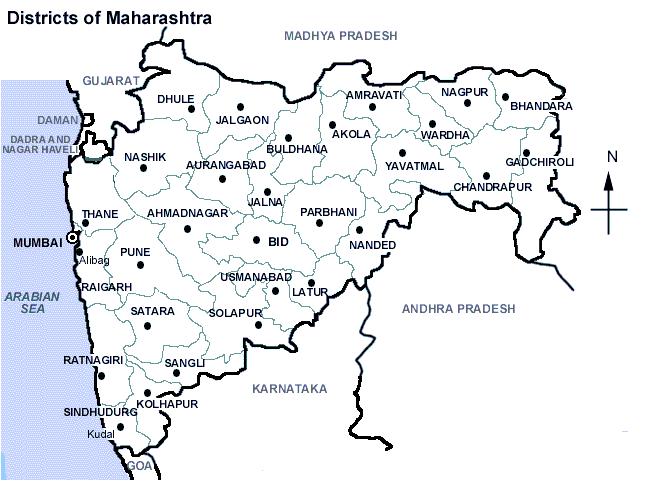
| My State |
 |
| My MAHARASHTRA |
| Maharashtra is a large, populous and economically important state. Maharashtra with Mumbai as capital was formed in 1960. |
| Maharashtra derives its name from the word "maharathi" (great chariot driver). The name Maharashtra first appeared in a 7th century. It became Maharastri some time. Maharashtra falls into three major regions: Western Maharashtra, Vidarbha and Marathwada. The Maharashtra became promimnent and famous in the history of India from the Mauryan period. After the end of the Mauryans, Many Hindu kings for nearly a thousand year ruled Maharashtra. After the fall of Yadavas, the last of these Hindu dynasties the Muslims overwhelmed the state. Shivaji (b.1627-d.1680) the great warrior brings the Maharashtra to the centrestage. The desire to free ones people, The obsession to serve the ones Holy Land. Mother Jijamata shapes early life of young Shivaji The blessings of mother Jajamata, father Shahaji and teachings of Guru Dadoji Kondadev brings this motivated youth to Rohedeshwar Shivalaya to take oath for the formation of Hindavi Swarajya. The motivated Maratha Mavala stood behind him and fought for him. The sacrifice of thousands of Mard Marathe leads to the formation of powerful Maratha Empire. My all time favourite motivator, planner, terminator and worrier SHIVAJI was not only a Man but he was a Machine, a Manufacturing unit The Peshawas who followed the Shivaji ruled and extended the Empire from Gwalior to Tanjore in the South. The Maratha power received a strong imapct at war at Panipat, in 1761, when Ahmed Shah Abdali the Afghan ruler defeated the Maratha forces. Maharashtra become a part of the Bombay Presidency under the British administration after 1818. After 15 Aug. 1947 Bombay continued as one state consisting of Maharashtra and Gujarat. On May 1, 1960 Maharashtra and Gujarat were formed as a separate states. |
| History of Maharashtra |
| Economy of Maharashtra |
| The economy is of mainly Agricultural driven well by industrial units of prime important. Maharashtra is rich in various minerals of industrial importance. Some minerals like iron ore, limestone, copper, bauxite, silica sand, manganese, coal and common salt. Nagpur and Chandrapur belt is rich in Bituminous coal. Undersea oil deposits were discovered at Bombay High near Mumbai in the 1970s. The rich timber reserves are in large proportion. The mountainous region of the state is a virtual repository of Sorghum, millet, and pulses dominate the cropped area. Rice grows where rainfall exceeds 40 inches, and wheat is a winter crop in fields that retain moisture. Cotton, tobacco, and peanuts are major crops in areas having 24-39 inches of rainfall. Irrigation dams in rain-shadow areas have resulted in a rich sugarcane yield. Mangoes, cashew nuts, bananas, and oranges are popular orchard crops. Maharashra being most industrialised region having industries located at Bombay, Pune, Aurangabad, Ahmednagar, Nagpur, Sholapur, Akola and Amravati and almost all district places. The Sugar industry and Cotton textile industry is the largest and the oldest industry in the state. Agro industries and agricultural support industries are also making significant presence and impact in economy of state. The tourism industry is also gaining prime importance and momentum through out the state. Maharashtra utilises thermal electricity, hydroelectricity, wind energy and solar energy.The nuclear power production is also gaining importance in the power sector Maharashtra is the home of India's first nuclear plant (located at Tarapur, 70 miles north of Mumbai). |
| Society of Maharashtra |
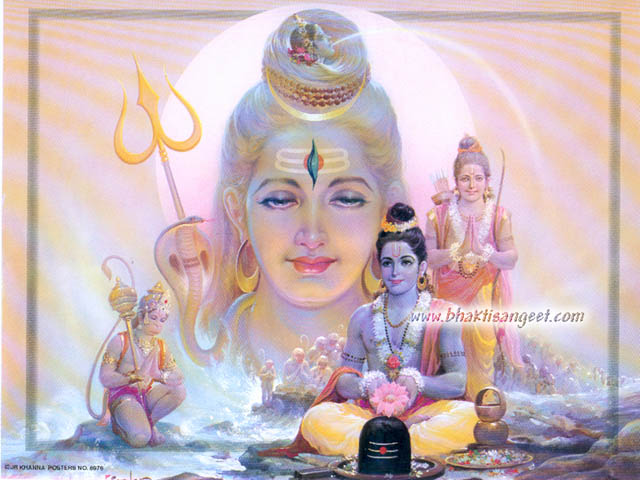
| Maharashtra a prominently marathi Speaking State is a house of many non-marathi races. It is a Hindu society, with Shiva( Five Jyotiryliga) and Ganesha (Ashatha Vinayaka) as the principal deity. It worships Goddess of Shakti, Wealth, and Knowledge is also at the centerstage (Tuljapur for Bhavani, Kolhapur for Ambabai, Vani for Saptashuring etc) Marathi, Hindi and Gujarati, Telugu, Kannada, Sindhi, Urdu, Bengali, Malayalam, and English are main languages. There are also many local languages, as Konkani, Khandesi, Gondi, Varhadi, and Mundari etc The religious diversity makes Maharashtra that of Mini-India as a whole. The state capital Mumbai ( formerly Bombay, Bambai ) truly reflects spirit of Mini-India. The Hindus are in majority followed by Muslims and Buddhists few Christians, few Parsis. Other religious minorities include Jainas and Sikhs, whose small communities are widespread. |
| Culture of Maharashtra |
| The cultural heritage of maharashtra is unique and appealing. The artistic and cultural heritage can be best judged in the numerous ancient cave paintings. The ancient cave paintings found at Ajanta and Ellora, The caves of Elephanta, Karle-Bhaje Leni on Mumbai-Pune National Highway and numerious other sites are true ancient and medieval architectural masterpieces of its own kind. The classical and devotional music, Sant Wagmay, theatre, Marathi-Natak and Marathi-Tamasha are the showpieces of cultural and devtional spirit of maharashtra. The Pune, cultural capital of state supplemented by Kolhapur (Some times called Kalapur and some times by Karaveernagari) and numerious other places are the hubs of cultural activities and organizations. Festivals abound in this state of jolly people. Some important are: Kala Ghoda festival, Elephanta Music and Dance Festival, Pune festival, Gudhi Paadva,Ram Navami, Akshayya Truteeya, Maharashtra Day, Mahavir Jayanti, Buddha Jayanti, Wat Pournima, Gokhulashtami, Ganesh Chathurthi, Nariel Purnima, Ramadan, Dussehra, Deepawali etc. |