 |
|
|
| Christmas Through The Ages, Continued |
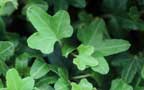
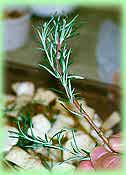
| Ivy Ivy, an important plant in Greek mythology, was associated with Bacchus the god of wine. It was believed that the berries would prevent intoxication if eaten before drinking wine. Garlands of ivy leaves were used to crown poets for ceremonies. It was the symbol of love because of the way it clings while it grows. Mistletoe Other pagan customs have their succesors in our Christmas celebrations such as mistletoe - a legacy from the Druids. Mistletoe is a parasitic plant found growing on trees. This plant was especially sacred to the Druids. If it was found on an oak, it was cut with great ceremony, and was used to cure many ills. Scandinavian mythology relates how the plant must always be suspended in order to serve as an instrument of good. Balder, the god of poetry and eloquence, and second son of Odin and Friga, communicated to his mother a dream he had in which he died. She wanted to protect her son from death and invoked all the powers of nature to obtain an oath from them, that they would do Balder no harm. Balder took his place amid the combats of the gods and fought fearlessly. Loake, his enemy, resolved to discover his secret and, disguising himself as an old woman, went to visit Friga. He had complimentary remarks about her son and wished him good fortune. The goddess related the reason that no harm would come to her son; however, there was one plant which she did not think of conjuring, because it was impossible for it to inflict any harm on her son. Loake was informed that the plant was mistletoe. He left and procured some mistletoe and fashioned an arrow out of it. Loake entered the assembly of the gods and said to Heda, "Why do you contend with the arrows of Balder?" Heda replied, "I am blind and have no arms." Loake then presented him with the arrow formed from the mistletoe, and said, "Balder is before thee." Heda shot and Balder was slain. All things in heaven and Earth joined in mourning the death of Balder. He was brought back to life again by the power of his mother's love and tears which became crystallized as the pearly berries of the mistletoe. Because of the resuscitation in which love proved itself victorious over death, it was divinely ordained that the mistletoe was to be held sacred and that it would never grow on earth but suspended between Earth and Heaven. When mistletoe is hung from the ceiling, members of opposite sexes pass under it and give one another a kiss of peace and love. It was always hung with holly to provide shelter for the spirits of the wood in winter. Gathering the mistletoe was referred to as "bringing home Christmas." Boxwood Boxwood was used by the ancient Hebrews in the Feast of the Tabernacles, and is mentioned by the prophet Isaiah in describing the glory of the latter days of the church. "the glory of Lebanon shall come unto thee, the fir tree, the pine tree and the box together" (Is . 60:13). The box was used to replace the Christmas greens which were removed on Candlemas. boxwood was kept up until Easter Eve, then replaced with branches of the Yew tree. Rosemary The fragrant rosemary, with its needle-like leaves, silvery on one side, is found in the warmer parts of Europe. It is an evergreen that has long been used in Christmas celebrations. The legend says that these flowers were once white but were changed to pale blue when the Virgin Mary spread her infant's clothing on a rosemary bush to dry during the flight to Egypt. Rosemary is supposed to bring happiness to those who use it, perfuming homes on Christmas night. It has been referred to as "a comforter of the brain." There is a notion that it makes the old young again. Laurel To us in America laurel is somewhat different from the fragrant sweet bay of Europe, although it looks similar. We know it as a flavoring for cooking. To the Greeks and Romans it was a sacred plant used to decorate statues of their gods, victorious athletes, poets, and renowned people. It served as a most appropriate cover for Caesar's balding head. The stories recounting its uses are truly fascinating. Because of this, it was used widely for decorating at Christmas. The Worship of Trees The worship of trees has had prime significance in the history of mankind down through the ages. It extends back to those remote times when the world was made up of wandering tribes. In ancient times, it was the business of new immigrants to found a central settlement known as a "Mother Town." When they cleared land, they always left a group of trees in the center of the clearing. Among the trees stood a central tree known as a "Mother Tree." From this source stemmed all action of life and pursuit of religious belief. As the settlements grew, and additional communities were formed, those who went forth as pioneers took with them their household gods, their tribal ways of measuring time and their customs. In the new settlement they lighted their first fires at the same times as their fathers had and thus retained all of their customs. Eventually, trees took on the form of deities who were the guardians of fertility. Thus the legends and the lore from many countries led to a curious kind of tree worship with strong emphasis on their preservatrion and care. Some of the curious practices of ancient times have persisted among the country folk of Europe even to this day. There were very close ties to the soil by the peasants who tilled it. Many of our familiar trees were closely associated with the Christmas tradition. There is an old belief among the Gypsies that the ash tree, or twigs from it, should be used to make the fire on Christmas Eve. They believe that this tree supplied the wood that made the fire that warmed Mary, Joseph and Jesus in that first Christmas night. In Rome before Christianity took root, the ancient fig tree which had originally flourished on the banks of the Tiber was finally transported to the comitium of the Forum, where it was widely known and revered. It was a slip of the tree beneath which the she-wolf had nursed Romulus and Remus who founded that ancient seat of civilization. It's care, preservation, and perpetuation make a most enchanting story full of marvels and wonders. The burning bush from the Old Testament served as a symbol of the Nativity and also the Virgin Mary. It became a decorative motif in the catacombs as early as the third century and later appears in various expressions of religious art. The similarities between the plant world and the animal were very real to men in early times. The resemblances between trees and plants displayed in their appearance in the various seasons and at different times of day made men aware of the mysterious power or forces of nature. Seasonal changes left a deep impression, inspiring an attitude of reverence and awe. |
 |
 |
 |
 |
| . |
 |