Abstract
The aim of
research is to compare the students’ attitude between Fukuoka University
of Education Students and State University of Jakarta. Instruments used
in this research called Student Attitude toward Science Scale (SASS). This
instrument developed by modifying the original Menis Instrument. SASS consists
of 23 items concerned with the importance of science, science as a career
and science as subject in the school curriculum. Numbers of students participating
in this research were 207 students of Fukuoka University of Education and
257 students of State University of Jakarta. Research results found that
Universitas Negeri Jakarta Students have higher attitude toward science
rather than Fukuoka University of Education
1. Introduction
Much of the national
attention has focused on science, mathematics, and technology/vocational
education. Japan has generally taken a "catch-up" approach to science and
technology. Japanese Government policies are priorities and prospects for
a Lifelong Learning Society, increasing diversification and, sophistication.
In Indonesia general education prioritizes expansion of general knowledge
and improvement of skills for the students. Vocational education prepares
students in mastering a number of specific vocational skills needed for
employment.
Japan well known as country
with high technology, advance research in many discipline such as computer,
science, agricultures, marine and mine etc. Universities in Japan have
been expanded cooperation with industry with respect to research and human
resource development. In Indonesia, universities are also urged to expand
cooperation with industry with respect to research and human resource development,
but the implementation of this program faced many problems. Everyday Japanese
students interacted with sophisticate device such as PC computer, Internet,
automatic machine etc. While only a view Indonesia students interacted
with device above. In Laboratory activities Japanese students supported
with complete apparatus or equipment and other facilities. This situation
are completely support Japanese students to improve their knowledge, affective
and attitude to study easily about science.
2. Attitude toward Science
Attitudes are complicated mixtures
of some basic psychological processes. In every action we take, our perception,
emotion, motivation and thoughts interact in complex way. The simply way
to think about an attitudes is to view them as our predisposition toward
object - predisposition that reflected our individual preference and aversion.
These predispositions affect the way we perceive these abject and think
about them.
We have attitude about an enormous
array of subject. These attitude whether trivial or importance affect our
personal action. Our attitudes are also implicated in enormously importance
action involving whole society. Students attitude influence their politic,
economy, and social behavior. Our attitude about an object may even change
while the object stay the same – so attitude obviously do not have origin
in the object them selves. Our attitudes are influence by many factors
including emotional association. Some of our attitudes are simply based
on experience. If we encounter an object repeatedly, we will develop a
positive attitude toward the object. No reward, no reason, no belief, no
goal need to be connected with the object. Simply repeated encounter are
all that is need to produce a positive attitude is called the exposure
effect. Research finding indicate that the people may form attitude simply
associating object with emotion arousing circumstance.
Attitude can change merely
through repeated exposure to an object, and they can change because of
pleasant or unpleasant consequences associated with it. Two major sources
of changes have been extensively studied by psychologies; (1) persuasive
communication and (2) resolve cognitive dissonance.
Attitudes consist of three
components: cognitive component, affective component and motivational component:
(1) Cognitive Component, this component commonly called beliefs or knowledge
structure about object and events. Some beliefs are based in fact about
many beliefs are false: the belief that spaces are unlimited is true, and
belief that atom cannot separate into small piece is false. (2) Affective
Component, although students obtained a good grade in science class, we
still need more information about student’ affective component of their
attitude toward science. Sometimes, in fact the affective component is
primary. This is especially clean in the case of attitude formed early,
such as student interest to science before they know much about science
in class. (3) Motivational Component, attitude are also linked to an object’s
importance to us. If student know in the future most of job will require
knowledge of science, they motivated to be a science teacher or to be scientists
or researcher in science laboratory.
Science is a systematic, objective
search for understandings of the natural and human world. A body of knowledge,
formed through continuous inquiry. Science is characterizes by use of an
empirical approach, statement of generality (laws, principles, theories)
and testing to confirm, refute, or modify knowledge about natural phenomena.
Attitude towards science is
predisposition toward object concerned with the importance of science,
science as a career and science as subject in the school curriculum, predisposition
that reflected individual preference and aversion toward science.
3. Methods
Participants:
Data were collected from two
faculties of science of two universities Fukuoka University of Education
(FUE) Japan and State University of Jakarta (UNJ) Indonesia. Numbers of
students was participating as samples 207 students of Fukuoka University
of Education and 257 students of State University of Jakarta. Data collected
under authority of university teachers. Participant university student
in the two universities were comparable with grade level.
Procedures of data collection:
First, questionnaires are available
in tree languages English, Japanese, and Bahasa Indonesia. Data collections
in Fukuoka University of Education Japan were using instrument in Japanese
language. Data collections in State University of Jakarta (Indonesia) were
use instrument in Bahasa Indonesia.
Second, most of data were collected
in science class. Students answer the attitude scale under supervises by
teacher. Sometime teacher supervises the students to answer the attitudes
scales in his room. Time consumes to answer the attitude scales are about
10-15 minutes.
Instrument:
The instrument used in this
research called Student Attitude toward Science Scale (SASS). This instrument
developed by modifying the original Menis Instrument. Student Attitudes
toward Science Scale (SASS) made into two languages are Japanese Language
and Indonesia Language. SASS consists of 23 items concerned with the importance
of science, science as a career and science as subject in the school curriculum.
-
Science is useful for solving the problem of everyday
life
-
Science has ruined the environment
-
Science is very important for a country's developmentThe
money spent on science is useful.
-
Scientific inventions and discovery improve our standard
of living
-
Science will help to make the world a better place
in the future
-
Much worries in modern society are because of science
-
Scientific invention and discovery is bad more often
than being good.
-
Science and technology are the cause of many of the
world problems
-
Scientific inventions has increased tensions between
people
-
Working in a science Laboratory (for example, in such
cases as the electric power company and the medicine manufacture company)
would be an interesting way to earn a living
-
In the future most of jobs will require knowledge
of science.
-
The people who understand science are respected in
society
-
In my future career, I would like to use the science
I learned in school
-
It is important to know science in order to get a
good job
-
I would like to become a science teacher
-
Science is an enjoyable school subject
-
The science taught in school is interesting
-
Science is difficult subject
-
Science is difficult when it involves calculating
-
Science is difficult when it involves handling apparatus
-
There are too many facts to learn in science
-
Science is relevant to everyday life
Administrating Scale:
Each respondent is asked to
rate each item on some response scale. For instance, they could rate each
item on a 1-to-5 response scale where: 1 = Strongly disagree; 2 = Disagree;
3 = Undecided; 4 = Agree; 5 = Strongly agree. All of these odd-numbered
scales
have a middle value is often labeled Neutral or Undecided. It is also possible
to use a forced-choice response scale with an even number of responses
and no middle neutral or undecided choice. In this situation, the respondent
is forced to decide whether they tendencies more towards agree or disagree
end of the scale for each item.
The final score for the respondent
on the scale is the sum of their ratings for all of the items (this is
why this is sometimes called a "summated" scale). On some scales, several
items have reversed in meaning from the overall direction of the scale.
These are called reversal items. It is need to reverse the response value
for each of these items before summing for the total. That is, if the respondents
choose option 1,score is 5; if they choose 2 the score is 4; 3 = 3; 4 =
2; and, 5 = 1.
4. Results
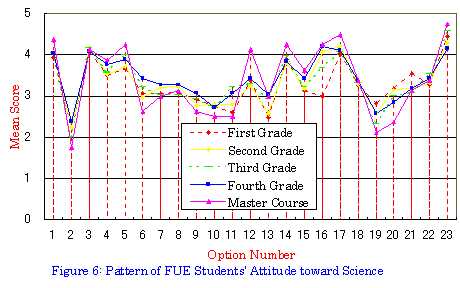
FUE Students’ Attitude toward Science

-
FUE student patterns of response to attitude scale
toward science are the same, although quantity is different
-
Most of the students (92%) agree with the statement,
“Science has ruined the environment”. Their mean score to this attitude
subject 2,12. Students as higher level (Master course students) hold negative
attitude toward this statement (mean score = 1.75). Student’s attitudes
toward this statement become negative as high as their grade level. The
students believe that science has ruined the environment although they
believe that science is useful for solving the problem of everyday life
and important for country’s development.
-
Most of the students (75%) believe that in the future,
most of job will require knowledge of science and they would like to use
the science they learned in school in their future career but they do not
believe that the people who understand science are respected in their society.
-
Only first grade students hold negative attitude to
the statement, I would like to become a science teacher. Most of the students
of this university agree with this statement. Their attitudes are increase
as high as their grade level. First grade students are the new students
in university, they do not know much about education. University needs
to provide students to improve their knowledge about education, teaching
methodology and so on.
-
Most of the students (83%) agree that science is difficult
subject. Their attitudes are increase as high as their grade level. Master
course students have the lower score of this statement and first grade
students have the higher score. This fact is a little confusing, because
usually new students have many problems in way how to study in new circumstance
or new school. Perhaps this condition is caused of students experience
to science in class. Been studying science, students have faced many difficulties
of science, unexciting teacher methodology, difficult test. So after they
study they have perception about science that science is difficult subject.
Students at high level (master course and fourth grade) agree that science
is not difficult what it involving calculating but all of students agree
that science is difficult when it involving handling apparatus.
UNJ Students’ Attitude toward Science
-
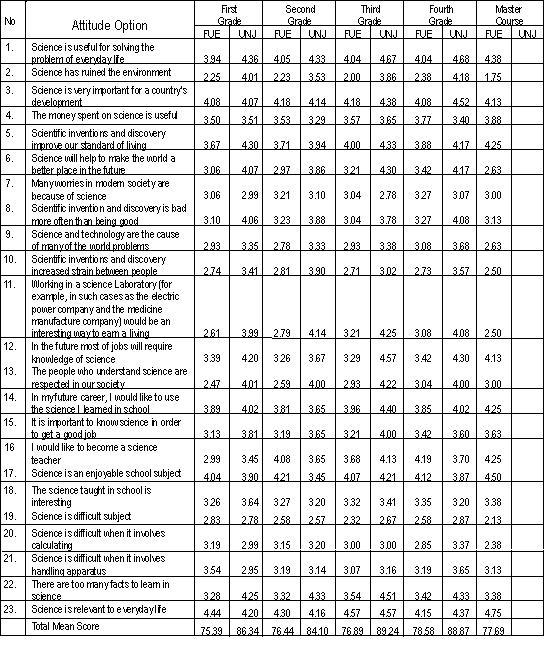
UNJ Students pattern of response to the attitude scale
shown in graph above generally were the same.
-
UNJ students’ attitude towards attitudes statement
generally positive. Only statements as follow indicated negative attitude
e.g. many worries in modern society are because of science (66%), science
is difficult subject (76%) and science is difficult when it involves calculating
and handling apparatus.
-
Most of UNJ Students hold positive attitude to the
statement I would like to become a science teacher. Their attitudes are
increase as high as their grade level. It mean students interest and motivation
are conducive to promote them selves as a science teacher in the future.
Comparison of FUE Students and UNJ Students
Attitude Toward Science
Comparison among Group Levels.
Table 1: First Grade Students’ Attitude toward
Science
|
Group
|
n
|
Mean
|
SD
|
t-stat
|
t-value
|
df
|
P<
|
|
UNJ-1
|
83
|
86,337
|
13,316
|
6,34962 |
1,660 |
153
|
0,05
|
|
FUE-1
|
73
|
75,389
|
7,762 |
-
|
-
|
-
|
-
|
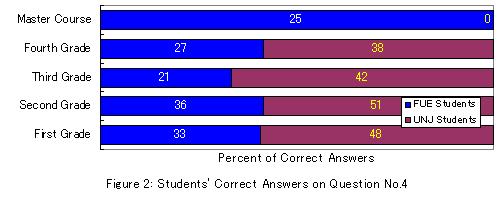
Table 1 presents the mean score and t stat and
t value. This table indicated t stat > t values its mean UNJ Students attitudes
more positive than FUE students’ attitudes. Figure 3 exhibits the contrast
between FUE and UNJ first grade students’ attitude toward science
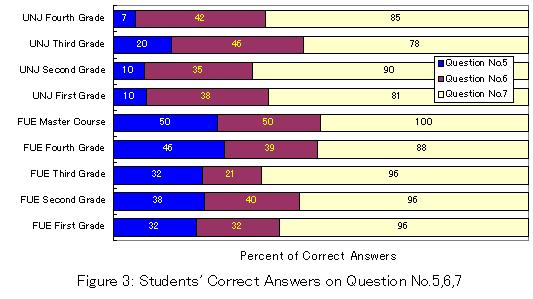
Table 2: Second Grade Students’ Attitude
|
Group
|
n
|
Mean
|
SD
|
t-stat
|
t-value
|
df
|
P<
|
|
UNJ-2
|
51
|
83,941
|
12,551
|
3,750846
|
1,660
|
122
|
0,05
|
|
FUE-2
|
73
|
76,452
|
8.095
|
-
|
-
|
-
|
-
|
Table 2 presents the mean score and t stat and
t value. This table indicated t stat > t values its mean UNJ Students attitudes
more positive than FUE students’ attitudes. Figure 4 exhibits the contrast
between FUE and UNJ second grade students’ attitude toward science
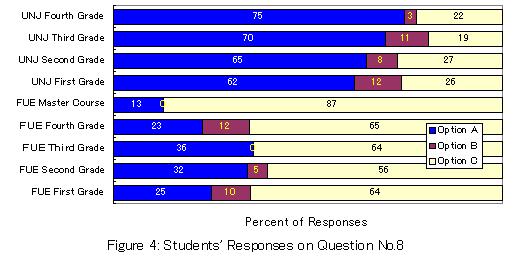
Table 3: Third Grade Students’ Attitude
|
Group
|
n
|
Mean
|
SD
|
t-stat.
|
t-value
|
df
|
P<
|
|
UNJ-3
|
63
|
89,238
|
8,399
|
6,181673
|
1,660
|
89
|
0,05
|
|
FUE-3
|
28
|
76,893
|
8,962
|
-
|
-
|
-
|
-
|
Table 3 presents the mean score and t stat and
t value. This table indicated t stat > t values its mean UNJ Students attitudes
more positive than FUE students’ attitudes. Figure 5 exhibits the contrast
between FUE and UNJ third grade students’ attitude toward science
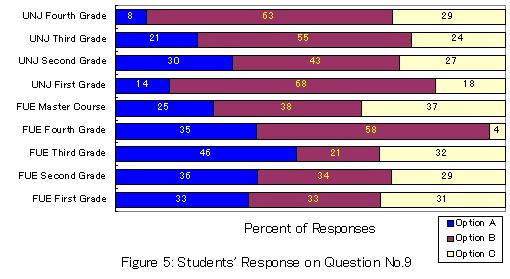
Table 4: Fourth Grade Students’ Attitude
|
Group
|
n
|
Mean
|
SD
|
t-stat
|
t-value
|
df
|
P<
|
|
UNJ-4
|
60
|
88,867
|
9,967
|
4,779663
|
1,660
|
84
|
0,05
|
|
FUE-4
|
26
|
78,577
|
8,801
|
-
|
-
|
-
|
-
|
Table 3 presents the mean score and t stat and
t value. This table indicated t stat > t values its mean UNJ Students attitudes
more positive than FUE students’ attitudes. Figure 5 exhibits the contrast
between FUE and UNJ fourth grade students’ attitude toward science
Statistically the difference between FUE students
and UNJ students’ attitude toward science determined by t-test formula
as followed below:
Table 5:FUE and UNJ Students' Attitude
|
Group
|
n
|
Mean
|
SD
|
t-stat
|
t-value
|
df
|
P<
|
|
UNJ
|
257
|
87.163
|
11,4706
|
11,66957
|
1,646
|
462
|
0,05
|
|
FUE
|
207
|
76.454
|
8,22006
|
|
|
|
|
Degrees of freedom (df) for the t test is df =
(N1+N2)-2= (257+207) – 2= 462. Using a probability table for the t statistic
(available in most statistics books), the researcher determines that a
value of t =1.646 is sufficient to demonstrate statistical significance
at the 0.05 level. Therefore, for this problem, t (462) = 11.6957, p <
0.05 is statistically significant. The researcher concludes that student’s
attitude between FUE students and UNJ students are difference significantly.
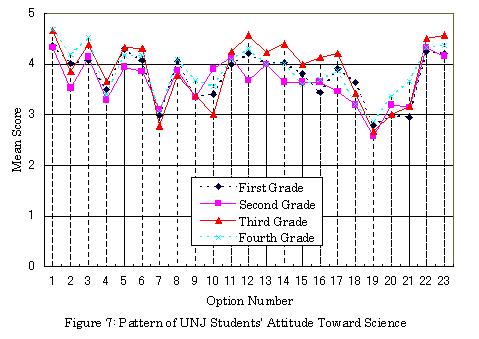
Figure 7 presents common responses pattern of FUE
and UNJ Students attitude toward Science. UNJ students attitude mean score
generally more high than FUE students attitudes. FUE and UNJ students agree
that science is difficult subject.
5. Conclusion
This study demonstrated that UNJ students’ attitude
towards science is more positive than FUE students.
Reference
Aron. A., & Aron E. (1999). Statistic for
Psychology, 2nd ed. Prentice Hall, Inc. New Jersey, 643p.
Banu, D.P, (1986). Secondary school students’
attitudes towards science, Research in Science and Technological Education,
4, pp. 195-202.
Bootzin, R.B., et al., (1986). Psychology
Today, 6th ed., Random House Inc., New York, 757p.
Cheek, D. W. (1992). Thinking constructively
about science, technology, and society education, State University
of New York Press, New York,
Francis L.J & Greer J.E., (1999), Attitude
toward science among secondary school pupils in Northern Ireland: relationship
with sex, age, and religion, Research in Science and Technological
Education. 17,pp. 67-74.
Japanese Government Policies in Education, Science,
Sports and Culture (1997): Sports and Scientific Research: Opening the
Door to the Future. http://www.monbu.go.jp/hakusyo/1997eng /index.html
Jenkins, E.W., (2000). What Can Physics Teachers
Learn from Research in Physics Education? Physics Education, 35, pp.445-250.
Koballa, T.R. (1988). Attitude and related concepts
in science education, Science Education, 72,pp.115-126.
Monbusho, (1994). Education in Japan: A graphic
Presentation 1994, Ministry of Education, Science, Sport and Culture
of Japan (Monbusho)
Menis, J., (1989). Attitude toward school, chemistry
students and science among upper secondary chemistry students in the United
States, Research in Science and Technological Education, 7, pp. 183-190
Ziman, J. (1988). An Introduction to Science Studies
The Philosophical and Social Aspect of Science and Technology, Cambridge
University Press, Cambridge, 203p.
|