 |
 |
 |
| Welcome |
 |
| Home |
 |
 |
|
 |
|
| Let's face it we all need help sometimes and that is what this page is for. I will be listing information for the amateur and experienced alike. Topics such as how to dig and what to dig with. How to choose a detector and not spending to much to get one. And something that tends to be underated, "safety". If there is a topic you would like see covered please email me and let me know. |
 |
| Buying a Detector |
| This can be a challenging task. With all the choices out there it can be hard to decide which one to buy. Hopefuly I can make this decision easier. First decide what kind of detecting you will be doing. Such as coin, relic, ect.. The area you live in makes all the difference. For example, when I lived in Florida there wasn't much relic hunting to do but lots of coin and beach hunting. Just remember any detector will find metal if it's there. Just like buying a car some have more options for more money. This brings up the most important thing, "How Much To Spend",. Well you can go out and buy the most expensive thing out there but ask your self how often are you going to use it. You may want to consider buying a $200-300 detector first with less of a learning curve. I went backwards I started with a top of the line detector and ended up using a less expensive model. I will tell you this no detector is 100% accurate at deciphering what a target is. Even the meter units. Trust me it would be nice to know what your target is before you dig but you will not know untill you dig it. Warranties make a big difference too. If givin a choice would you buy a car with similar features but a 2 year, 5 year, or lifetime warranty. Well it's the same with metal detectors. Some brands have better warranties. This makes a huge diference down the road. Consider what kind of stress you are going to put on your detector. Do you want to take a $1000 detector out in the woods and get banged up or or through a swampy area. It's ok to do so but think about it ahead of time. Weight can be a major factor as well. When you walk all day with a detector on the end of your arm weight makes a big diference. I prefer something light. The best advice I can give you is to test drive a few. Find a local dealer and they will be glad to help you out. If you want my suggestions based on what I prefer just drop me a line and I will be glad to help. I don't want to put down any brand because they all find treasure. I , like many other MD's have there favorite one. |
|
| How to Dig |
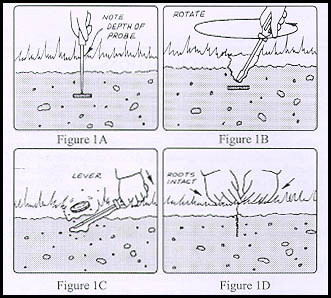
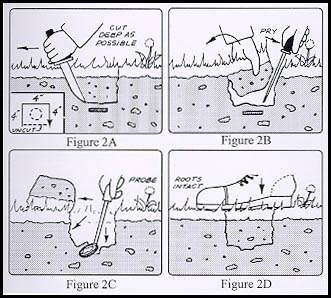
| Believe it or not, how you retrieve your treasure is probably the most important aspect of metal detecting. I know that seems ridiculous but think about digging up a rare coin only to discover you put deep scratches in it. Now what is it worth. There are different methods for retrieving items but we will cover the basics. In most cases they work the best anyways. |
| PLEASE FILL YOUR HOLES |
 |
 |
| This method works using well using a brass probe to find a target but using a screw driver is to retrieve it can be dangerous to a coin. |
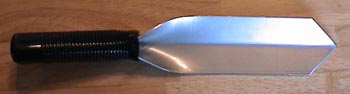
| This is the most prefered method for retrieving items in a yard. Some like using a knife, I prefer a digger to cut a 3/4 hole and hinging it back. that way I can put the plug back without disturbing the ground. |
 |
 |
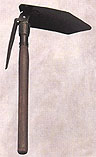
| For relic hunting I prefer a military breakdown shovel. I's less weight than a regular shovel and can be used two ways. In the L configuration for quick digging or the normal configuration for deep items. |
 |
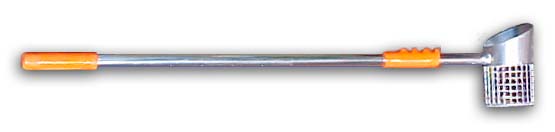
| For beach use there are a number of scoops on the market. I prefer one with a long handle so I don't have to bend over so much. You will do a lot of digging there. |
 |
| And the most important thing to remember is "FILL YOUR HOLES " This can't be stressed enough. I wish I had a dollar every time I got turned away from a good detecting spot because the land owner had problems with people not filling their holes. This can lead to people or animals breaking their legs. Just be responsible and set a good example for others to follow. It only takes a second to fill in a hole and just as much time for a small child to get hurt by one. That child could even be yours or mine. |
|
| Safety |
| This one subject alone can make the difference between a great day detecting or a day in the emergency ward. Always give some thought as to your enviroment. Being prepared makes for a more enjoyable outing. I will cover in more detail specific ways to stay safe in the following topics: Relic Hunting Coin Hunting Beach Hunting |
|
| Relic Hunting |
| This is the most challenging of all the aspects of detecting. It may not be for everyone. And it is the most dangerous. There are different ways to relic hunt. Some people relic hunt in clean areas or fields. I hunt any where I think may be relics. Sometimes it may be in a field or on a mountain side. You never know where you will find some. This is why relic hunting can be dangerous. There is always a threat of getting hurt when you are in a hostile enviroment. Snake, ticks, and tripping are the most common forms of danger and it pays to be prepared. And don't forget to drink plenty of water. If you get dehydrated you can get muscle cramps or worse pass out. So don't take the chance.The most important thing to bring is a hunting partner. If anything happens to you it's good to know someone is there to help you. I have made a list of items a relic hunter should carry when detecting. Some are basic things you should always have with you. And some are optional items that come in handy. Have fun and be safe. |
| Basic Items |
| Optional Items |
| Digger Back Pack or Pouch Water Batteries First Aid Kit Insect Repellent Trash Bags |
| Snack Knife Toilet Paper Water Proof Matches Walkie Talkies Map Compass or GPS Camera Tape Pad & Pencil Hat Gloves String or Rope |
|
| Coin Hunting |
| This is probably the most prosperous form of detecting. Whether your detecting at an old house or a park. You will always come away with something in your pouch. As far as dangers go just becareful of broken glass or any thing that can cut you. Here are some basic items to take. Good luck and have fun. |
| Basic Items |
| Digger Pouch Water Batteries Insect Rellent Magnafying Glass First Aid Kit |
|
| Beach Hunting |
| Metal detecting on a beach is the most fun you will ever have detecting. You will never know what you will dig up . An added bonus is the sand makes for easy digging. The main dangers are sunburn and dehydration. So drink plenty and bring some sun block. Here is a list of things to bring. Good luck and enjoy the beach. |
| Basic Items |
| Sand Scoop Pouch Water Batteries Sun Block First Aid Kit |
|