
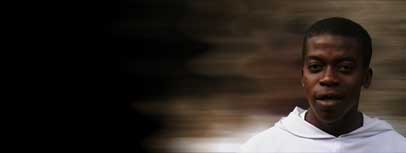
Tare OP is a Dominican Student in St. Thomas Aquinas Priory, Samonda,
Ibadan. He is currently in his third year of theological studies at the
Dominican Institute of Philosophy and Theology, Ibadan. |
REFLECTIONS: Whose Authority?
Our reading this evening reminds us of one of the important aspects of our faith: The Divine Inspiration of Scripture. We must recognize, we are told, that the interpretation of spiritual prophecy is never a matter for the individual. No one can explain, by himself, a prophecy in the scriptures. Why? Because no prophecy ever came from human initiative. When people spoke for God, it was the Holy Spirit that move them. No prophetic message ever came from the will of men, but men were carried along by the Holy Spirit as they spoke the message that came from God, we are told.
In Dei Verbum, we read that to compose the sacred books, God chose certain men who, all the while they were employed in this task, made full use of their powers and abilities so that, though he acted in them and through them, it was as true authors that they consigned to writing whatever he wanted written and no more.
When the human authors wrote, they wrote as full authors. They did not write under the influence of divine dictation. They wrote like real human authors. Most often, the sacred writer is not aware that he is being used and moved by God; he sets about his work in a perfectly natural way. He may feel the need to put forward some truths about God or about God�s dealing with men; he then sees how, according to his ability and talent, the point may be most effectively made; finally he writes the book. All the while, although he did not know it, he was guided by the Holy Spirit. The divine influence which inspired him in the first place continued to move him until the book is written. God moves the sacred writers according to their nature as men; He moves them through their intellect and will. God, in moving them, fully respects their intelligence and free will. How this can be is a mystery. Our theology teaches us that God, by a motion of grace, can move man from within and move him infallibly, yet all the while preserving his character as a free being. Under the supremely efficacious impulse of the Holy Spirit, the human author is infallibly moved to think and to write what God wills and as God wills it. Hence, all that the inspired authors affirm should be regarded as affirmed by the Holy Spirit. We should be confident of the message proclaimed by the scripture writers for they wrote under the inspiration of the Holy Spirit.
We can be sure that we have grasped what God really means only when we are sure of the intention of the human writer, for it is through him that God addresses us in Scripture. Hence, the interpreter of Sacred Scripture, in order to see clearly what God wanted to communicate to us, should carefully investigate what meaning the sacred writers really intended, and what God wanted to manifest by means of their words.
The books of Scripture, firmly, faithfully and without error, teach the truths which God, for the sake of our salvation, wanted written in the sacred scripture. The big task with scripture is to find the authentic interpretation. Our reading today warns us that this task is not a matter for an individual. The task of giving an authentic interpretation of the word of God, whether in its written form or in the form of tradition, has been entrusted to the living teaching office of the Church alone, whose authority is exercised in the name of Jesus Christ, under the guidance of the Holy Spirit. Hence, in reading and interpreting scripture, we will do well to pay attention to the Magisterium. If we are faithful to the Magisterium, we could never go astray. We would discover the hidden truths of scripture which is like a lamp in a dark place; then will the light of the morning star shine in our hearts and the day of new knowledge dawn with the passing away of the night of ignorance.
Tare OP, 2007.
|
 home
home bio
bio lyrics
 poems
poems reflections