And so circumstances led Orson Welles to abandon an unfinished film. It was not the first time, and it would not be the last.
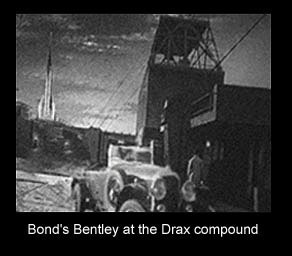
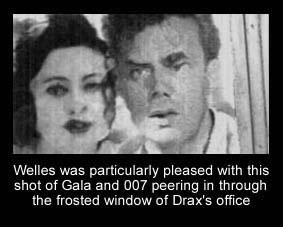
Roma Kemrie Mace, the late producer's estranged wife, found part of her widow's inheritance to be a bunch of cans of what she was told was "unreleasable rubbish". Leaving aside the fact that it was unfinished, would she have wanted it shown anyway, when one of the leading players was her late husband's busty young paramour? (The subsequent career of Brenda Bright is shrouded in mystery. Save for a fleeting appearance in the 1959 teen torment melodrama Beat Girl - which, incidentally, featured John Barry's first film score - she seems to have vanished without trace. A great pity since, by all accounts, she was an actress of considerable talent.)
 When, a few years later, Broccoli and Saltzman came knocking at her door, Mrs Mace was perfectly willing to part with the Moonraker rights. The Eon partners screened the footage and ruled out a rescue attempt. They wanted to shoot their Bond series in colour, for a family audience. Their eventual 1979 production was to dump the novel's "dated" storyline in favour of a more topical, Star Wars-era concoction from the pen of Christopher Wood, aka Timothy Lea of Confessions of a Window Cleaner fame. By this time, the original Welles version had long since faded into an obscurity so deep that not one of his biographers considers it worthy of more than the briefest passing mention, if that. Perhaps Welles himself felt that it wasn't really his project, what with all the meddling from producer Mace.
And Bogarde seemed, for whatever reason, to have erased the whole thing from his memory. Possibly, viewing the later success of the Eon Bonds, he had no wish to see his interpretation of 007 subjected to comparisons with Connery, and quietly hoped that none of the footage would ever re-emerge. Whatever the case, he never spoke or wrote of it.
End of story?
Not quite.