For a while, shooting proceeded at a brisk pace. The initial rushes looked good, all gunmetal monochrome, crazy angles and noiresque shadows, with effects man Les Bowie and his team working miracles for peanuts.
 To producer Mace's undoubted relief, Welles set aside his fondness for long, complex, time-consuming takes, opting instead for a quick-cutting, elegant dynamism, forging a narrative that cruised smoothly along like Bond's Bentley, with ample power in reserve for the big moments. (The muscular style Welles adopted brings to mind the Robert Aldrich of Kiss Me Deadly, or even the early black-and-white work of Russ Meyer during his Faster Pussycat period.)
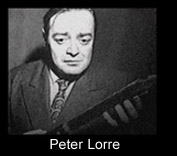
Mace was even more pleased when Peter Lorre signed on as Drax's oily sidekick Willy Krebs. (Lorre had already played Bond baddie Le Chiffre on TV, and Welles would later have his own stab at the character, albeit in a chaotic spoof opposite Peter Sellers.)
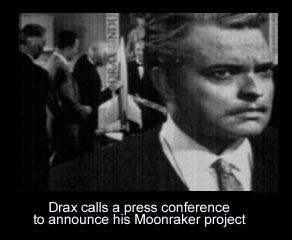
Welles loved, whenever possible, to bury his own performances under truckloads of theatrical makeup, and so he was somewhat displeased when Mace insisted on departing from both the novel and the original script by having Drax's facial disfigurement remain "hidden" behind a lifelike mask until, at the film's climax, Gala Brand tears the mask from his face to reveal the fiend beneath. (Mace still had memories of childhood terrors caused by Lon Chaney's Phantom Of The Opera, and was also evidently influenced the recent success of the Vincent Price horror movie House Of Wax.) Markedly reluctant, Welles played Drax with little more than a moustache and lightened hair - although Mace did permit him to sport a false nose. And so again, for a time, things skipped along smoothly.
At least, until Mace said he wanted more skin...