Populations |
Places |
Food, Diet & Hunting |
Weight & Hight (body) | Fun |
|
| Wolves hunt in packs and often prey upon animals that are much larger that they are. They mostly eat hoofed mammals, like elk, deer, moose, sheep, and bison, but will eat almost anything, including birds, fish, snakes, lizards, and fruit. Wolves almost never attack people. They swallow food in large chunks, barely chewing it. Wolves can eat up to 20 pounds (9 kg) of meat at one meal. When they return from the hunt, wolves regurgitate some of the food for the hungry pups. | 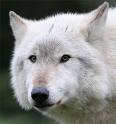 |
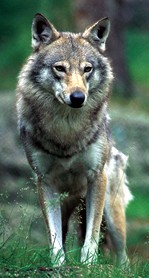 |
Wolves howl as a signal to other wolves, telling of the beginning and ending of a hunt, of a wolf separated from its pack, as a warning to other wolf packs, and simply for the fun of it. Gray Wolves have strong jaws with sharp teeth, including long canine teeth which tear flesh. Adults are about 4 1/2 feet long and weigh about 80 pounds. They have very good eyesight, acute hearing, and a keen sense of smell. |
| Many of the populations in the Lower 48 are fragmented and highly unstable, and many are wolves that have migrated from Canada.The most stable populations are in Alaska and Canada (except for the Canadian province of Newfoundland, where they became extinct in 1911).Captive breeding programs have reintroduced several small populations in the wild. | 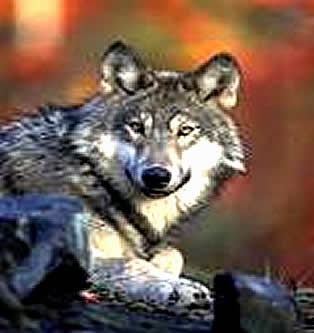 |
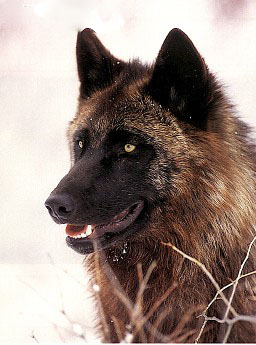 |
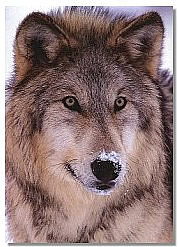
The Gray Wolf (also known as the Timber Wolf ) is a wild dog that lives in packs (groups). Gray wolves that live in the treeless plains of the far north are called Tundra Wolves or Artic Wolves. The gray wolf is a fast-running carnivore (meat-eater). After almost going extinct, it is now only found in Alaska, Minnesota, Michigan, and Wisconsin. |
Their former range in North America included Canada, the United States (except Hawaii), and Mexico in North America. The Mexican subspecies that once ranged throughout the southwestern United States and Mexico is extinct in the wild. |
|