Songkran
Day (Thai New Year)
Song-
kran originated in Sanskrit as “pass or move forward”,
has a astrological definition of Sun movement
from one zodiac sign to another. When movement changes
from Pisces to Aries, it is specially called Maha Song-kran
Song-kran period generally are the 13th, 14th, and 15th of April
each year, specifically named Maha Son-kran Day Nao Day
and Lerng-sok Day respectively. Each region in Thailand may
have different name of each day and different festive
celebration depending on local belief.
Since
the ancient time, it has been a strong superstitious belief about Songkran festival.
Each year, prediction is made after the announcement of Songkran Goddess’sname.
As a country of agriculture, prediction will focus mainly on rain and water
for agriculture, which results on crop harvesting outcomes.
During
Songkran festival, there are traditional cultural activities which are, before
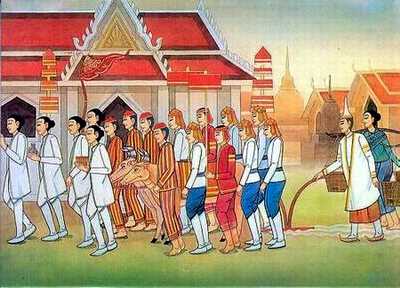
Songkran Day, people will clean their houses, utensils, and tools to welcome
all the good things for new year to come. In addition, preparation for making
merit, generally to Buddha’s monks, is very common at this period.
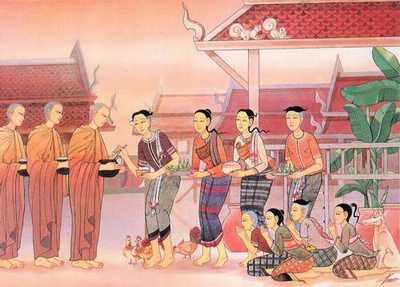
On Songkran Day, there is usually an early merit making by offering foods and
things to monks, unleash birds and fishes ( as another mean of making merits),
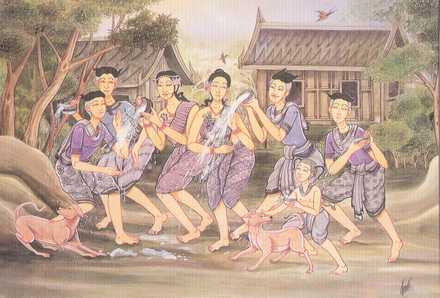
praying for the dead relatives, watering Buddha image, etc. Water splashing
is one of the famous afternoon activities.
Songkran
also conveys another meaning of Thai social values. It is the time when all
family members get together, more or less like Thanksgiving, due to the very
traditional way of Thai lifestyle. During this special family reunion, the younger
will water the elder and elderly to pay respect and gratitude, and will receive
blessing in return.