SITE
UNDER
CONSTRUCTION.
This site and "The Gumnut ballscope" are under construction but you should be able to build a good sphere with the info as is.
I
had the problem that when my 304mm
GSO telescope was
pointed anywhere near straight up and riding on the 120mm tall
equatorial platform, the eyepiece became too high to use. I
wanted to be able to track the sky and keep the eyepiece low enough to
use with my feet on the ground. I can trip over my own feet
in
broad daylight so a stepladder in the dark is a definite non-starter.
During a web search for ideas, I came across Jerry
Ortion's web site where
I read about his "Trackball" telescope that can track without a separate
equatorial platform. Very interesting idea.
The
more I thought about it the more I realised that many other
little irritations with my Dobsonian mounted GSO could be solved using
a sphere mount.
1. The sphere mount meant that observing the zenith would no longer suffer the torment of Dobson's hole.
2. The equatorial
drive built into the base of the sphere mount would eliminate the extra height of my
separate equatorial platform.
3. The equatorial drive never needs to be reset to the beginning.
4. The eyepiece can always be in a comfortable position.
Also, I could reuse the
stepper motor and electronics from the equatorial platform. With careful planning the primary mirror and cell, spider, secondary, focuser, finders,
etc. from the GSO could all be used with either the GSO tube or the
sphere scope without alteration.
I decided to build a sphere mounted system and rehouse my GSO optical
components. Having decided to build it I began by researching the
ball, the largest and most obvious component. What size sphere would I need for my
primary mirror? made from what? from where?
Since I have my GSO Dob. as a guide, the first thing I did was to
consider the dimensions. The ground board of the Dob. base is 63cm
diam. so I could probably use that as a starting point for my sphere
diameter. The
GSO doesn't make me lean in to reach the eyepiece at zenith so I
measured from the centre of it's OTA to the eyepiece position, 30cm
without an eyepiece, about the same as the radius of the ground board.
Ah, so that's why there's no "leaning in"! I hadn't recognised that
before. I decided to look into this. I set my scope to the zenith and
dropped a plumb line from the eyepiece position to the floor and the
closest any part of my body came to the plumb line was 20cm (8ins)! A
60cm sphere would be no problem.
A smaller sphere would have less room to work inside, less room for
a cooling fan, battery etc. Also the weight of the primary mirror and
it's cell being closer to the centre of the sphere would mean that
balancing the secondary, focuser, finders etc. would require a counter weight
near the mirror making longer cooling times.
Decision made, a large diameter sphere would be better all round. With the centre of the sphere also being the centre of gravity
of the whole optical assembly I decided on a 60cm sphere so that the mirror could be placed very
low in the sphere at the greatest distance from the centre of gravity.
This would better counter balance the secondary and peripherals at the
other end of the truss. A 60cm sphere would not cause me to "lean in" to get
my eye to the eyepiece when the scope is pointed near the zenith. There
would be plenty of room inside the sphere to accommodate cooling fans, batteries, etc.
I
initially purchased a 60cm inflatable gym ball hoping to make a mould from
it but found it was not a good sphere when inflated. It did,
however, serve as a useful test sphere because I found that I could easily get it's 60cm diameter
in the back seat of my car. Unfortunately it wouldn't fit in the
boot, but that was the trade-off to get the size of sphere I wanted. The GSO tube was too long to go on the back seat of my car so to be able to get the sphere in the car would be a bonus.
Having
decided on the size, I looked at suitable materials and decided on a
fibreglass sphere. It could be made any thickness and stiffer than many
alternatives. The sphere
surface
acts as the bearing for the altitude and azimuth and is the
equatorial track, so the tougher the surface and the stiffer the sphere
the better.
I
needed to make a good spherical mould since the gym ball had turned out to be unsuitable. It needed to be
as
close to perfectly spherical as I could get. I decided on a plaster mould, it would be
stiff enough to hold it's shape well as long as it was supported well.
Also it was cheap and easy to work, I used finishing plaster because it was easy to sand.
I built a box to contain the wet plaster while I shaped the
hemispherical mould in it. The box would hold the shape and
allow it to dry and harden, possibly for several coats of plaster.
Several thin coats of plaster would tend to dry faster, shrink less,
crack less and hopefully slump less than thick heavy coats of plaster.
I made full scale drawings with felt pen and newspaper to work out the
mould box dimensions.
I needed to work out the shape and size of facets that I would need to help keep the plaster thin.
Click on any of the drawings or photos for a closer look.
The base board of the box.
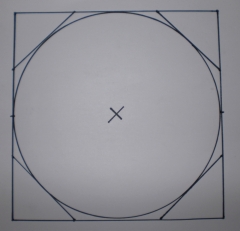
With the circumference of the sphere marked out, 4 lines
representing the corner facets are drawn in forming an octagon around
the circle.
The facets will be used to limit
the plaster thickness in the box and help to shorten the plaster drying time.
I marked the exact centre of the
baseboard and drilled a 2mm pilot hole for the paddle's axle screw
(more about the paddle later).
Viewed from the front. (Section through the centre of the box)
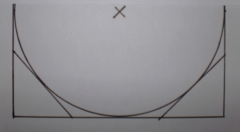
The box was a little deeper than a half sphere to allow for trimming the completed hemisphere to size at it's equator.
I drew the facets between the floor and the wall of the box to more closely form the shape of the sphere. The facets form another smaller octagon in the bottom of the box.
Google Sketchup drawing in 3D, section view. 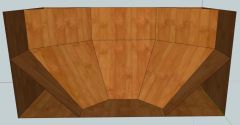
This drawing clearly shows the facets. 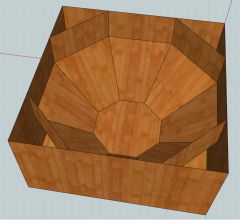
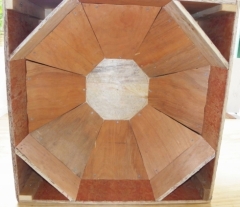 Photo of the completed box made with 12mm veneered chipboard.
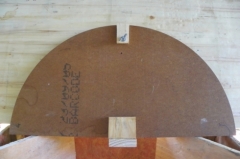
The
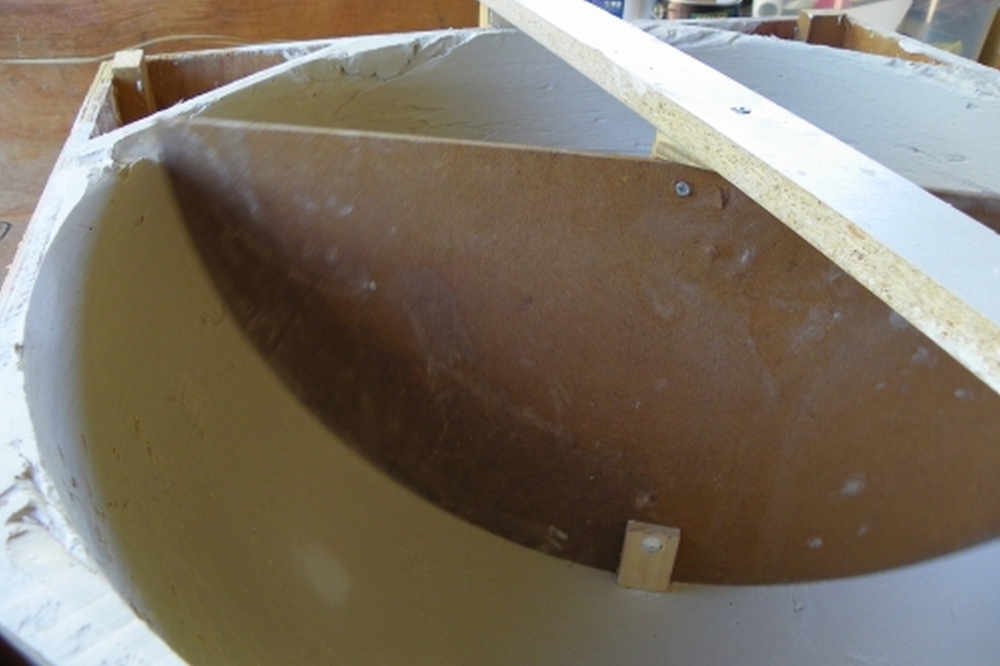
next step is to build the paddle. The paddle is designed to shape the plaster into the hemisphere in the box. Cut a
semicircle from 6mm hardboard or similar board, using a router jig. See how to make a router jig here http://www.woodworkingtips.com/etips/etip102000sn.html
I then added the two axle blocks, centred top and bottom of the paddle (as shown in the photos), and drilled them for the axle screws.
So that I could centre the paddle accurately on the axles,
I enlarged the screw holes in the hardboard and
put washers under the heads of the screws to make them adjustable. I
used paper shims under the blocks to centre them to the thickness of
the hardboard.
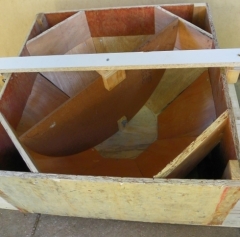
Fit
and centre the paddle.
The paddle will only make a few very slow revs so the axles do not
need to be anything more complex than a simple self tapping screw. Put the screw through the pilot hole you made in the bottom of the box with a washer to act as a spacer.
I added two blocks to the outside
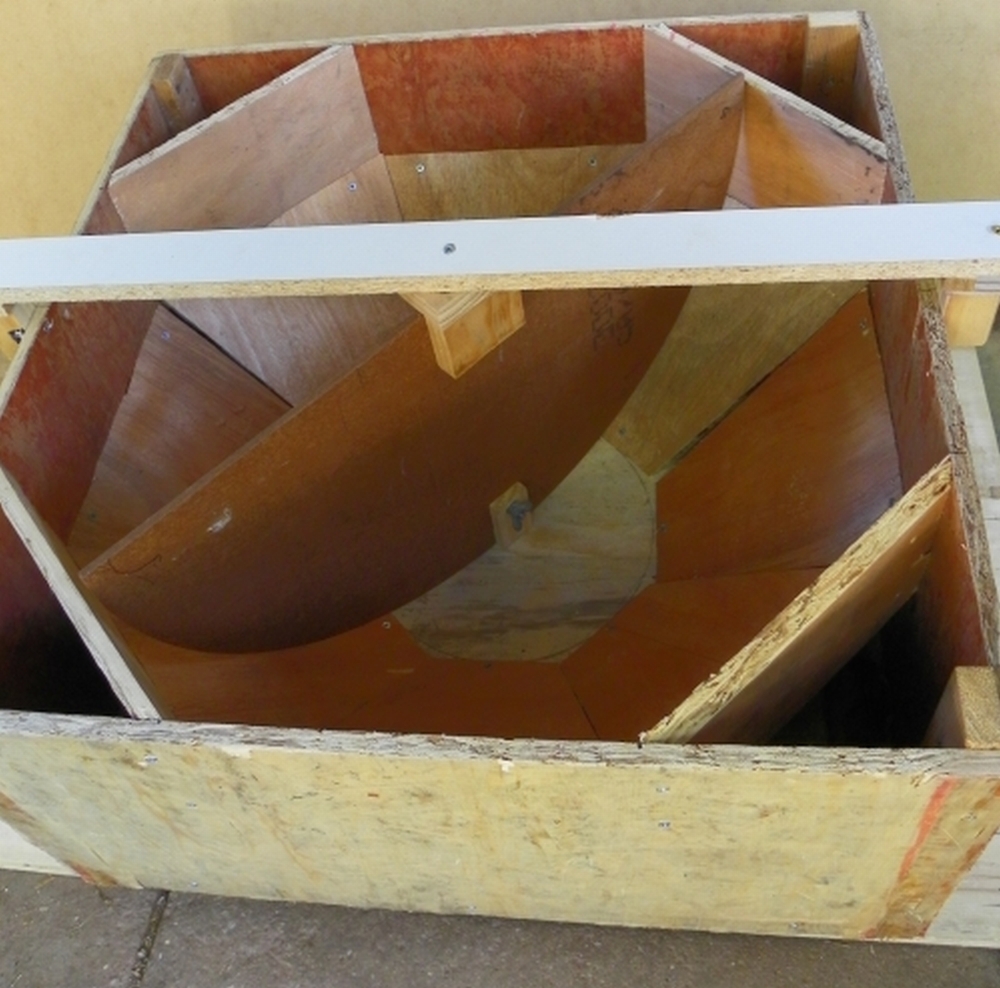
of the box to support the upper axle mounting board and mounted the paddle on the axles. It is important to centre the
paddle correctly at this stage, making sure that it rotates easily in
the box before tightening everything into place. Clamping the axle
mount to the outside blocks while I centred the paddle made adjusting
it easier.
NOTE:- Centre the paddle well, both the shoulders and thickness or you'll
get a hemisphere with a flat pole and lots of sanding to correct it.
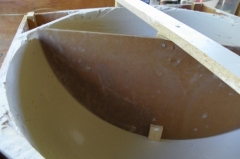
Make
your batch of plaster thick enough to hold it's shape, it needs to be
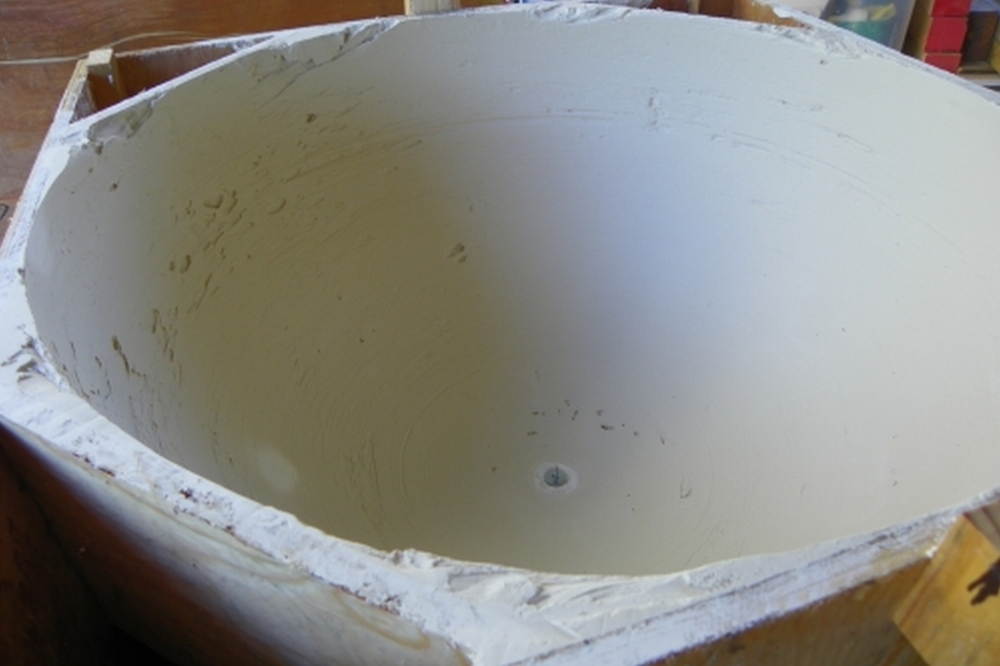
thick so it doesn't slump any more than you can help. My method was to repeatedly throw small volumes of the thick brew into the box with a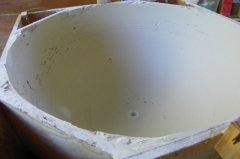 large spoon at the same time slowly rotating the paddle, gradually filling all the voids until a hemisphere took shape.
It took several layers to fill all the voids and get a good hemisphere.
When a batch of plaster starts to set, clean up any high spots then let it harden and dry. Remove the paddle and clean it. Continue at a later time with a new batch of plaster until there are no further voids to fill. The paddle's
position in the box isn't super critical, you can make a final thin
skim over the whole hemisphere surface if you feel it needs it.
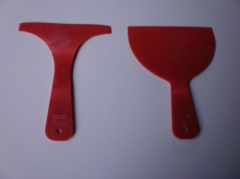
These tools were a better way of getting the smaller shallower voids filled than throwing with the spoon.
I used a copping saw and a half round file to shape the plastic tool
(left) so that it would more readily conform to the shape of
the sphere.
After some experimenting I ended up with the blade about
2cm deep behind the working edge.
At
this stage you'll need to sand the plaster to get a good finish on the
mould and help to get a really nice hemisphere. The secret to sanding a
well shaped, smooth hemisphere is the sanding disk itself. The sanding
disk needs to
be a stiff ring or circle that only brings the sanding media into
contact with the high spots in your mould and leaves the low spots
untouched. To make it easier to know how you're going use a pencil and
draw an asterisk shape in the mould, don't use a pen, the pencil marks
don't soak into the plaster). Repeat this part
drawing new lines until you have a good hemisphere a the lines will
disappear with only a very quick light sanding. Lines that persist show
low spots that need sanding out or filling. HINT: it's better to fill a
persistent hole than to sand the whole mould down to get it out.
I used a 230mm diameter, 240grit sanding disk designed for use with a
rubber backing plate that would normally be mounted on an angle grinder.
Definately NO power tool should be used for this job.
I made a 200mm diameter disk from 20mm MDF and drilled a 6mm hole at
the centre for a screw that goes through a fender washer, the sanding
disk, the hardboard disk and then a wood block as a knob type handle.
Spin the MDF disk in a drill and sand it to a nice round, also sand an
angle on the MDF disk to allow it to push the sanding disk into a wider
contact with the plaster.
DON"T use a power tool to sand the plaster, a nice smooth well shaped hemisphere relies on the randomness of hand sanding.
Remember, preparation is the key, make sure you're happy that you have a good mould before you start with the fibreglass.
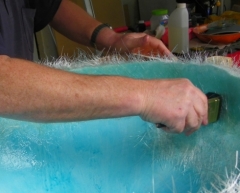
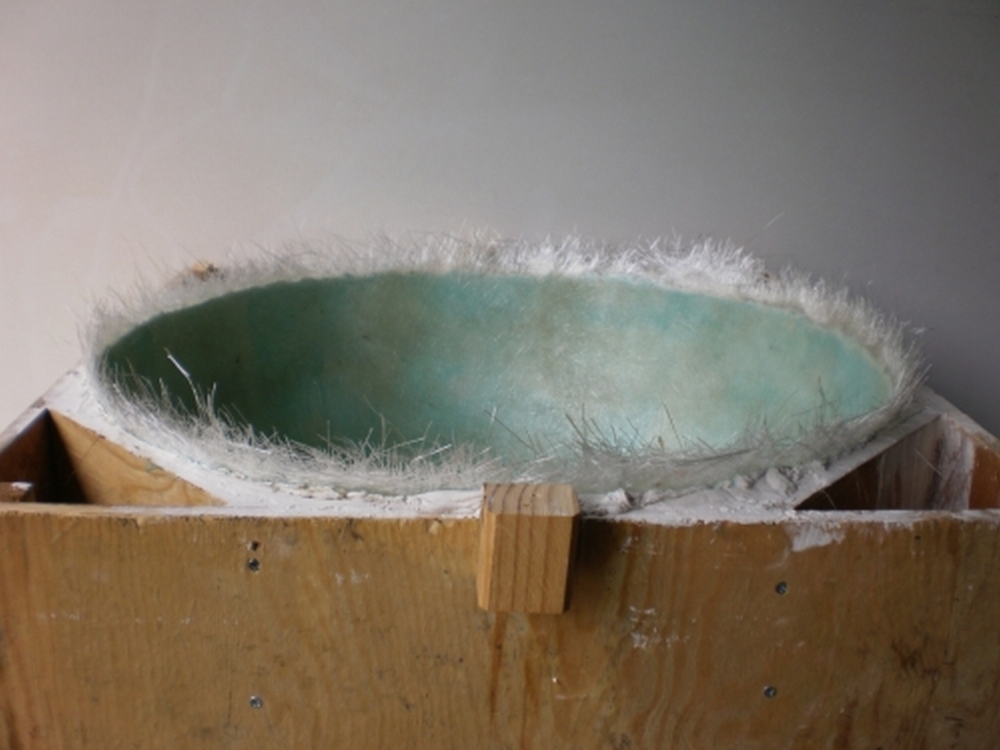
The mould was waxed, then waxed again, then I waxed it again, got that? then I waxed the mould one more time.
IMPORTANT:- Leave the wax plug in the pilot hole to keep the resin from sticking in the hole.
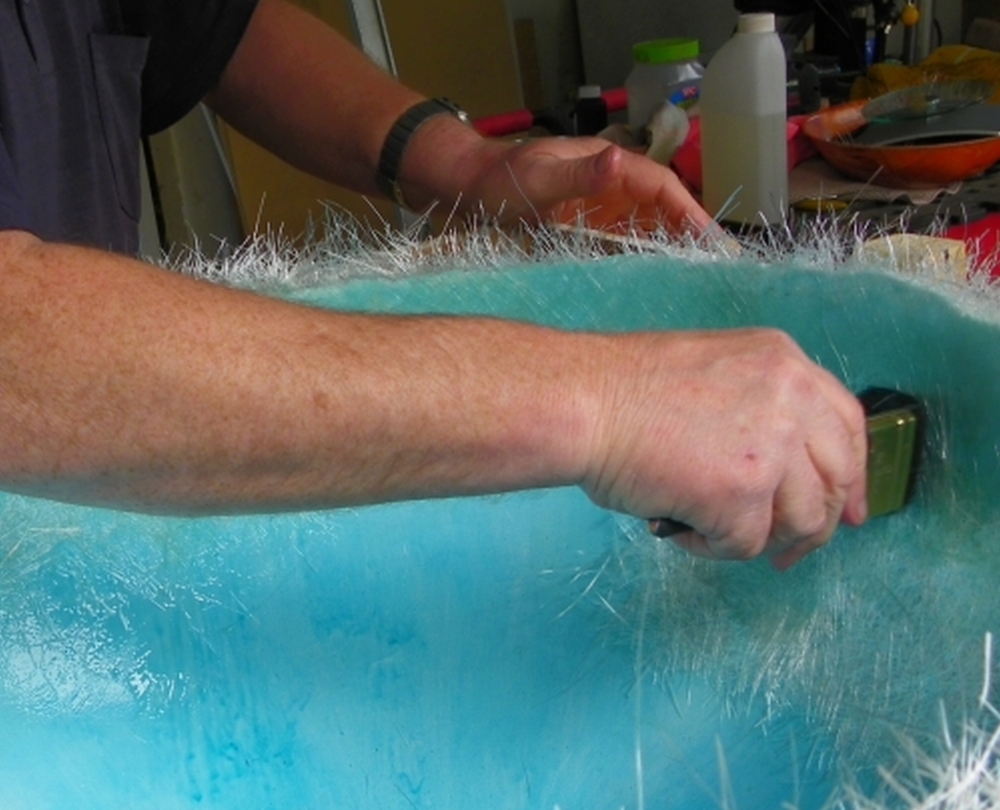
I applied the mould release agent as per recommendations on the bottle.
The bright blue colour in the photo is the colour of the release agent.
I
applied 4 layers of 450gram chopped strand mat fibreglass TORN (cut
edges don't blend very well) from the roll into 100 X 100mm squares.
Bigger areas of mat tend to fold and crease in the spherical shape
rather than blend in nicely. Each layer was applied over the
whole mould before I started the next layer on top of it. I completed
all 4
layers in under half an hour without stopping.
Calculate 1litre resin per 1sq metre of 450gram mat. Each layer was
about 1mm thick and used 1/2litre of resin per layer in my mould.
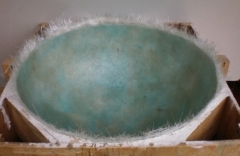
Next day, the moulding was ready to be removed from the mould.
Remove the wax plug from the pilot hole CAREFULLY with a stiff piece of wire.
I
gently pulled on the moulding around the rim and used the water pressure
from the garden hose held against the pilot hole in the bottom of the box to
help push the moulding out of the mould. The release agent is water soluble so the water also helps to release the moulding.
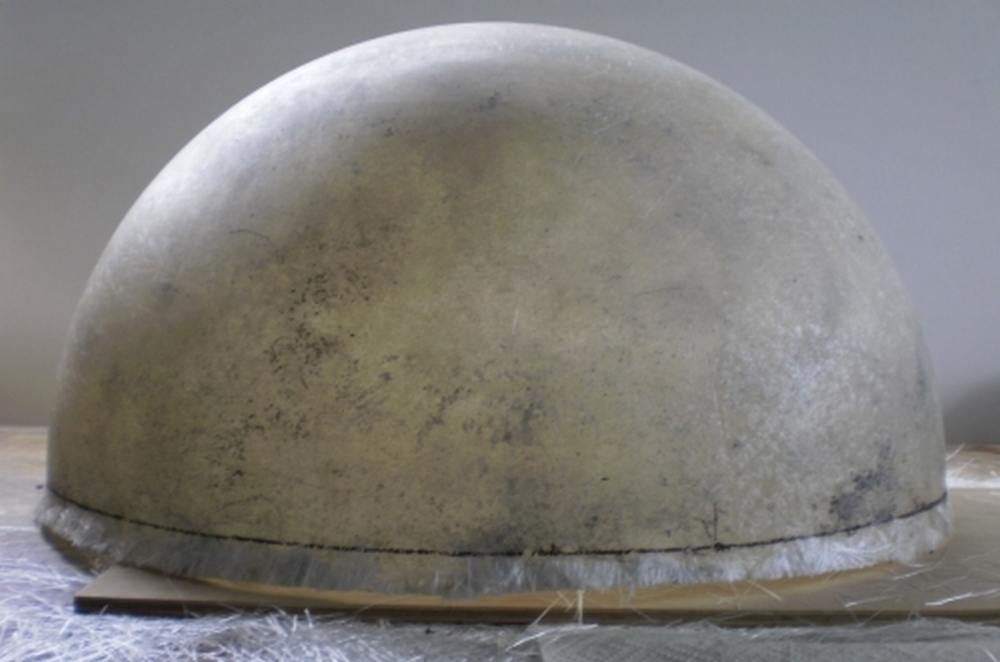
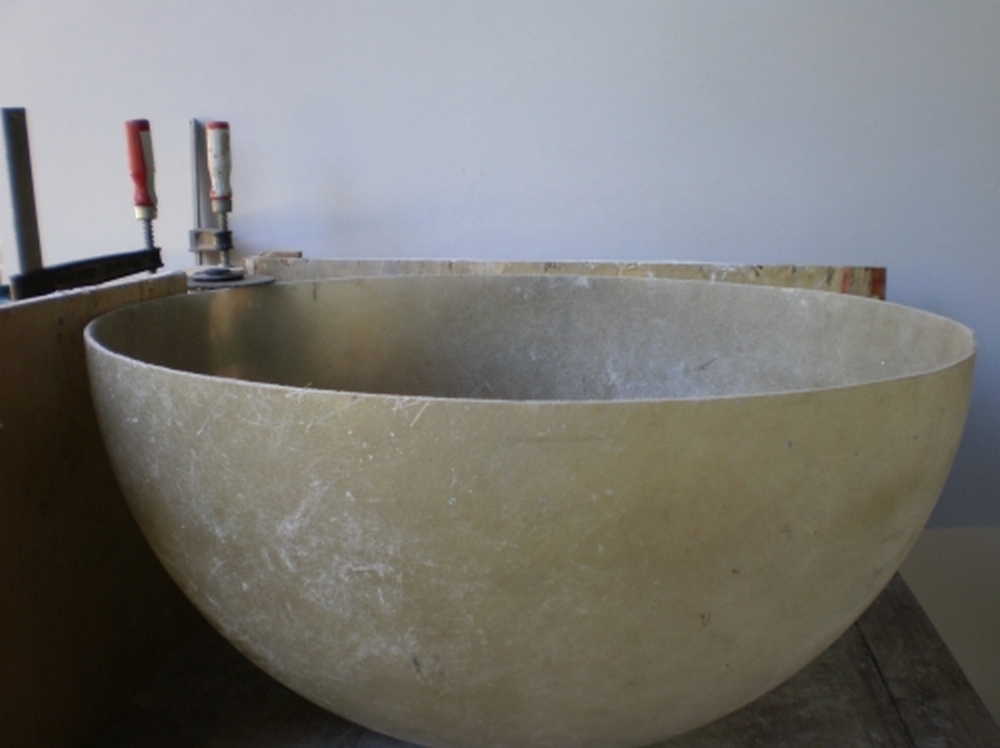
There will be two identical mouldings like this.
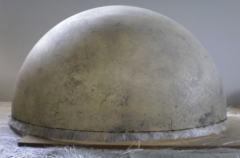
I built a large compass tool from scraps of ply and mounted a "fineline" marker pen at 90deg. to the leg and a point similarly mounted on the other leg to
draw the equator. I
measured the circumference of the hemisphere at it's equator, divided
that by 4, measured from the pole and marked several places around the
equator and drew the line to trim to. The
marker became blunted in a short time so I completed the line around
the circumference then replaced the pen with a sharp nail mounted in a
dowel and drew a much finer line in the broad black line the pen made.
I then trimmed the excess off with the small hand held angle grinder.
Fortunately I hadn't trimmed right up to the line because my work was way
too wavy and needed a nicer trim if it was going to fit together
nicely.
I recycled some of the mould
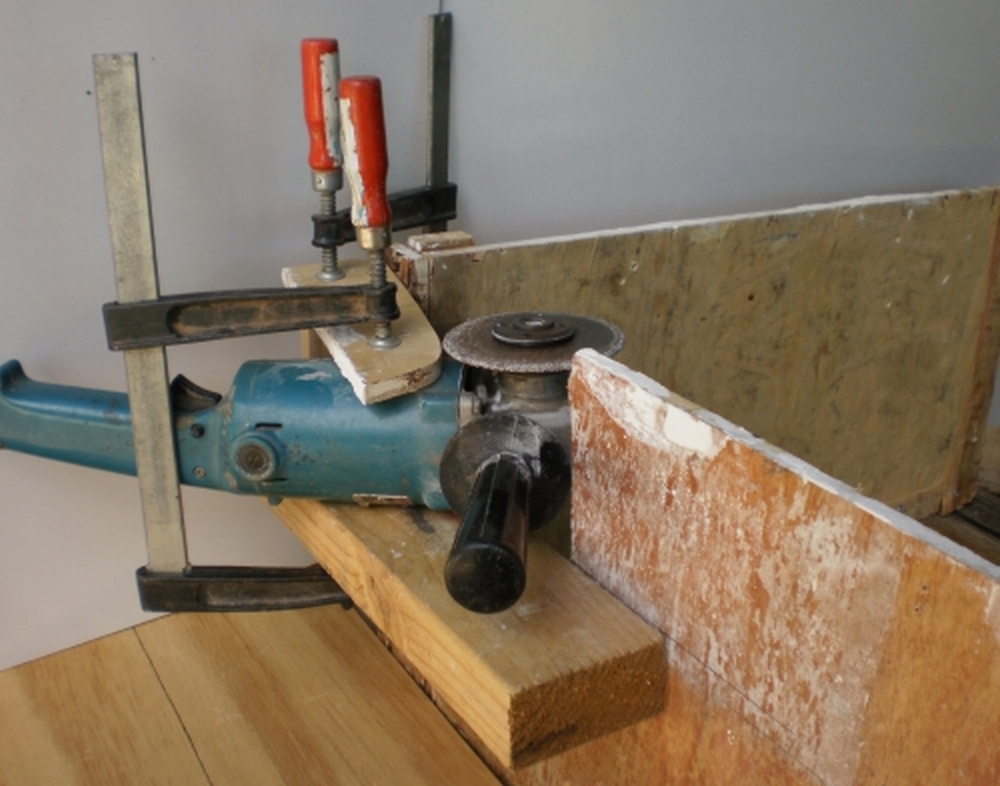
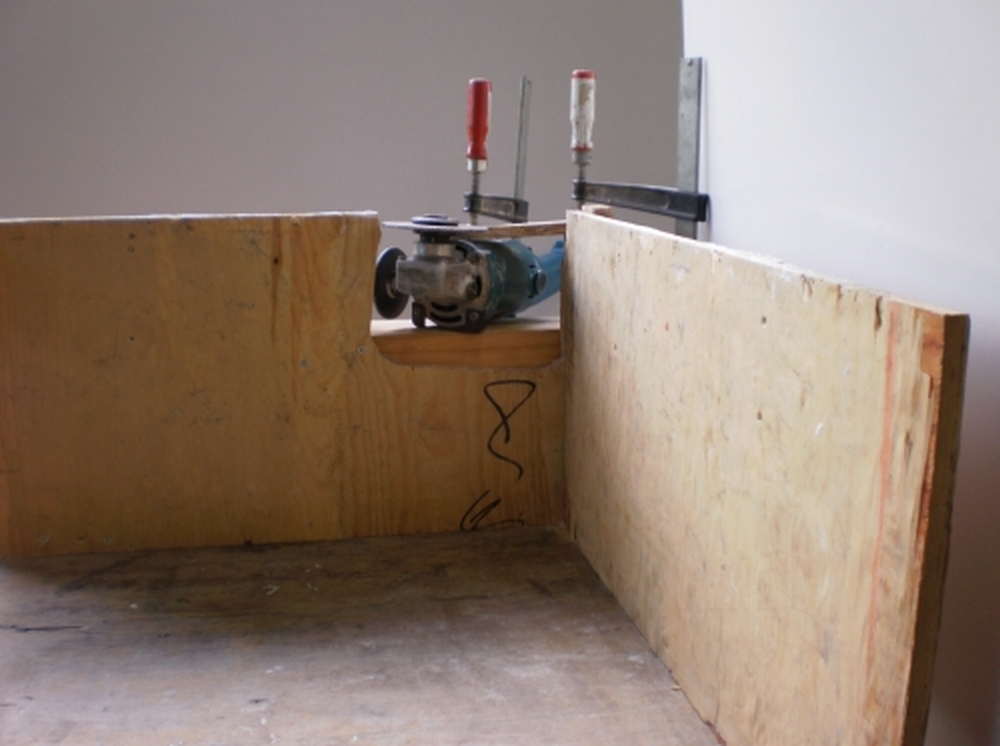
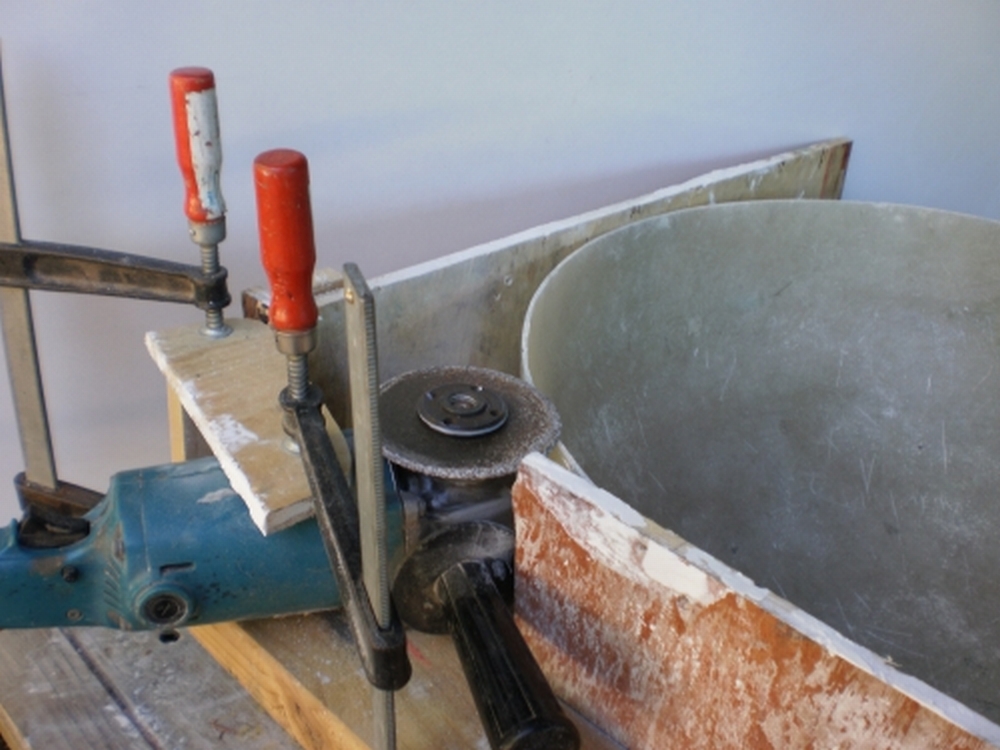
box to build the trimming jig, the base and two sides. I also had to build a mounting platform for the grinder.
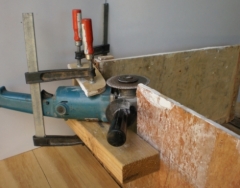
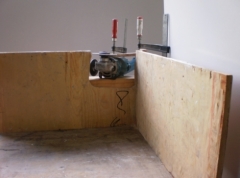
The 3mm thick cutting disk I used in
the angle grinder was for cutting stone though a metal cutting disk would do just as well.
I adjusted the angle grinder to the correct height by shimming.
A screw through the pole of the hemisphere held it to the workbench and gave a nice steady pivot point, then I CAREFULLY rotated the hemisphere past the
cutting disk adjusting the grinder to cut deeper with each of 3
successive passes.
The guard was removed from the angle grinder for this job.
After trimming. 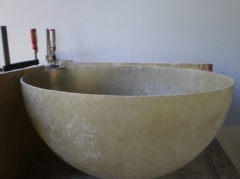
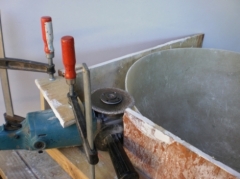 And from above.
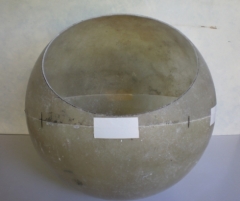
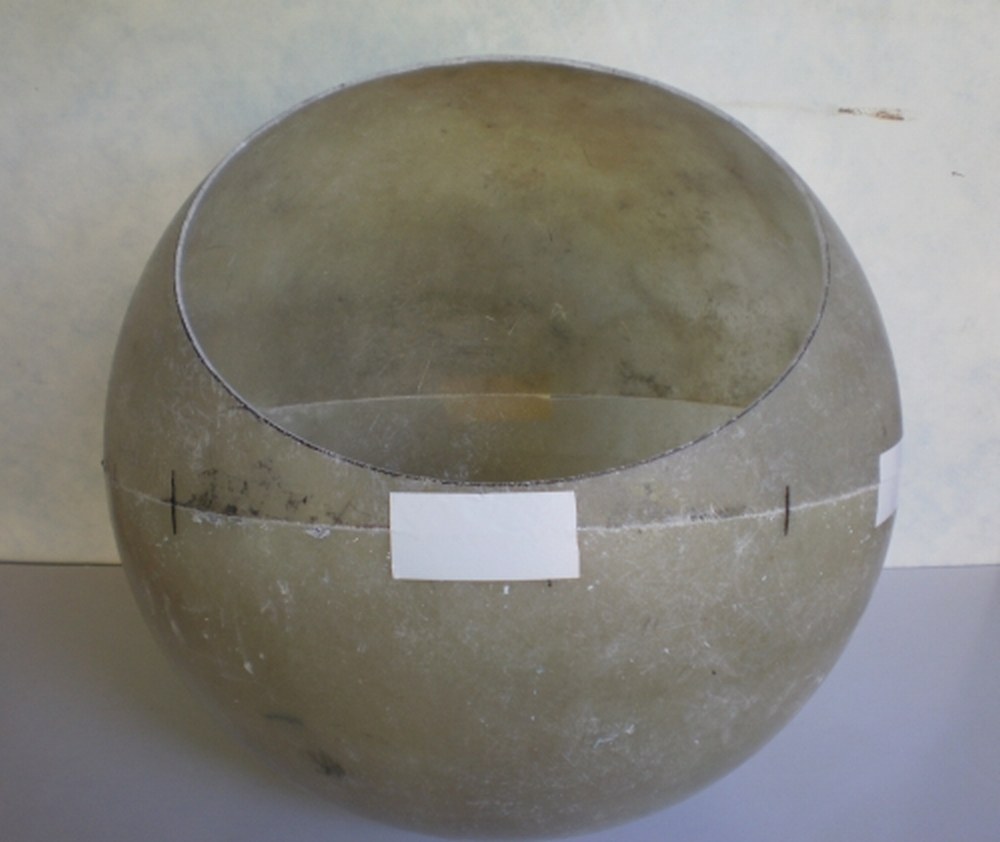
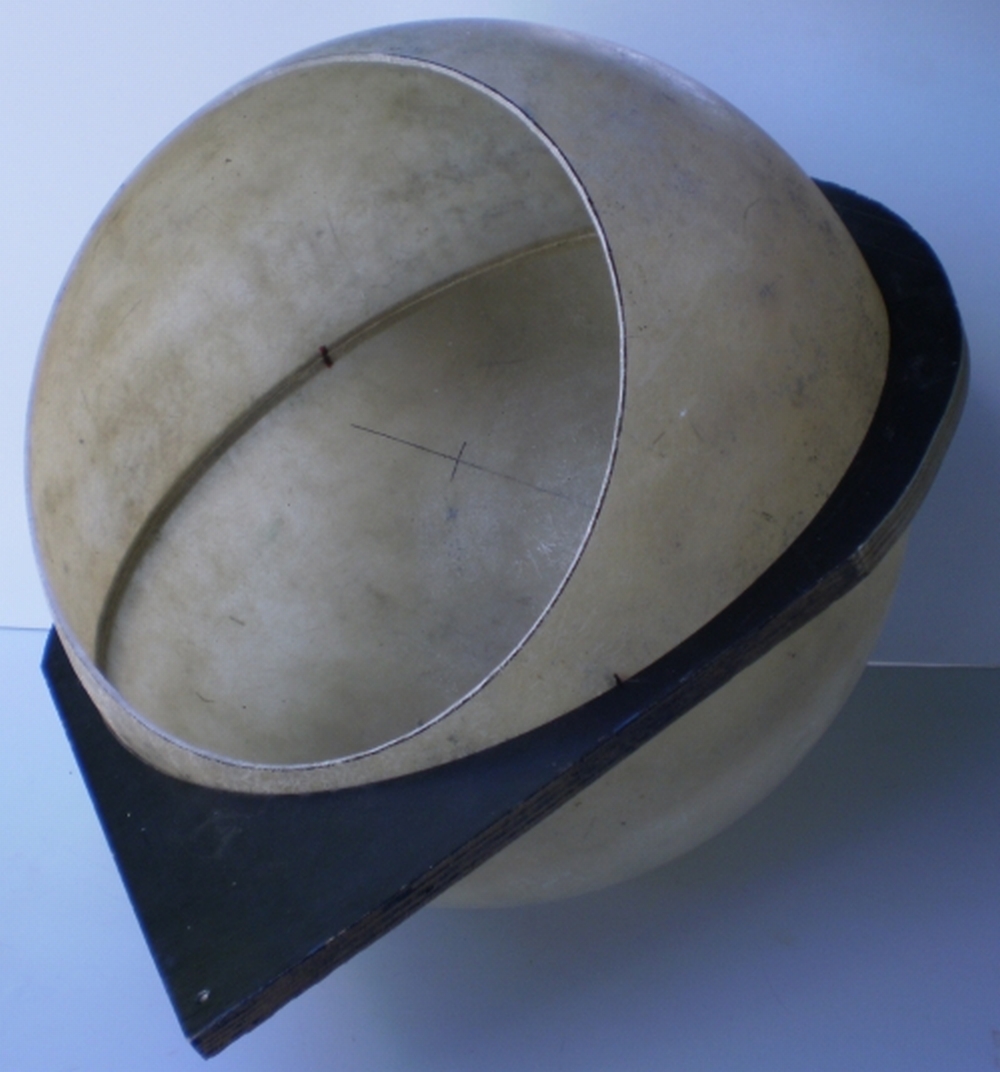
The two hemispheres taped together.
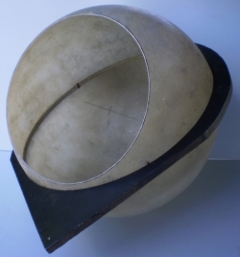
Equatorial alignment ring, ready to fibreglass the two halves together
To be continued :--
=========================================
Scratches
and other surface damage to the sphere will be detrimental to good
tracking so a protective case for transport and storage is a must.
=============================================
This is as far as the project has come so far. I'm hoping to
begin work on it again soon, when the weather warms up a
bit.
If you have any comments or questions about the project so
far please don't hesitate to email me at the address in the
graphic.
Please come back later and see how I'm progressing.
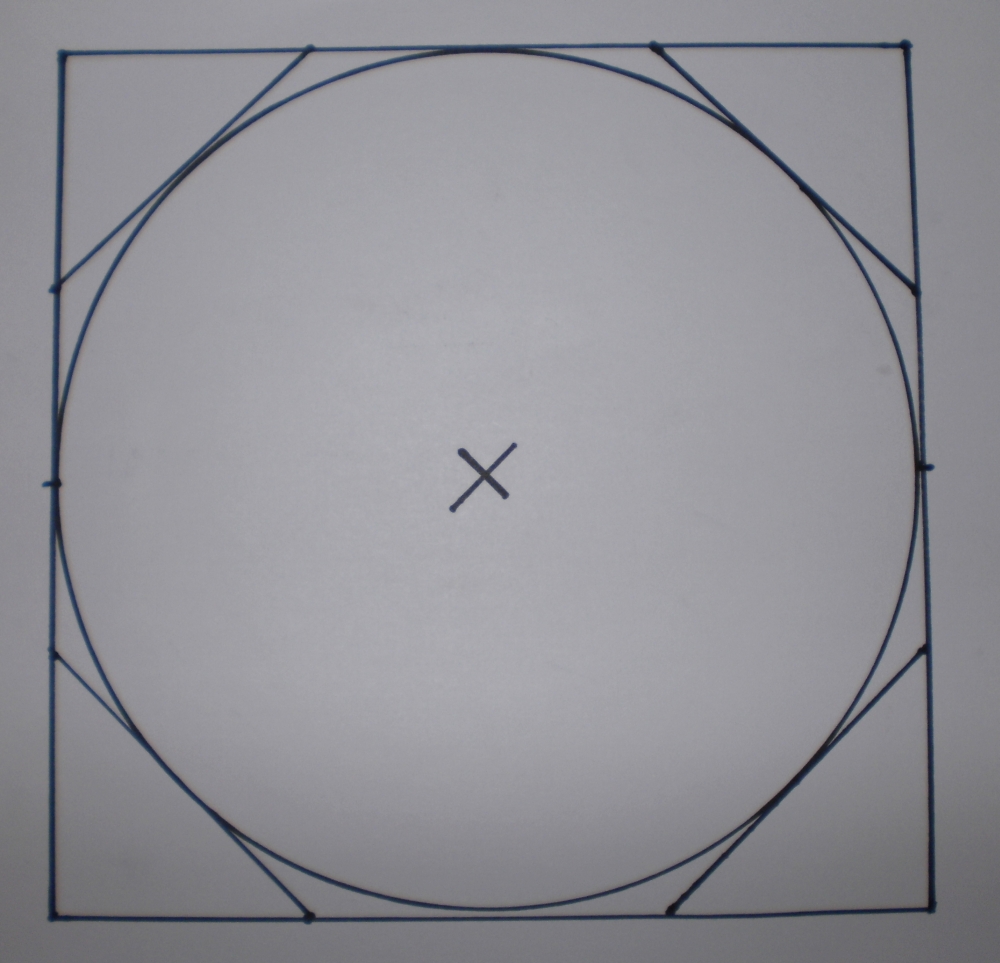
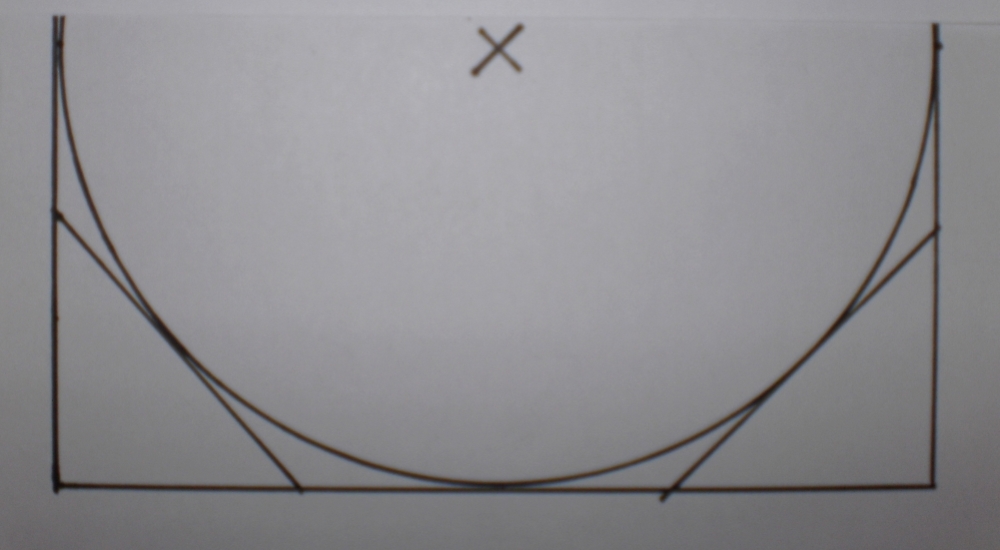
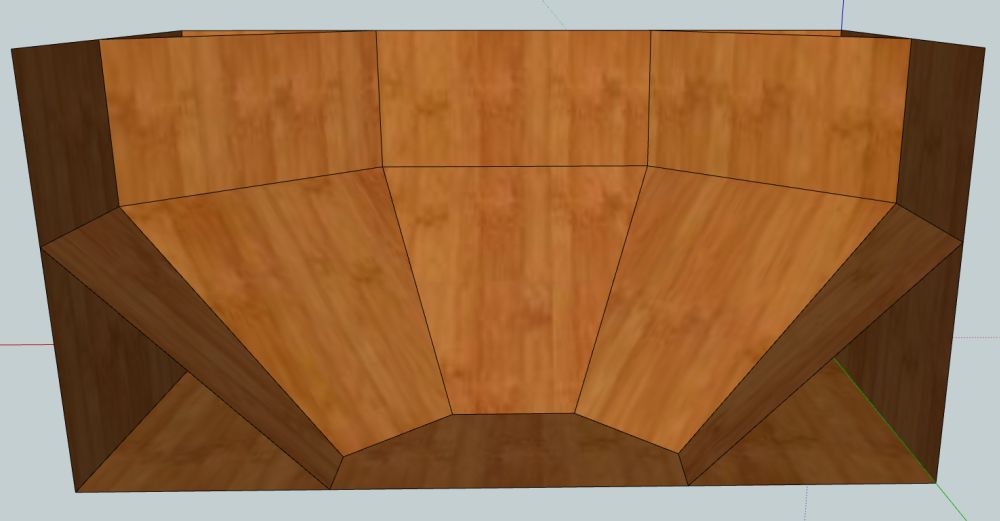
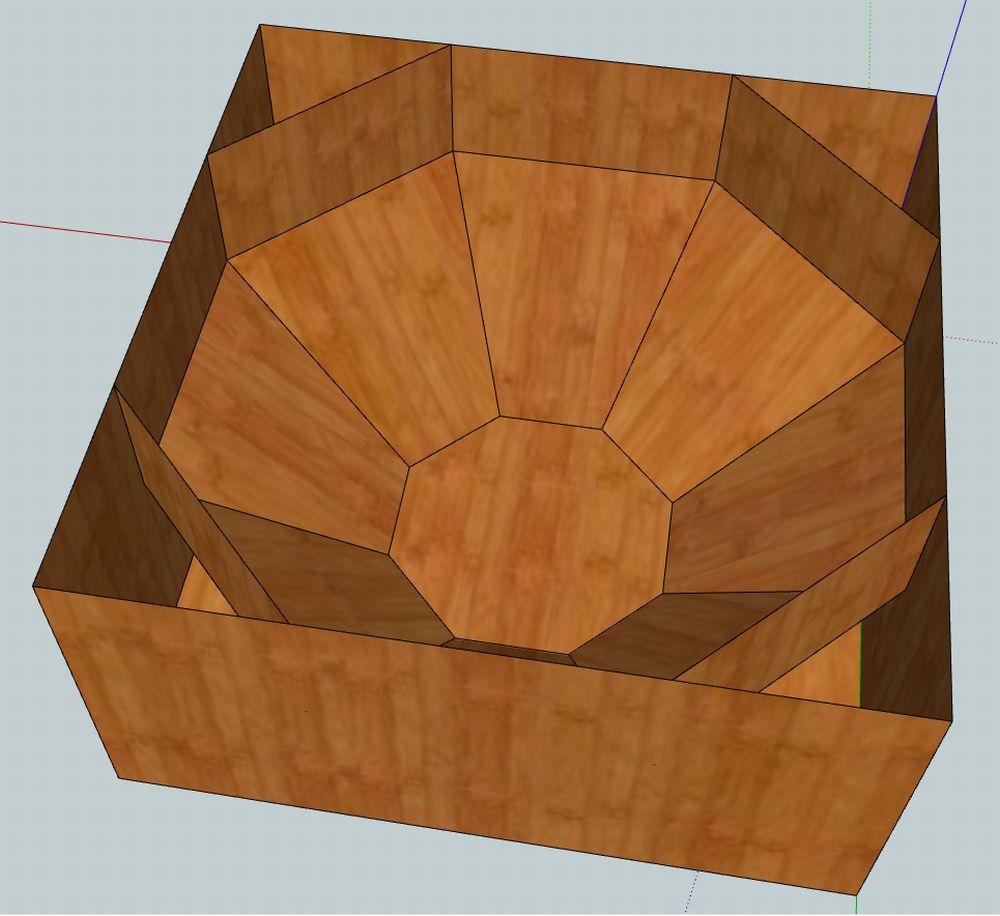
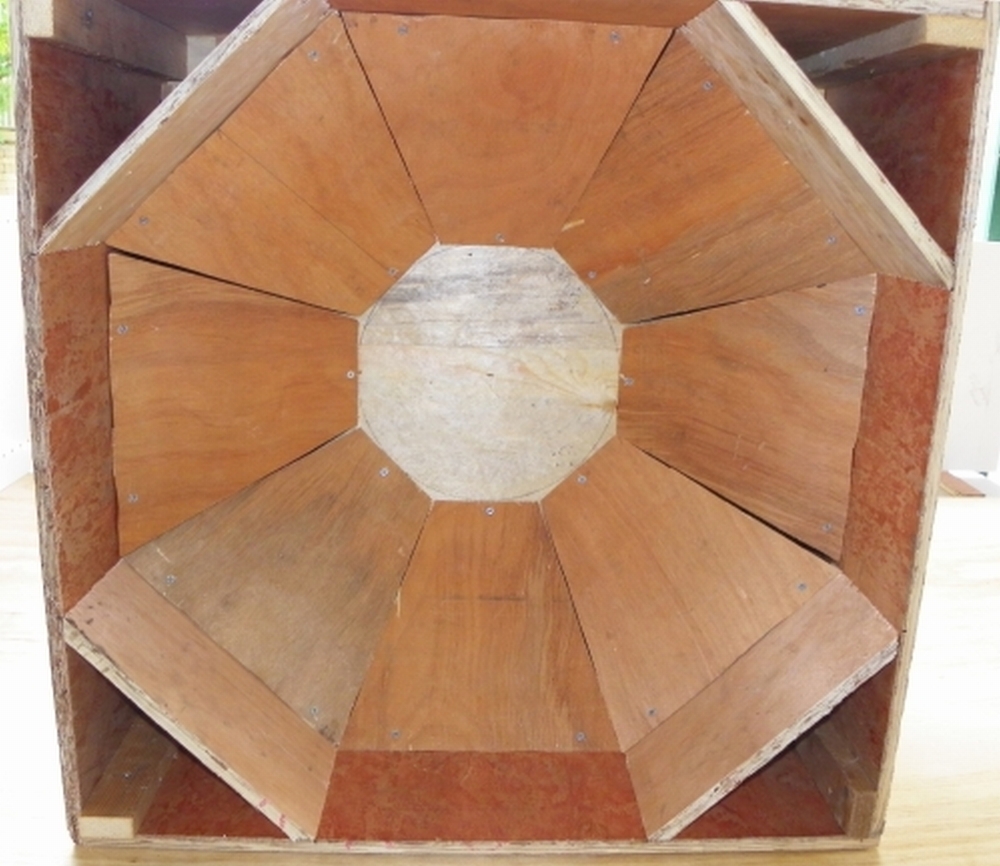 Photo of the completed box made with 12mm veneered chipboard.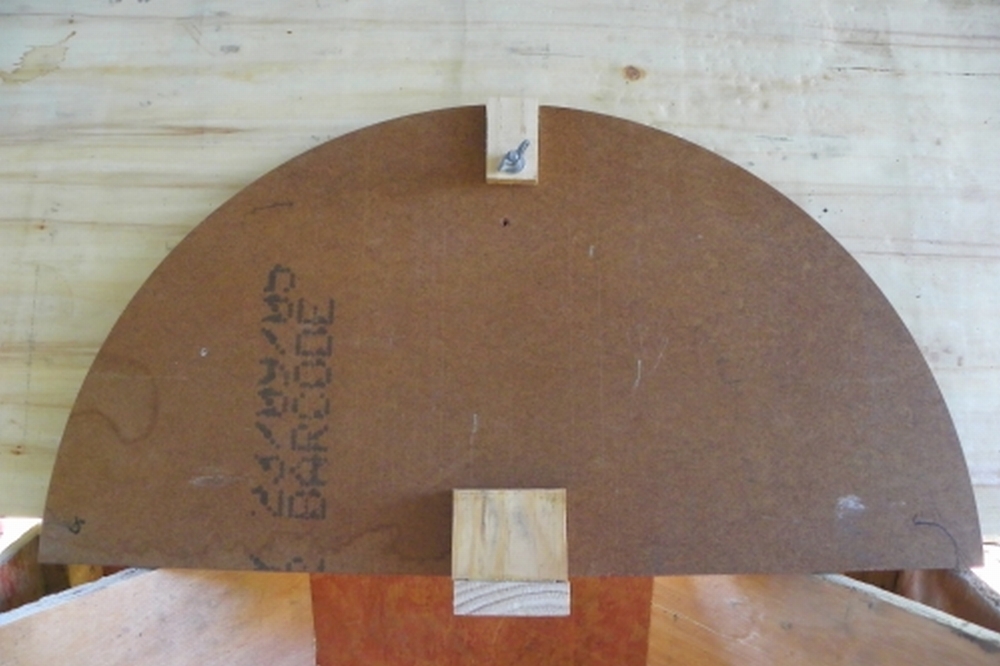
 large spoon at the same time slowly rotating the paddle, gradually filling all the voids until a hemisphere took shape.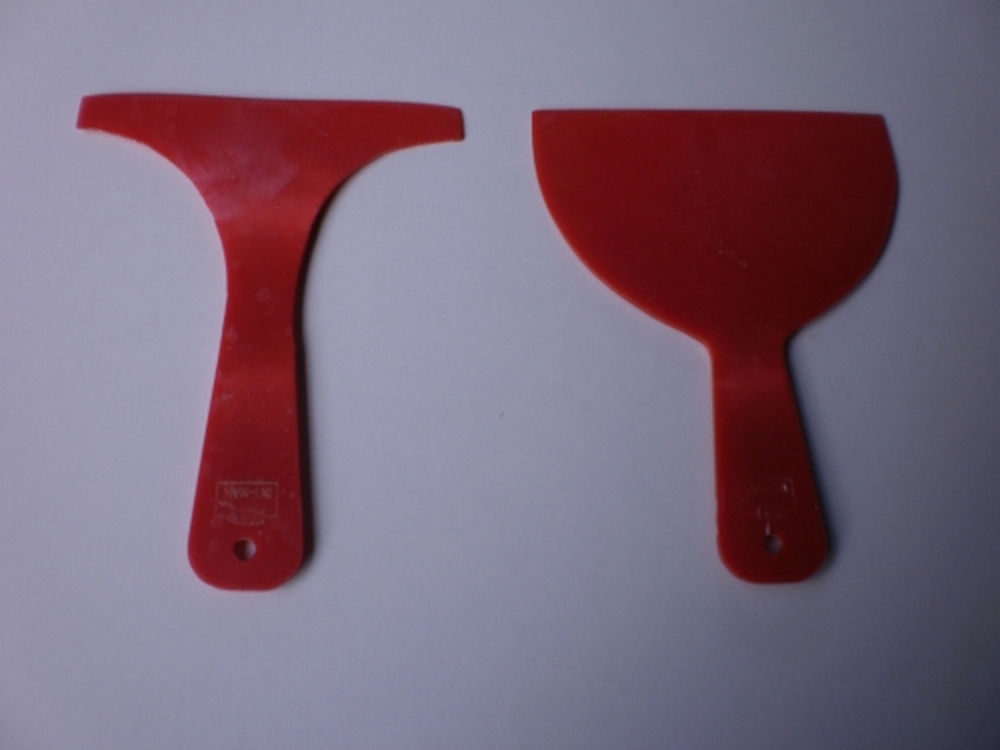
 And from above.