|
|
|
KYUDOKAN KATA
The Rhythm from the History ...
- KYUDOKAN KATA LIST -
01. Fukyugata Ichi
02. Fukyugata Ni
03. Pinan Shodan
04. Pinan Nidan
05. Pinan Sandan
06. Pinan Yondan
07. Pinan Godan
08. Naihanchi Shodan
09. Naihanchi Nidan
10. Naihanchi Sandan
11. Unsu
12. Jion
13. Jitte
14. Passai Sho
15. Passai Dai
16. Kushanku Sho
17. Kushanku Dai
18. Chinti
19. Seisan
20. Chinto
21. Sochin
22. Gojushiho
_______________________________________________________________
FUKYUGATA 1-2

The Fukyugata kata were expressly designed and adopted to
make it easier for beginners, such as Okinawan school children, to learn
karate in 1940's. Fukyugata kata were developed in joint cooperation with Okinawan Karate Masters,
as a representation of the two main traditions of Okinawan Karate-do, Shuri-te and Naha-te.
Master Shoshin Nagamine originally created Fukyugata Ichi as a new kata. This kata
is meant to be the first basic kata practiced in Kyudokan, and contains basic movements of karate-do.
Fukyugat Ni was developed by Master Miyagi Chojun with the influence of Gekisai Dai Ichi kata of Goju-Ryu.
PINAN 1-5
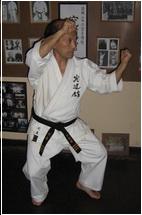
The five Pinan Kata were created by Master Anko Itosu.
He created this Kata Series at the age of 77, for the purpose of introducing
Karate to Okinawan School system with the influence of advanced kata like Kushanku.
NAIHANCHI 1-3
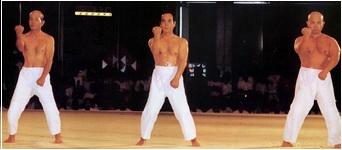
Naihanchi kata are the tanren kata of Shuri-te. The creator of these
Kata is unknown. But Naihanchi was handed down to Master Itosu Anko by Bushi Matsumura.
Today three kata are existed in Naihanchi series. Therefore, it has been practiced in
Okinawa for more than 200 years. This has side movements with short distance fighting
applications. Naihanchi Katas are famous for developing power and generating power inside
to outside. In Okinawa it is said -Shorin Ryu starts and ends with Naihanchi-(Naihanchi wa
hajimaru.Naihanchi wa owaru. And it is believed one must practice this kata for over ten
thousand times to understand the kata.
UNSU
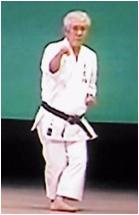
Unsu was originated in Shaolin Temple in Honan, China. Kanken Toyama
Sensei introduced this kata to Okinawan Karate Syllabus. 52 movements has been considered
in creating this kata, from the 106 original movements.
JION
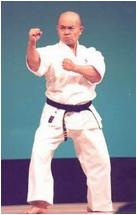
The creator is unknown. But it was believed this has come
from a Buddhist temple called Jion ji in China. It is said Matsumura brought this kata.
Some says this kata comes from Tomari-te tradition.
JITTE
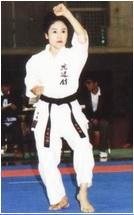
Creator of this kata is unknown.� Jitte� can be translated as
�ten hands�. Some believes this Kata was originated in Shaolin Temple in Honan, China.
It is important to know that Master Chatan Yara has lived in Shaolin Temple in Honan for
about 20 years. This Kata was introduced to Shorin Ryu by Master Shinpan Gusukuma (Shiroma).
PASSAI 1-2
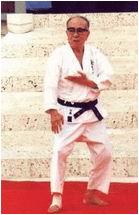
It's believed that this kata comes from Tomari Style. There are many
versions of this kata such as, Passai Sho, Passai Dai, Oyadomari Passai. Passai Dai was
developed by Master, Sokon Matsumura and Passai Sho was developed by Master, Anko Itosu.
KUSHANKU 1-2
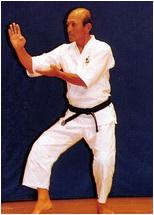
Kushanku Kata has originally handed down by Master Sakugawa
-Father of Okinawa Karate-. But many masters altered this Kata with their experience .
The Chinese sailor and martial art expert Kushanku (Kung Syang Chung, Ko Sokun) taught
this Kata to Master Sakugawa. This kata is one of the most advanced kata in Shorin
system. Master Nagamine has said it takes more than 10 years of continuous training
of this kata to gain expertise in this kata. There are many versions of Kusanku Kata
developed by Sokon Matsumura, Chatan Yara, Itosu Anko, etc. We practice Kushanku Sho
& Kushanku Dai in Kyudokan. Kushanku Dai is said to be developed by Master, Sokon
Matsumura and Kushanku Sho by Master, Itosu Anko.Hanshi Oscar Higa created Higa No
Kushanku in honor of Master Yuchoku Higa and Jintatsu Higa.
CHINTI
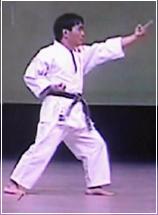
�Chinti� can be translated as �amazing or mysterious hands�.
This Kata has many mysterious & hidden techniques. This is said to be developed by
an Okinawan folk dance.
SEISAN
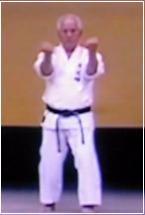
Seisan kata has a Chinese origin and practiced in Naha-te tradition
(Goju-Ryu). Seisan literally means "13". Yuchoku Higa Sensei learnt this kata from
Jinan Shinzato Sensei of Goju Ryu and added to Kyudokan syllabus.
CHINTO

It's believed Sokon Matsumura has learnt this Kata from a
Chinese pirate called Chinto. This kata has lot of techniques in Crane Stance
(Tsuru Ashi Dachi). Some believed this kara was originated in a Chinese Temple.
SOCHIN
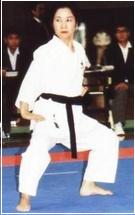
A beautiful Kata in Kyudokan syllabus. It probably should be
interpreted as something more like "Energetic Calm". The creator of this kata is
unknown. But some believe it was influenced by Master Houhan Soken. There exist a
version of Sochin called Aracanochiwa in Kyudokan. The combination of slow movements
and in a moment it turns to a quick movement is special in this kata.
GOJUSHIHO
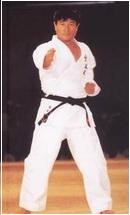
Literally means 54 steps. It's believed that this kata
was originated in Shaolin Temple. This is a long kata in Shorin Systems.
karate, okinawa karate, karate-do, karatedo, karate do, kobudo, higa,minoru higa, yuchoku higa, oscar higa,
kyudokan, martial arts, kata, shorin ryu, kobayashi, chosin chibana, bunkai, sensei, naha, japanese,
okinawan karate, shorinryu, shuri, shuri te, shuri-te, shurite, shuri, okinawa te, itosu, anko itosu,
sakugawa, matsumura, sokon matsumura, ryukonkai, kobayashi ryu, jintatsu higa, benito higa,
dojo, dojos, senseis, masters, karate masters
|
|
