
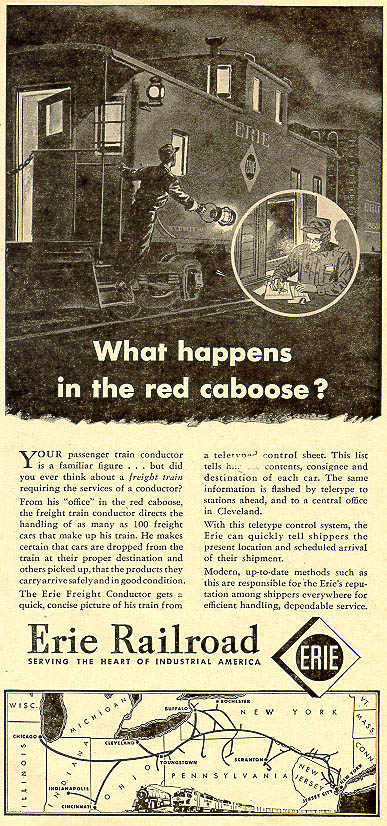
As modern technology began to make the caboose obsolete,many railroads,including the Consolidated Railways Company initiated programs that provided municipalities with opportunities to acquire them at little or no cost. Such was the case with ex-CR caboose #21754.
Placed on its current Shohola site on March 19, 1991, #21754 was formerly used on the Reading, Penn Central, and Conrail lines. It was built in January 1949, and originally met New York Central System Equipment Engineering specifications. lt was classed as an N7 caboose.
After several meetings of the newly formed Shohola Railroad and Historical Society, it was decided to utilize the recently acquired caboose as a museum and tourist information center. Planning, fund raising, and extensive volunteer work was begun in order to transform the old caboose into a signficant tourist attraction.
The village of Shohola was settled in 1772. The 45 square mile township,extending from the Delaware River to Route 6 was formed on September 25, 1852.
While there were only a few farms in the area at first,growth began with the coming of the Erie Railroad in 1848. Seven years later,a bridge was built,replacing the ferry which connected Shohola with Barryville and the Delaware and Hudson Canal.
The first significant industry was lumbering, and by 1900 all of the original forest had been cut down to be used in construction from New York to Philadelphia. After 1870 the quarrying of bluestone for buildings and sidewalks became a major industry.
>On July 15,1864, a mile and a half west of the village of Shohola, a train carrying over 800 Confederate prisoners of war collided with a coal train, causing a loss of over sixty lives. The Shohola community responded with help for those injured in the tragedy.
ln 1871, St. Jacobi Lutheran Church was constructed, and St. Ann's Catholic Church was built in 1923.
At the turn of the century, with a one dollar round-trip ticket on the Erie, many tourists came to Shohola Glen,a noted amusement park. Local boarding houses then began attracting large numbers of vacationers each summer.
By 1960 vacation homes and retirement homes were replacing boarding houses, and the following thirty years saw the township population quadruple.
Approximately one-third of Shohola is owned by the Commonwealth of Pennsylvania, with the Township containing a portion of the Delaware State Forest and sections of three state gamelands.
Twin Lakes, Walker Lake, and Shohola Creek are among many beautiful waters of the Township, and along the Delaware River is a twelve mile stretch of the Upper Delaware Wild and Scenic River Corridor, an area where both private property and the national interest in the river have been protected by special zoning.
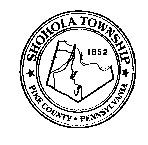
The seal of Shohola Township consists af a map of the Township with the four main bodies of water - Walker Lake, Twin Lakes, Delaware River, and Shohola Creek, and the four state roads that lead into the township-Twin Lakes Road, Lackawaxen Road, Shohola Road(Route 434) and GAR Highway (Rt. 6).
The two stars represent peace and tranquility. Translations of the word SHOHOLA, as the Indians originally applied it to the peaceful, tranquil Shohola Creek. The date 1852 is the year the Township was legally formed.
Ed Backus President
Rolph Mueller Vice President
Marianne Yeaw Secretary
Christine Gries Treasurer
Martha Shadler Trustee
Elliott Zucker Trustee
Dee Dee Backus Trustee
Caboose is open
Saturdays and Sundays from 11 AM to 2 PM
During June, July and August
Admission is free
 Get your own Free Homepage