

A MOST HATED SUBJECT
Disgusting, blood sucking, parasites, spreaders of diseases and worms, living unnoticed on your pet. The smallest of creatures is one of the herdest to kill. Quite a few years ago we had a flea infestation when we lived in Upper Darby. We bathed our pets in flea shampoo, set off a fogger in the house, sprayed the carpets and furniture, and used who-knows-how-many other products. Trying to rid your home of fleas is an extreme money waster and it seldom works properly. We had to do this at least three times before it worked. Now, luckily, there are even more products out there, preventatives and treatments. Treatment still costs a lot of money. Start your pets on preventative treatment two weeks before warm weather (Flea Season) starts. We use (and love) BioSpot. It costs a lot less than the more widely known names and works just as well. We usually order ours through a pet catalog.
*TICKS*
Although just as disgusting and capable of spreading disease, ticks are much easier to deal with for several reasons;
1.) They are larger than fleas and more easily noticed.
2.) They do not require poisons to get rid of them, just twaezers.
3.) They do not breed on your dog, at least I never heard of it. I've never seen more than two at a time on my pets.
4.) They are easier to manage right down to prevention.
We have had several dealings with this pest! If you find a tick on any of your pets remove it immedialy. Get a pair of tweazers if possible, if none are available use your index finger and thumb. Get as close to the skin as possible. Pull straight up. You can save the tick in a plastic ziploc bag and have it tested for diseases at your veterinarian, but MAKE SURE it cannot escape. It is not neccesary to keep the tick. You can just keep an eye on your pet for the next month and go to the vet if anything is different. The longer it is embedded in your pets skin the better chance it has to spread disease. BioSpot works for tick prevention as well.
~WORMS~
Yet another disgusting, disease spreading parasite. Worms are less common, but more difficult to detect because they live inside your pet. Most species common in animals live somewhere in the digestive system. Some symtoms include, a rounded and bloated belly and a skinny body, trouble passing stools, increased appetite. There are also heartworms. Your pet may obtain these from mosquitoes. The heartworms live in, obviously, the heart. I'm not sure how to detect symtoms of this. They slowly deteriorate your pets' hearts until they die. Use a mosquito repelent on your pet (BioSpot to the rescue again!) as well as a heartworm preventative. If you suspect your pet has worms call your veterinarian. Find out which wormer to use, if an over the counter poison will work. They may want you to bring your pet in with a stool sample. This way they can identify which worm(s) your dog has and they can treat it better. DO NOT change your pets food while undergoing the deworming. You are putting poison in to your animal's digestive system and changing the food at this time could cause illness, vomiting, and diarrhea.
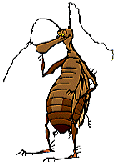
Flea larvea live on flea dirt, or dried blood, and dead skin until they are able to suck blood.
Fleas have killed more human being than all the wars ever fought. 1/3 of Europe's population was once wiped out from the Bubonic Plague which was brought on by carrier fleas.
A flea can jump 350 times its own length. That would be like a person jumping across a football field.