
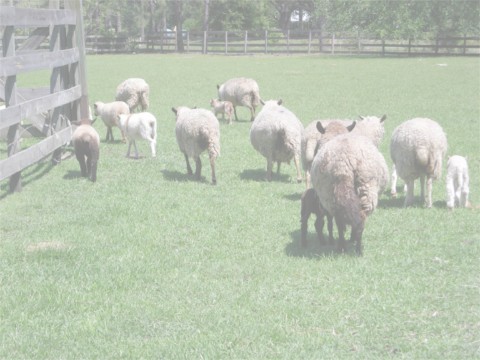
lots of lambs and a few still to come
What are Gulf Coast Native Sheep?
Gulf Coast sheep are a small bodied sheep with a refined bone structure. They have wool free faces, bellies and legs and are white to dark brown in color. The trait that is of most importantance to me is that they have also developed a degree of resistance to internal parasites. Experimentation with this breed has shown the presence of a factor or factors which acts against parasite infections, in particular the stomach worm, Haemonchus contortus, which is one of the most problematic parasites here in the gulfsouth region.
Most breeders and owners of native sheep have been able to severely limit or even eliminate the use of dewormers in their flock management due to this genetic factor.
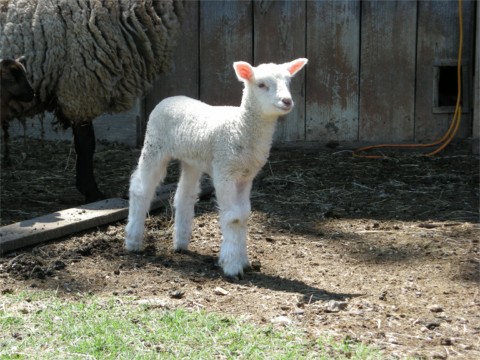
Gulf Coast sheep have adapted to the hot and humid conditions here in the gulfcoast region and routinely produce and raise at least one lamb per year without intensive management
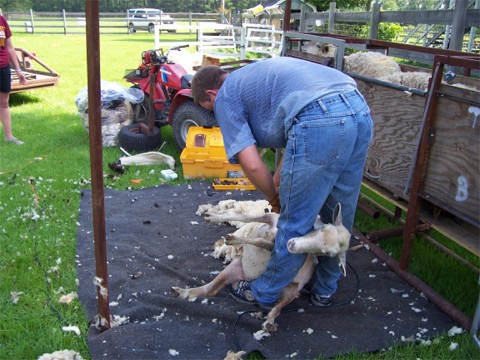
Brent Daigle our shearer hard at work
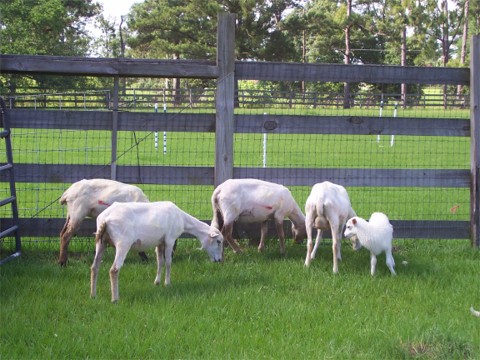
summer hair cuts