 |
|
|
|
|
|
|
|
|
|
|
|
|
|
|
Emissions vs. Fuel Economy |
|
|
|
Here is information for those who may need to understand what has been going on the last 30 years or so. Basically the EPA has mandated that all three engine pollutants be minimised as low as possible. This requires that the engine's air to fuel ratio be held around 14.7 to 1, which is the stehoicmetric or chemically perfect ratio. This means 14.7 pounds of air to 1 pound of fuel. If we lean the ratio out, say to 16 to 1, the engine would obtain much better fuel mileage.
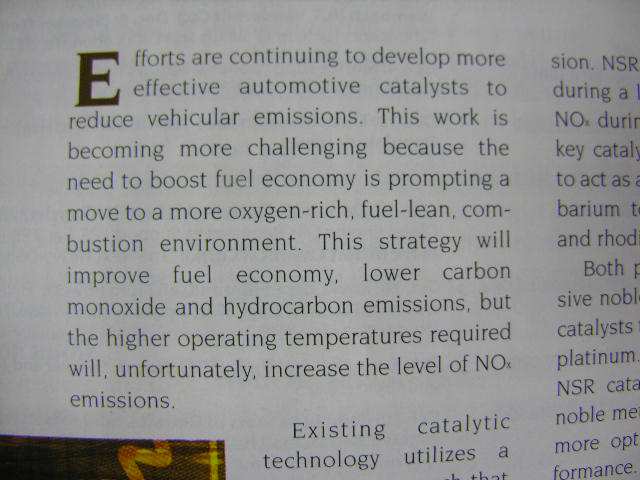
Recently I opened up a new issue of a Lubrication magazine. Not sure why this story was in a lubrication magazine but here it is. |
|
|
|
 |
|
|
|
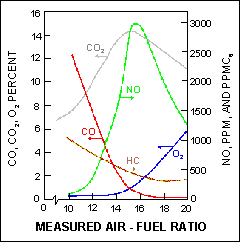
As you can see, this is nothing new. When we lean out the fuel the Nitrogen oxide pollution increases. However, I believe the Hydrocarbon pollution is more detrimental than Nox. Hydrocarbon and Carbon monoxide pollutants drop when the fuel is leaned. Below is a simple gragh I found on the internet that shows how pollutants vary with the air fuel ratio. |
|
|
|
 |
|
|
|
Time to wake up and smell the coffee. What we have been doing is injecting more fuel into the engine than needed to operate it efficiently. This extra fuel is used to cool the combustion to reduce NOX. Then the fuel that is wasted gets burned off in tha catalytic convertor.
I have heard people say that the technology exists to allow Chevy Suburbans to get 40 MPG but the greedy oil companies and the greedy car companies have a secret plan to keep this from happening. I won't mention the political persuation of these "know it all" idiots. Maybe when Gasoline hits $5.00 a gallon we will start thinking about raising the NOX limit.
|
|