
Yeah so those are some of the bands I'm into.
I think I ripped this off of MSN Music or something, it's a little thing on the different types of Metal. I don't agree with a lot of the shit here, but they give the jist of it.
Deathcore
Deathcore, which includes the substyles of Death Metal, Black Metal, and Grindcore, is the most extreme form of Heavy Metal. The tempos are relentless, the vocals are extreme, and more often than not, the music is technically complicated. The lyrical content tends to deal with morbid subjects such as death and Satan. While there is no mainstream audience for Deathcore in the world, these bands enjoy a dedicated cult following. Death Metal is primarily an American style that has expanded into much of Europe. Many of the early Death Metal bands originated in Florida, including Death, Morbid Angel, Deicide, and Obituary. Black Metal's origins are mainly Northern Europe and this is where it still gets the most respect, although there are many fans in America and the rest of Europe.
Hair Metal
The music is slick, the pants are tight, the riffs are big, the hair is bigger, and the attitude is, somehow, even bigger than the hair. Los Angeles was the center of the movement where bands like Poison, Motley Crue, Warrant, and countless others sprung up in the mid-'80s playing the pop-oriented, radio-friendly hard rock that is called Hair Metal. Most of the bands combined overt machismo with makeup and clothing that at times came close to drag. Thanks to its exposure on MTV, Hair Metal has been the most commercially successful form of Heavy Metal, enjoying several years of arena tours and heavy rotation on pop-radio until, in the early '90s, it fell out of favor in the wake of the Alternative explosion.
Nu Metal
Nu Metal is the latest form of Heavy Metal. Whereas traditional Heavy Metal and Thrash play straight rhythms with power and speed, Nu Metal slows down the tempo and turns up the groove. The vocals are usually non-melodic and often hip-hop influenced. As with all forms of Heavy Metal, the guitar is still at the center of the music, but many Nu Metal bands have expanded out from the standard guitar, bass, and drum combo to include additional musicians, including DJs, multiple vocalists, and sample artists. The pioneering works of Nu Metal include Faith No More's 'The Real Thing' and Helmet's 'Meantime.'
Note: Nu Metal is a fucking disgrace to music.
Stoner Rock
The Stoner Rock movement of the late '90s owes its existence to the music of Black Sabbath. The original Stoner Rock band was Kyuss, who took Sabbath inspired riffs, turned up the distortion, and tuned down the guitars. The music is usually slow but extremely heavy, which results in a sound that is laid-back at the same time that it's aggressive. The guitar takes center stage and the riffs almost always bring Sabbath guitar-player Tony Iommi to mind. Lyrical content runs the gamut, but often centers around lighter subject matter such as cars, fantasy, and, of course, drugs.
Thrash/Speed Metal
Thrash and Speed Metal both combine Heavy Metal with Hardcore Punk, adding the speed and aggression of Hardcore with the volume and heaviness of Metal. Bands like Metallica and Anthrax emerged from the underground scene in the mid '80s, with others following in their paths, Pantera and Slayer being two of the most successful.
Heavy Metal
Heavy Metal is basically Rock and Roll with more Rock and none of the Roll. The music is louder, faster, and heavier than its predecessors. Black Sabbath, who debuted in the early '70s, is widely considered to be the first Heavy Metal band, with their dark anthems about selling souls and going insane defining the lyrical content for years to come. Thundering barre chords, heavy drums, and aggressive vocals are all cornerstones of the style. In its thirty plus years, Metal has rarely been extremely popular, but it never completely disappears from the charts.
DOOM METAL
Probably the most atmosperic and definitely the slowest metal genre, doom metal was created by the forefathers of heavy metal, Black Sabbath. Their self-titled song was one of the first examples of what later called doom metal. Another revolution within the genre happened in the early 90's when three english bands - Anathema, Paradise Lost and My Dying Bride started playing doom-death. Slow and morbid, dark and always melancholic, doom metal also can be characterized by a number of experiments with 'non-metal' instruments - like piano, violin or organ.
PROGRESSIVE METAL
Inspired by such prog rock bands like Rush or ELP, progressive metal appeared as a mix of prog rock, which was very popular in the 70s, and 80s heavy metal. First bands playing in this style were Queensryche and Fates Warning, but the term "progressive metal" gained its wide use only after the appearance of probably the most well-known prog metal band, Dream Theater in the beginning of the 90s. Long compositions with complicated structures and highly professional instrumental parts, concept albums and intellectual lyrics - that's what prog metal is all about.
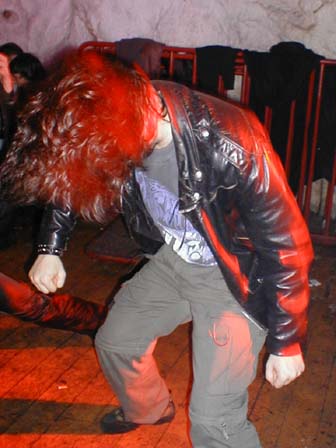
Keep on Bangin