Beeswax Products
Sources: Mulzael, Henry, Practical
Beekeeping in the Developing World
and
The National Beekeepers Association
of the Gambia
Grafting
Wax
Ingredients:
1 part Resin
1 part Beeswax
Melt the wax
and resin together and stir well. Store the wax in a stick form and wrap
in paper
Sewing
thread
To strengthen and
smooth sewing thread for use with animal hides and thick material, simply
pull the thread through a block of wax.
Fixing
cracked hooves
Ingredients:
1 part Honey
1 part bees wax
Melt and mix
the honey and wax together. When the mixture has cooled, clean out the
hooves and apply.
Furniture
and wood polish
Ingredients:
200 g beeswax
100 g turpentine
50 g orange, lemon, or coconut oil
Shave or grate
the beeswax. Slowly mix the turpentine with the wax. The turpentine will
soften the wax without the needs for heat. Mix in the oil. Store the polish
in a tightly sealed jar or container.
Floor
Polish
Ingredients:
60 g Potash
60 ml water
120 grams of beeswax
270 ml water
Bring the 270ml
of water to a boil and add the beeswax. In a separate container, mix the
potash with the 60ml of water. When the wax has melted, mix in the potash
and water. Keep cooking until a milky fluid forms. Store in a tightly sealed
container.
Leather
Waterproofer
Ingredients:
750 g beeswax
45 g pitch
60 g groundnut oil
40 g iron sulfate
50 g essence of thyme
Melt the wax
in a double boiler. Remove the wax from the heat and allow it to cool until
semi-soft. Mix in the pitch, groundnut oil, iron sulfate, and essence into
the wax. Store in a tightly sealed container.
Topical
ointment for burns
Ingredients:
18 g beeswax
40 g paraffin wax
10 g pulverized aloe or aloe extract
30 ml water
1 g borax
Shave the beeswax
and paraffin and melt them together in a double boiler. Remove the mixture
from the heat and add the water, aloe and borax. Pour the mixture into
their storage containers.
Beeswax
cold cream
Ingredients:
100 g beeswax
200 ml water
300 g colorless mineral oil
6 g borax
scented oil (optional)
Mix the wax and
mineral oil together and heat in a double boiler until the wax is dissolved.
Heat the borax and water together in anpther double boiler. When the borax
solution is warm, mix it with the wax solution and stir until it thickens.
Remove from heat and as it cools, add the scented oil. Pour it into jars
and allow the cream to cool before placing the lids on.
Hand
cream
Ingredients:
2 cups vegetable oil
1 attaya glass of beeswax, shaved.
2 vials of mentholatum solution
1 bottle of perfume (optional)
Melt the wax
and oil together in a double boiler. Add the mentholatum and perfume. Pour
the mixture into the storage containers and allow them to cool before placing
the tops on the containers.
Note - For a
sore muscle rub, use an oil of mentholyptus and camphor instead of the
mentholatum
solution.
Shoe
polish/waterproofer
Ingredients:
1 part store bought shoe polish
1 part beeswax shaven
Mix the polish
with the wax and store.
Wax
soap
Ingredients:
10 bars of local laundry soap, shaved
1 spoonful of salt
2 spoonfuls of soda (lye)
250 g of beeswax
2 cups of vegetable oil (groundnut, palm, cooking, etc.)
Melt the wax
and oil together in a double boiler. Place this mixture on the side. Now
melt the soap. After the soap has melted, add the soda and the salt and
mix well. Stir in the wax and oil solution. Remove from heat and keep stirring
until it begins to thicken. Pour the mixture into your soap mold and allow
it to cool before cutting.
Lubricants
Beeswax can also
be rubbed onto hinges and chains to act as a lubricant that can work as
well as some oil lubricants. However, the possibility of trapping sand
and dirt is probably greater.
Candles
Wax:
Pure beeswax can be used if you
are also using professionally made candle wicks. However, if you make your
own wicks, you need to mix paraffin with the beeswax.
Wicks:
A local cotton thread can be use
to make wicks for candles. You cannot use nylon, polyester, or any other
synthetic thread. Take sixteen strands of the thread and twist them together.
The local Fulla cotton can also be
used, if it is first twisted into a thread to strengthen it. The best method
for forming the local Fulla cotton is to basically turn it into a 4-strand
rope.
First, tie the 4 strands together
at one end.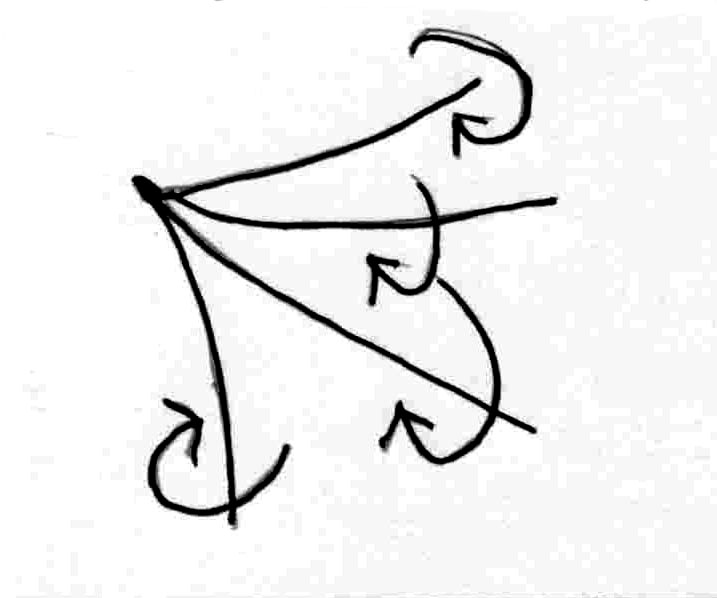
Next, twist each strand until tight.
The cotton has already been twisted to form the thread, you are going to
twist it in the same direction to make a tighter thread. If you twist it
in the wrong direction, the cotton will fall apart.
Finally, twist the 4 threads together
in the opposite direction. When you put the threads together, you will
find that they seem to want to twist in that direction, so you are just
helping it along and making the twist tighter.
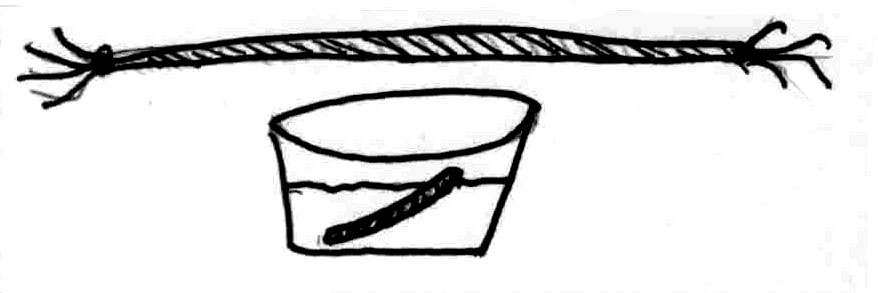
Tie the wick off at the other end
to keep it from unraveling.
Soak the wick in melted wax for
a bit, and its ready to use.
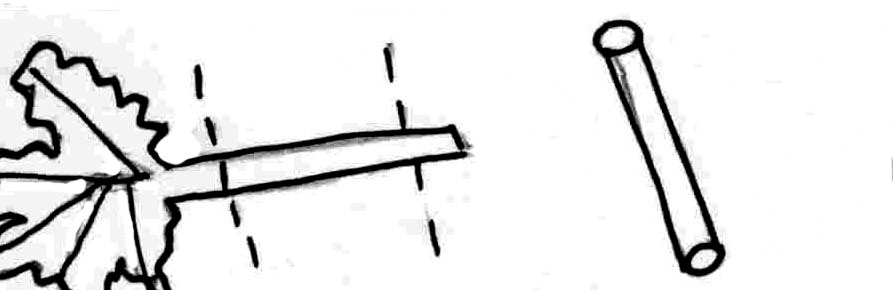
Molds:
Papaya stems make good molds, but
they can only be used once.
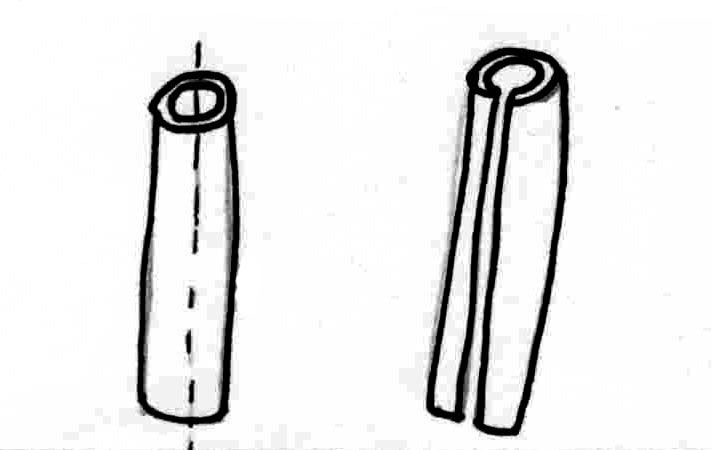
A plastic pipe can make a very good
reusable mold. Take the pipe and make a cut down one side so that it can
be later opened to remove the candle.
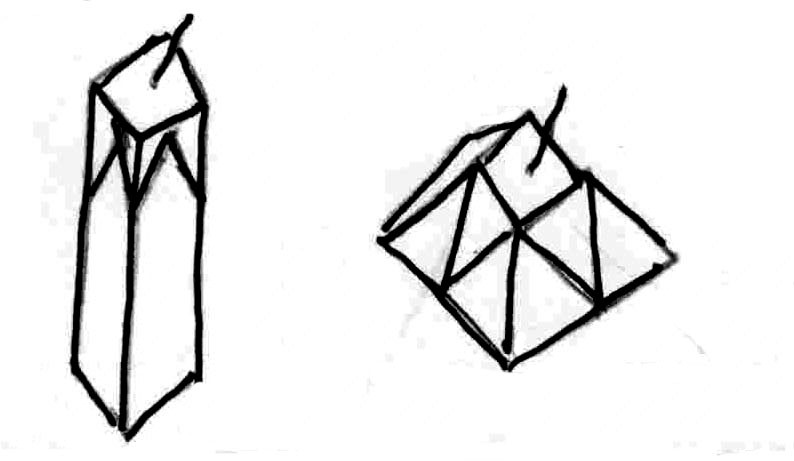
Origami enthusiasts
can create molds out of paper, using a few of the box designs. If the paper
is sturdy and removed carefully, the molds can be refolded and reused.
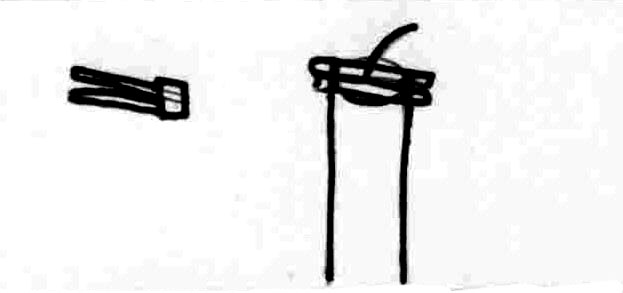
A pair of tooth picks can be taped
together to form a vice that can be placed over the top of the mold to
hold the wick in place.
Home