This is used in
Nigeria as an income generating project. The ropes can be used as is, but
are often woven into furniture or bags. The advantage to this method of
bag recycling is that you don't need the bags to be in good condition.
If the bags are already shredded, you've saved yourself some work.
First, you need
to collect and wash the bags. Next, you shred the bags into plastic strips.
The longer the strips, the easier they will be to use.
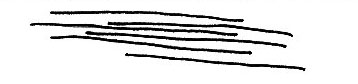
Now, lay a few strips on top of each other, staggering them so their ends are not even. Twist the strips together, and keep twisting until it becomes tight.
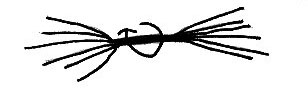
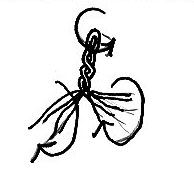
At this point, the twisted strips should be trying to ball up or fold on their own. Fold the twisted strips in half and it should begin twisting itself in the opposite direction. Help it along, and you get a sturdy rope. Keep twisting the ends in one direction, and twist the folded body in the opposite direction.
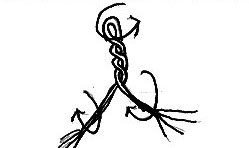
As you start running out of length on the ends, add more strips and continue twisting. I've found that the easiest and neatest way to do this is by folding a strip in half, insterting the strip into the center of the loose ends, fold first. Start twisting about half an inch below where the folded end lies.
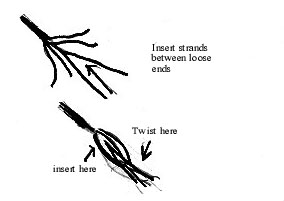
Keep twisting the ends on direction and the folded body in the other direction. When teaching this to schools, I actually grab 3 kids to work together; 2 kids fold the ends while the third twists the body.
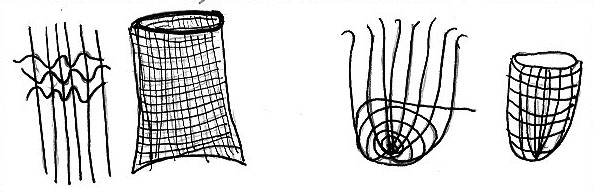
Baskets:
Palm fronds,
saplings, reeds, or other local materials can be used to provide the frame
that a basket can be woven around.
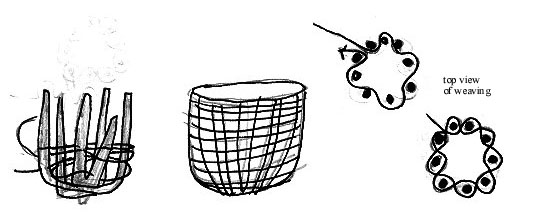
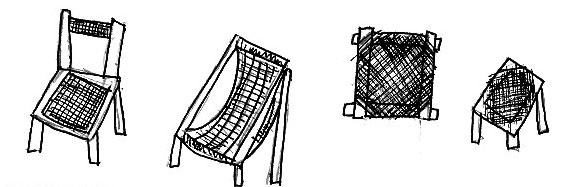
Furniture:
The ropes can
be woven around wooden frames to make seats and chairs. Adventurous types
might even be able to produce hammocks.
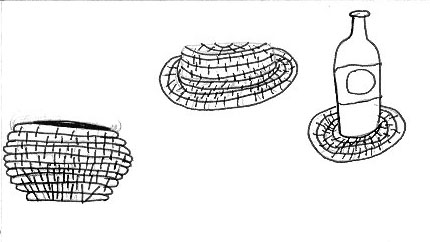
Dishes,
cupholders, hats, etc.:
These crafts
are based of a method of making grass baskets and bowls, etc. In addition
to the rope, you will need a sewing needle and some sort of fiber or thread.
Rice bag fibers may work well for this, as will local strings or thread.
Begin by coiling
a small part of the rope. Using the needle, you are going to wrap the thread
around two layers of rope, pinning one part of the coil to its successive
coil. Evenly space these wraps as the needle and the threat will need to
pass between them to secure the next coil.

When you have created a large enough base, start placing the next wraps on top of each other instead of next to each other. Keep wrapping and sewing. Feel free to experiment with diferent shapes and designs to produce different baskets and hats.