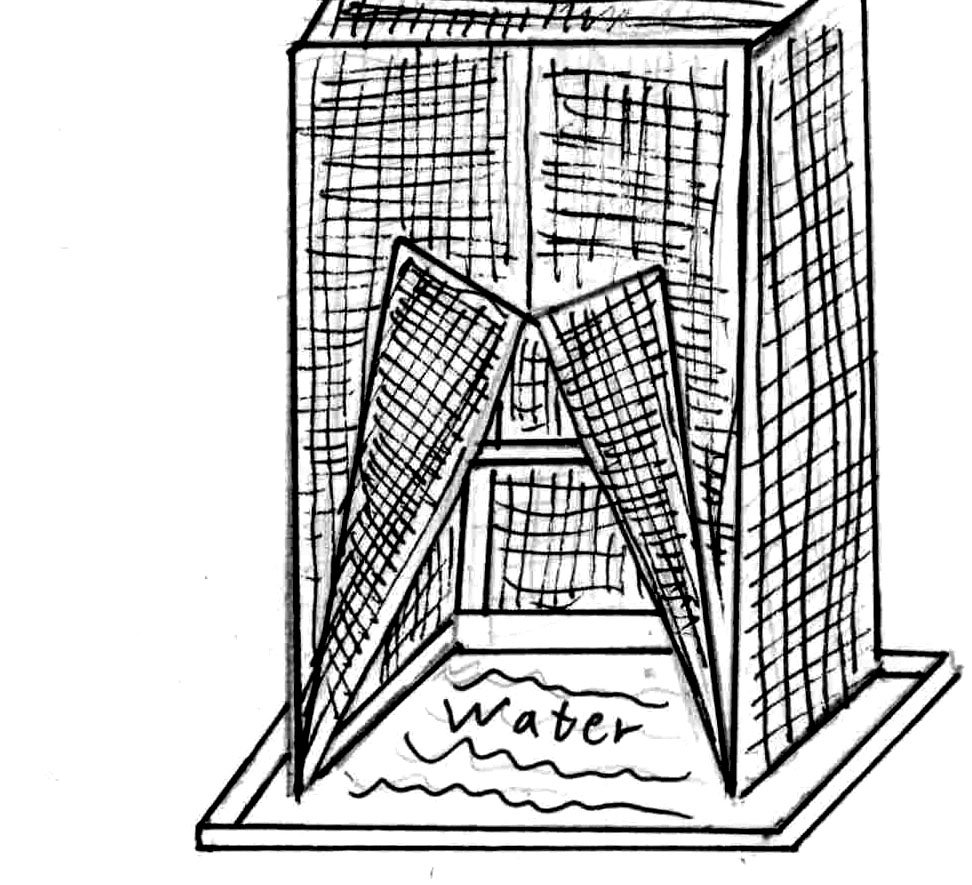
Clay
Pot Refrigerator
Source: Lubick, Naomi "News and
Analysis, Desert Fridge," Scientific American. Vol. 283, Nov. 2000.
Inventor: Mohammed Bah Abba, Nigeria.
In both of these
refrigerator systems, water is evaporated from a source surrounding the
food to be preserved. The evaporation draws heat away from the refrigerator
system, and therefor draws heat away from the food inside. The food is
cooled the same way that sweating cools your body.
For both of these
systems, it is important that there is a constant supply of water, and
that the systems are placed in well-ventilated areas to allow the evaporation
to take place.
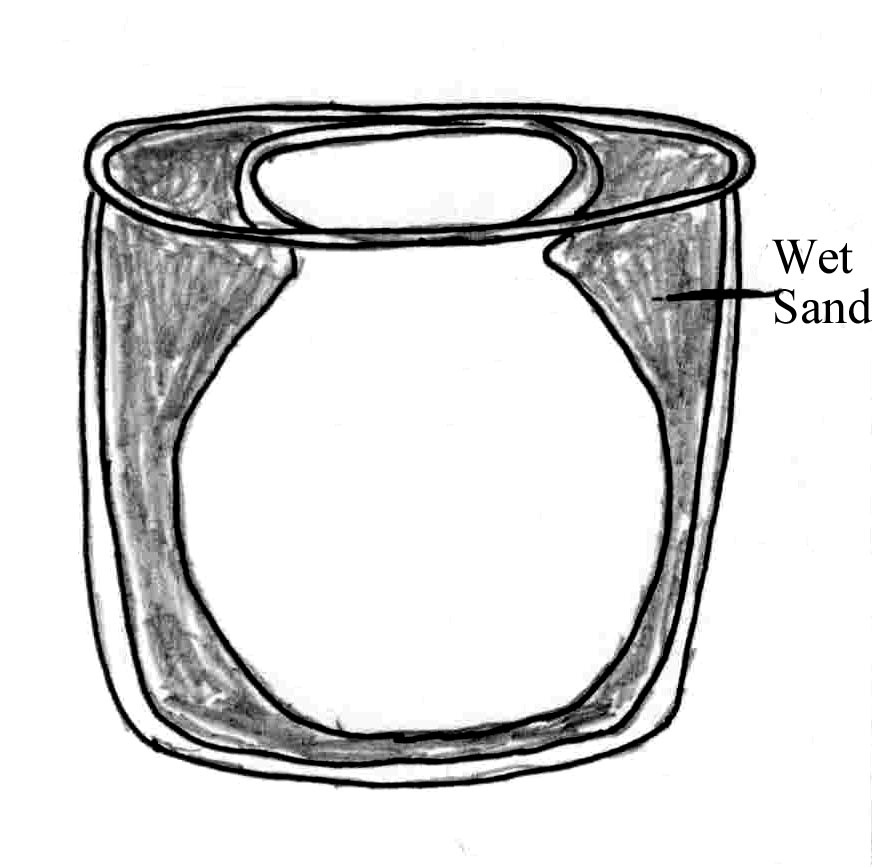
Clay
Pot Refrigerator
Source: Lubick, Naomi "News and
Analysis, Desert Fridge," Scientific American. Vol. 283, Nov. 2000.
Inventor: Mohammed Bah Abba, Nigeria.
Two unglazed clay pots are fitted
inside of each other. Because local Jibida's have small mouths, it will
be necessary to special order the outer Jibida. The space between the two
jars is filled with wet sand or wet course soil. The unglazed jars are
porous enough to allow the water to slowly seep through the sides to be
evaporated, cooling the food.
The exact temperature difference
is as yet unkown. However, it can keep aramanths fresh for about twelve
days, and tomatoes can last for several weeks.