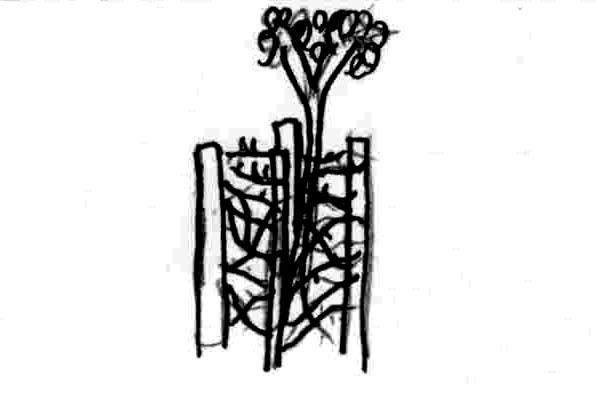
Well, you've planted
your seeds. You've cared for and nurture your seedling. You transported
and transplanted them to a location where you prayed they would flourish.
And then came the goat.
Locally made
woven tree guards can be purchased from neighboring villages for small
sums of money. Free tree guards, however, can be made from local materials.
Most of these tree gaurds consist of branches or sticks planted around
the tree. Next, some sort of barrier is placed around the sticks, or woven
among the sticks, in order to keep animals away from your tree.
Thorny branches, such as off of Ziziphus mauritania, one of the many acacias, or even palm fronds, can be woven among the uprights. Non-thorny branches can be woven as well, but they aren't as effective as a deterrent, and a solid barrier will need to be made.
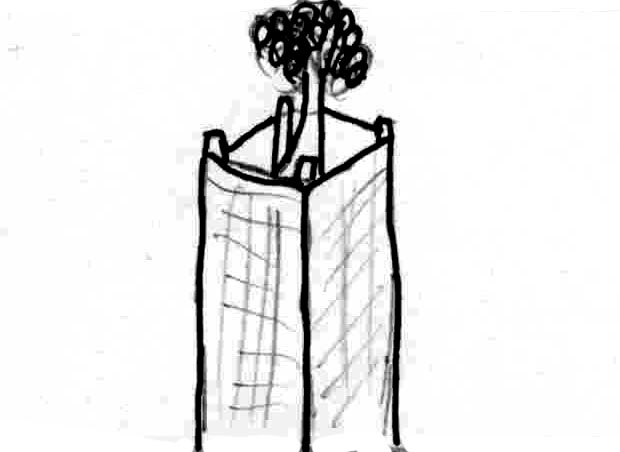
Rice bags have
been used as cheap barrier against animals. If you can get colored rice
bags they last longer against the sunlight and elements. Using cloth ties
is cheaper than wire and will bee less likely to pull through the bag.
Old dresses can
also be used. Depending on the size of the dress, you can actually make
about 4-6 tree guards per dress. Again, using cloth ties is cheaper and
more effective than using wire ties.
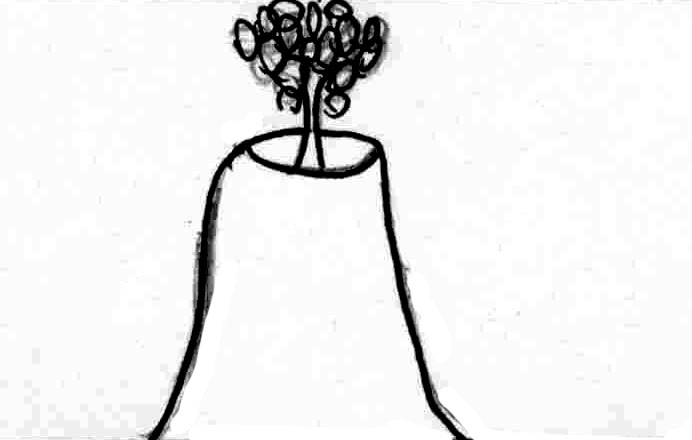
It is possible to sculpt a tree guard out of local clay, but you really want to make sure that there are no termites living in the clay you are using.
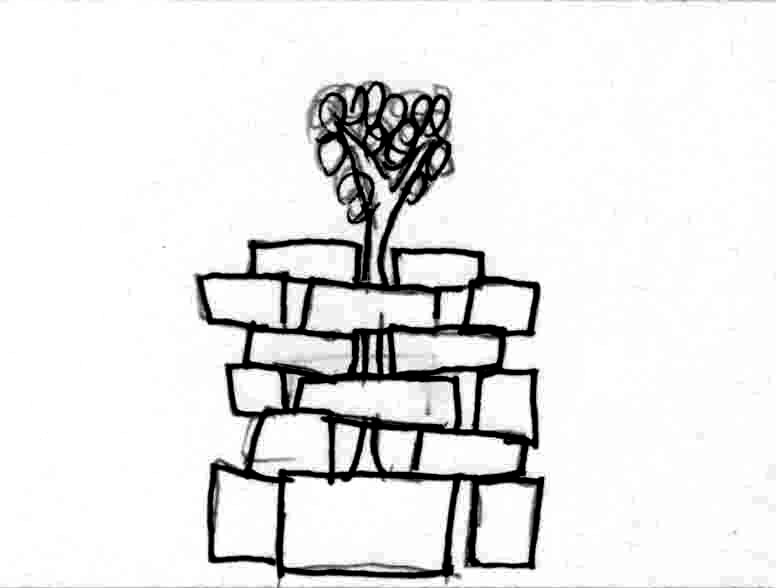
It is very common to see bricks stacked around trees to act as guard. They are effective, but bricks aren't always available.
Other materials
have been used to form the barriers for tree guards. Make sure that it
is something that can be removed afterwards. I have seen, in the Kombos,
a mango tree with a barrel around the trunk. The old barrel was used as
a guard, but was not removed before the tree could outgrow it.