Lack of proper food preservation is an all too common problem that results
in poor nutrition and wasted produce. One method of preserving garden produce
is to dry the food in the sun. In the dry season, solar food drying is
especially easy and only reqires a lean surface to place the food on, and
some form of screen or netting to keep flies and other disease carrying
insects from landing on the food.
Many types of fruits and vegetables
can be dried in these systems. Notable sucesses have been made with tomatoes,
onions, okra, eggplant, carrots, cabbage, sweet peppers, bananas, mangos,
apples, and papaya. The fruits and vegetables need to be sliced thinly
and placed on the racks so that there is no overlapping of produce. Tomatoes
also dry better if their seeds are removed. Generally, it only takes 1-2
days to completely dry the food.
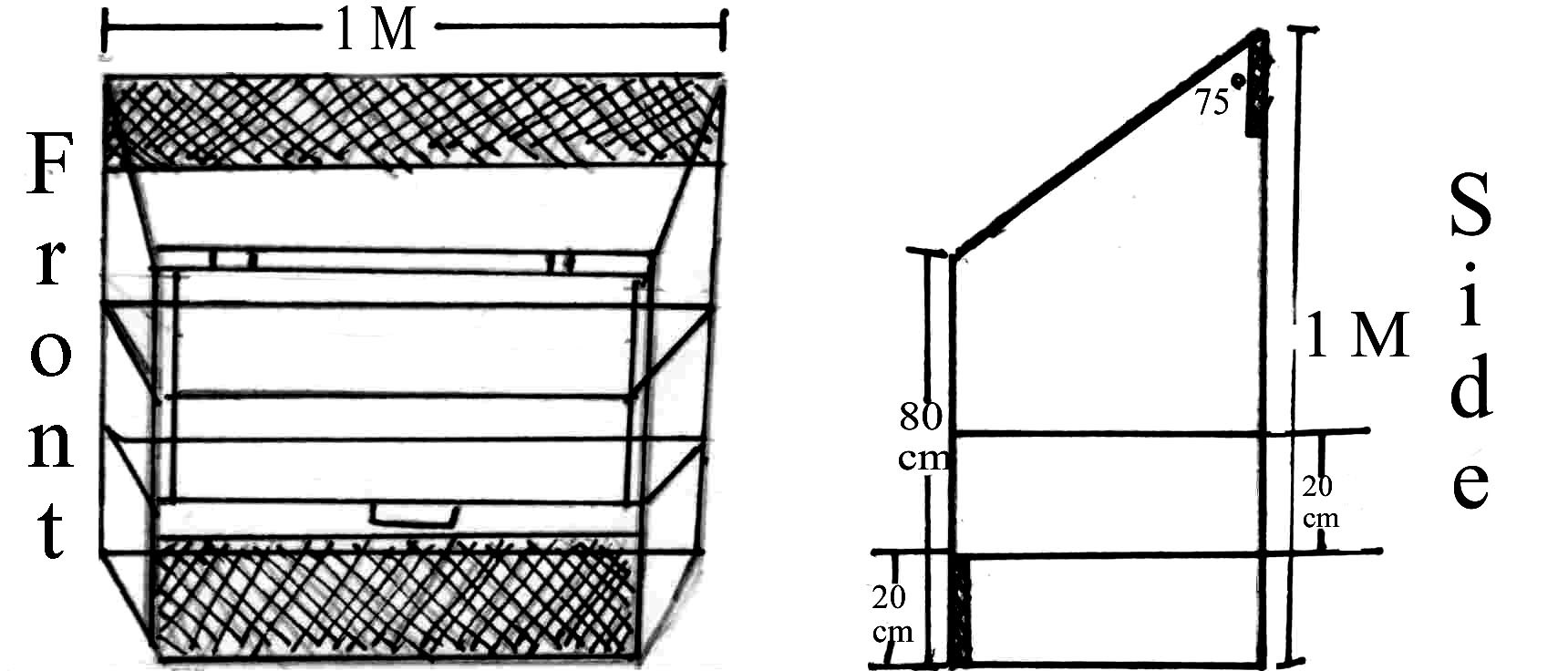
A powerful and
sturdy food dryer can be built by covering a wooden frame with clear plastic.
Mesh shelves and mesh covered vents are placed in and on the dryer to allow
for convection to remove the moisture from the food and speed up drying.
The clear plastic creates a greenhouse effect that increases the heat in
the dryer.
The following
is a design used by the Njawara Training Center in Njawara, The Gambia,
and has been used successfully to dry large amounts of food.
One drawback to
the solar drying of fruits and vegetables is that the sunlight can often
cause certain vitamins to break down. Using a piece of black plastic (a.k.a., 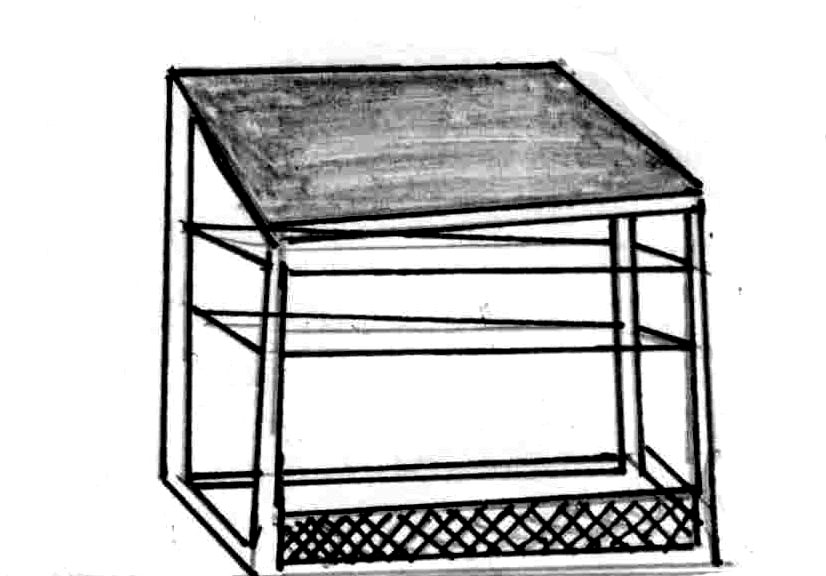 from
a garbage bag), instead of clear plastic on the top panel will allow for
heating while keeping some of the direct sunlight from destroying the vitamins
in the food. Clear plastic is still used for the sides of the dryer.
from
a garbage bag), instead of clear plastic on the top panel will allow for
heating while keeping some of the direct sunlight from destroying the vitamins
in the food. Clear plastic is still used for the sides of the dryer.
 Simpler and cheaper systems can be made from local materials. Other than
being smaller (and therefor not able to dry as much produce at one time),
these systems are just as effective as the above system.
Simpler and cheaper systems can be made from local materials. Other than
being smaller (and therefor not able to dry as much produce at one time),
these systems are just as effective as the above system.
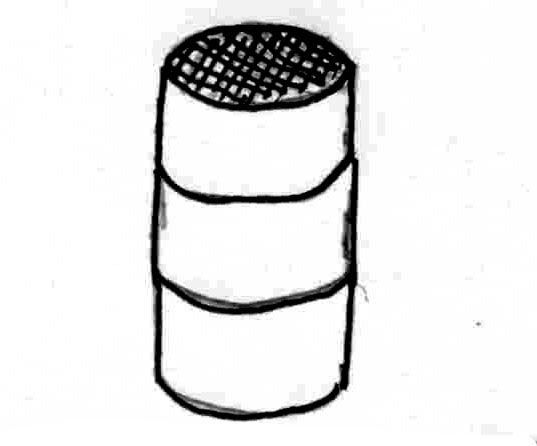
Three bamboo sifters stacked on top of each other creates an easily made dryer. Food is placed on the center dryer and the system is placed outside for the day.
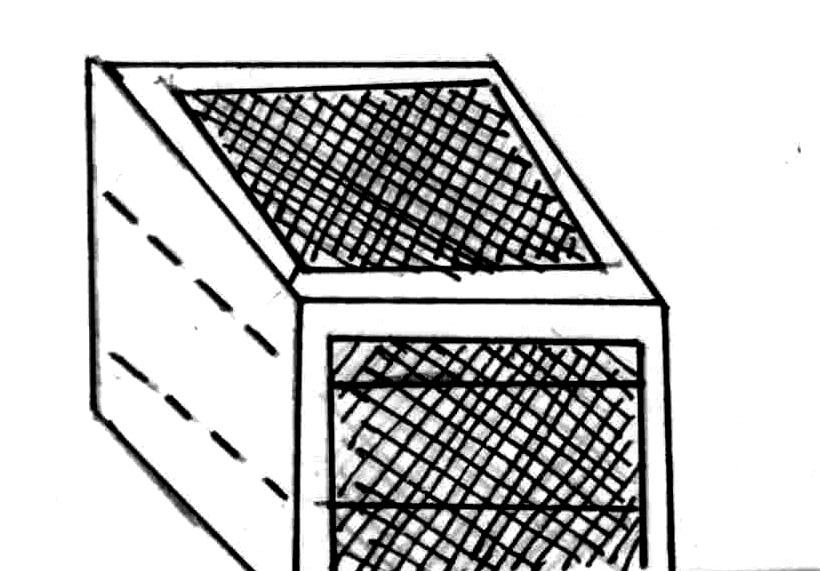
A cardboard box can be turned into a food dryer easily. Plastic mesh or a cleaned rice bag can make inner shelves for the food. The top is removed to let light in, and a hole is cut in the bottom of the back and the top of the front sides for ventillation. These are covered with either plastic mesh or mosquito netting.
If all else fails, a small mesh or mosquito net tent placed over a clean plate makes a really simple and easy dryer.
Something to be experimented
with by adventurous and inquisitive souls would be using solar dryers for
making various forms of meat jerky.
Sources: Boy Scout Fieldbook
“Ask Jackie,” Backwoods
Home Magazine. Volume 70, July/August 2001.
Jerky making requires a constant
exposure to 180OF (approx. 82OC) for a period of
about 8 hours. A system similar to the one used at the Njawara Agricultural
training center may be able to supply the needed heat and ventilation,
but you can experiment with the other dryers. The system might need to
be preheated in the morning with a very small fire placed in a metal pan.
Mesquite wood would be perfect, as it would also flavor the meat nicely.
The meat needs to be sliced about ¼ inch thick. You then either
lightly dust the meat with salt and pepper, or soak it in your favorite
marinade. Place the meat in the upper rack, and put a tray underneath it
in the lower rack to catch the drippings (it makes clean up easier, and
the drippings can be used in a barbecue sauce). Turn the meat halfway
through. The jerky needs to be hard for long term storage, soft jerky can
spoil.