|
Shehzad Roy was born on February
16, 1977. Shehzad Roy father is a businessman.
Shehzad Roy mother Nazli Qamar is a
Are you the proverbial rebel with a cause? People think that if I talk about providing adequate health and education I am a revolutionist or a rebel. It’s just that these are the basic needs which should be provided to the general public. I would answer your question by saying that my inspiration comes from the academic system in this country, and me being a singer with a cause comes from my music. The latter has supported me to raise funds and the power that music gives me transcends into a conflict with the government to improve the flawed education system in Pakistan. Qismet Apnay Haath Mein has an eclectic mix of songs where some spell patriotism, some are naughty while others talk about the political situation in the country. What inspired you to come out with such an album? Just by saying “we are one” one does not become a patriot. I am trying to point out problems but that also doesn’t make me the ultimate patriot. This country is not another planet’s hell and it’s not going to the dogs. My point is if you do not upgrade your education system you will have a chronic sense of despair among the masses. I am a patriot to the core, to the extent of giving my life for the right cause. I, in regard to Zindagi Trust, and Sami Mustafa of Book Group have both received threats while working on improving the existing system in government schools. But nobody can kill the passion that is there and I strongly believe that goodness is contiguous. Saali was a controversial song/album, then came Qismet…and specifically the song Khul
Kay Pyar in which the guitar riff represents the words emanating from frustration and which could not be put into words. Saali was my last album and the title song just came about without any specific pattern of thought. On the contrary, the songs in the latest album have a definite thought process. The song Khul Kay Pyar is basically a message to the young and old alike that due to the lack of creative outlets our youth indulge in mischief and then end up covering their misdoings. How are they supposed to vent their energy? What I am basically saying in the song is that one does not relive his youth again so we should make the most of it. The other song in the album, Laga Reh, and its video by Ahsan Rahim says a lot under the garb of its comic theme. Who owns the concept and are there any more videos in the offing? I have only written and composed the song. This was my first song and Ahsan, who is also a friend, came up with the concept. Four more videos are also in the pipeline all to be directed by Ahsan, namely the title song followed by Aik Baar Kehdo, Quaid-i- Azam and Aankhain which sketches the life of a suicide bomber. Keeping in mind the controversial nature of Laga Reh, how difficult was it to find a sponsor for the album? While making the Laga Reh video, since I had invested so much in it Ahsan warned me that I won’t be able to sell it due to controversial content. Somehow I did manage to get a sponsor but just two days before the video went on air the sponsor called me and told me that I needed to chuck out three shots — one where the old man says ‘leave everything to Allah’, second where the lawyer is trying to set a tyre on fire and third where people are picked up by the agency and then vanish into thin air. I was adamant and told them that I won’t because then there won’t be anything left in the video. It might sound very brave but believe me when you see all the money slipping away, it’s not funny. Here, I would like to ask sponsors to kindly support the paradigm shift in music, too. “I feel modern education just grooms you for the rat race, and even if you win you will still be considered a rat. I get excited when we talk about drama, violin classes or a sport through which a child’s hidden talent comes out in the open. Our children should be taught to ask questions, only then will they succeed in life as adults. In our country one may have the freedom of speech, but there is no freedom after speech. I gain power from music therefore I don’t need to become a politician,” says Shehzad Roy. The song was also supposedly banned. Why indulge in such risk-taking and insist on being a controversial artiste? Are you playing the angry young man? I also saw the bit on the Internet that Laga Reh has been banned but that was not the case. No risk, no gain, and there is no gain without pain. As I said earlier, trying to provide a sound education does not make me into a revolutionary. Gaining knowledge and empowering ourselves is the only and right way to go about things. I have tried to ask the right questions in most of songs on the album. We generally don’t ask questions and when and if we do, it is seen as controversial. Both the song and the Laga Reh video effectively summarised the earlier political situation in the country. Do you think the song is still relevant? Earlier during its making when I had expressed a similar concern, the director of the video, Ahsan, wittingly said that I need not worry about Laga Reh because no matter when the song was released listeners will relate to it. And do you know why? When I was 10, I heard on the 9 ‘o’clock news that Pakistan was going through a sensitive phase, and only two days back I heard Sheikh Rasheed saying the exact same thing all over again! So tell me what has changed? We like to live in denial and keep going on about nonissues, but I also think change is coming. We need to talk about the right issues. I think both the album and the song will remain topical even five years from now. God help us if people can relate to it even after that. Qismet… has allegedly become a best-selling album. How do you feel about that? Is it really that controversial? If it wasn’t selling well I would have become a pauper by now! It was tough losing a sponsor but if I had known that the album wouldn’t sell, I wouldn’t have been able to bring out Qismet... The message that I am trying to impart through this album is that the general public in Pakistan has not been given an outlet to think for themselves with the outlet being the right education system. Once our children start asking questions and demand an answer no leader can make a fool out of us. I also write for a section of the English press but writing, singing songs or going to talk shows won’t change anything. You can only create an opinion with it. I could have come up with such an album before but Qismet… came after I started working in the field and learned about the ground realities. The reforms in the education system that you speak of are also reflected in your music. So is music a tool to fulfill all such aspirations? Of course music is such a tool as I have raised the maximum amount of funds through music. It gives you power. People who generally create problems with my trust’s work back off after a while. I strongly believe that when you take a stand on the right issues, no one dare create problems. You seem to be in awe of Imran Khan and Ardeshir Cowasjee. Any particular reason? Do you have any plans to enter politics? I will never go into politics because once you go into that arena your hands are tied. The reforms that I am trying to bring in the education system are working out more strongly otherwise. And by the way, I have never given such an impression. As for Imran Khan, I have idolised him since childhood and he is like a brother to me. We are very close. The same goes for Adreshir Cowasjee. Both these men have given me tremendous support in regard to my educational project and I thank them for it. Ali Azmat, Fuzon, Strings and Zeb & Haniya have all released their albums round the same time as Qismet… Your comments on the released albums? I really liked Ali Azmat’s Klashinfolk and Zeb & Haniya’s. I support Zeb & Haniya because women are not encouraged in our country. Secondly, they are good musicians. As for Ali, I have been attending his concerts since I was young lad. He is the only rock star in our country and I love his music, and not just because he’s a friend. From pop singer to social activist, how would you sum up your journey so far? I have never really planned my life. Things just kept happening. But yes, I give credit to my parents and the people who inspired me and taught me a lot. My first passion was strumming the guitar. With that came singing at college get togethers, later adopting it as a profession. In 2003, I set up Zindagi Trust with the realisation that drastic reforms are needed in our education system. I feel modern education just grooms you for the rat race, and even if you win the race you will still be considered a rat. I get excited when we talk about drama, violin classes or a sport through which a child’s hidden talent comes out in the open. Our children should be taught to ask questions, only then will they succeed in life as adults. In our country one may have the freedom of speech, but there is no freedom after speech. I gain power from music therefore I don’t need to become a politician. You have already started working on the next album. Will it also be as hard-hitting as Qismet…? There is time for the next album to come out as I am touring and doing concerts for now. Then, I have adopted a few more schools which need attention. For the next album I am thinking of compiling songs on the brain drain issue. Our youth is abandoning Pakistan for greener pastures abroad. Besides this, there are many other issues that I want to touch upon. Nowadays, I am also into observing people on the streets where one sees millions of faces and zillions of stories. We have a very interesting country with so many religions, cultures, and castes. I’ve decided to observe people and compile my next album along those lines. Albums * Disco Graphy (group) * Zindagi (1995) * Darshan (1997) * Teri Soorat (1999) * Rab Jaanay (2002) * Buri Baat Hai (2005) * Qismat Apnay Haath Mein (2008) Best pakistani singers
|

 |
|
| Atif Aslam Abrar-ul-Haq Ahmed Jahanzeb Jawad Ahmed | |
 |
|
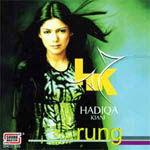
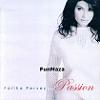
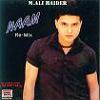
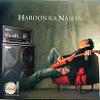
| Hadiqa Qiyani Fareeha Pervaiz Ali Haider Haroon Ka Nasha |