A meteor, sometimes called a "shooting star," can be the brightest object in the night sky, yet meteoroids are the smallest bodies in the solar system that can be observed by eye. Wandering through space, perhaps as debris left behind by a comet, meteoroids enter the earth's atmosphere, are heated by friction, and for a few seconds streak across the sky as a meteor with a glowing trail.A concise listing of all meteor showers that can be seen throughout the year using the Meteor observing calender
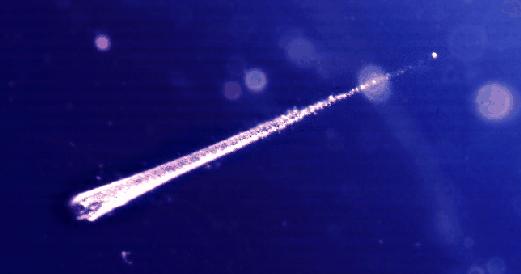
A brilliant meteor, called a fireball, may weigh many kilograms, but even a meteor weighing less than a gram can produce a beautiful trail. Some of these visitors from space are large enough to survive (at least partially) their trip through the atmosphere and impact the ground as meteorites. Fireballs are sometimes followed by trails of light that persist for up to 30 minutes; some, called bolides, explode with a loud thunderous sound.
If you have a dark clear sky you will probably see a few per hour on an average night; during one of the annual meteor showers you may see as many as 100/hour. Very bright meteors are known as fireballs.