Jumping ahead to the 16th century, colonists brought the rose to North America, making it
the longest cultivated European plant in this country.
 In 1798,Empress Josephine acquired
her palace at Malmaison and created the most remarkable rose garden ever planted. It included
every variety known at the time (about 250).
"Modern" rose hybrids date back to 1867, and by 1920 hybrid teas dominated the market. They remain
the most popular rose variety today. Fragrance is a very important characteristic of a rose.
All-America Rose Selections formed in 1938 to test new rose
varieties to determine which, if any, could be recommended to the public. One of the most popular
roses of all time, "Peace," was smuggled to the United States from occupied France in 1945.
The American Rose Society provides a wealth of technical literature and inspirational photography
in the website Roses.
For information about rose care click rose care
In 1798,Empress Josephine acquired
her palace at Malmaison and created the most remarkable rose garden ever planted. It included
every variety known at the time (about 250).
"Modern" rose hybrids date back to 1867, and by 1920 hybrid teas dominated the market. They remain
the most popular rose variety today. Fragrance is a very important characteristic of a rose.
All-America Rose Selections formed in 1938 to test new rose
varieties to determine which, if any, could be recommended to the public. One of the most popular
roses of all time, "Peace," was smuggled to the United States from occupied France in 1945.
The American Rose Society provides a wealth of technical literature and inspirational photography
in the website Roses.
For information about rose care click rose care
Rose care
Roses may be the flowers of love, but there's nothing romantic about a bush that doesn't produce beautiful blooms.
Don't worry. With a little tender loving care your roses will be as pretty as a picture.
Fertilize Regularly
The first feeding of your roses should be done when the bush first leafs out. For the remainder of the growing season,
fertilize after each flush of blooms. Stop fertilizing about 2 months before the first frost. Use a commercial rose food
or general-purpose fertilizer applied according to manufacturer instructions. Scratch dry fertilizers into the soil beneath
the leaves - but not touching the canes or bud union - and water well.
Mulch Generously
Mulch helps minimize weeds, keeps the soil moist and loose, and adds essential nutrients. Organic mulch is best - try wood
chips and shavings, shredded bark, pine needles, cottonseed or cocoa-bean hulls, chipped oak leaves or peat nuggets. Apply
in the spring just as the soil warms and before weeds start to grow. (It can also be applied anytime during the growing season
provided weeds are removed and soil surface is lightly cultivated.) Spread 2 to 4 inches over the rose bed, leaving some space
open around the base of each rose. Replace mulch as it deteriorates during the year.
Water Adequately
Seldom can you rely on rainfall to be an adequate source of water for roses. The actual frequency of watering will depend on your soil and climate as well as the age
of the plant. Try watering a few mornings a week - water slowly, until the soil is thoroughly soaked 12 to 18 inches deep.
Soaker hoses or a hose with a bubbler attachment will help keep water from splashing onto foliage, and possibly spreading
diseases. Soil-level and drip-irrigation systems are also effective.
Prevent Pests
The best pest prevention for roses is achieved by selecting top-quality plants and then properly caring for them. For more
information about specific pests and controls for your area, check with your local nursery or garden center, co-operative
extension agent or AARS public garden.
For more information about this web page contact
[email protected]
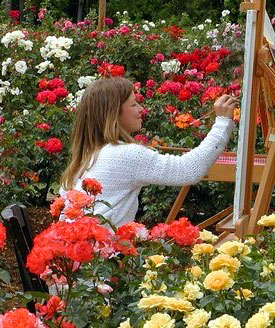 Fragrance is probably the single most common trait people identify with a perfect rose. From spicy to fruity
to musky, a rose's scent is hard to resist. When was the last time you didn't stop to smell the roses?
The best time to smell roses is midmorning when the sun has just reached the garden. The fragrance will be most intense
when the bloom is 1/4 to 2/3 open. Some fragrant roses are listed below.
Fragrance is probably the single most common trait people identify with a perfect rose. From spicy to fruity
to musky, a rose's scent is hard to resist. When was the last time you didn't stop to smell the roses?
The best time to smell roses is midmorning when the sun has just reached the garden. The fragrance will be most intense
when the bloom is 1/4 to 2/3 open. Some fragrant roses are listed below.