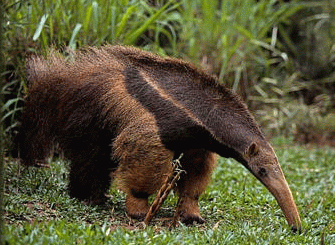
image courtesy: [email protected]
Common Name: Giant Anteater
Scientific Name: Myrmecophaga tridactyla
Size: 3 1/4- 4 1/4 feet
The Giant Anteater is the largest of the South American anteaters and can be found in the grasslands and rainforests of the
northern half of South America. They have long, tube-shaped heads and an extremely long worm-like tongue. They have
course, stiff hair that is longest at the tail. Their hair is highly flammable; it's not uncommon to find many burned to death after a
severe forest fire.
The Giant Anteater primarily feeds on ants and termites (they've also been known to eat beetle larvae and fruit); using its
strong, six inch claws to tear open rotten logs, large anthills and termite nests. It's long, sticky tongue then licks up the eggs,
cocoons and adult insects. These creatures may consume up to 35,000 insects a day.
The gestation period for the Giant Anteater is about 190 days and the single baby weighs about 2 1/2 pounds at birth. The
young nurse for approximately three months, never leaving the mother, who carries the baby on her back for the first 6-9
months of it's life.
Giant Anteaters are found in a variety of habitats, from the rainforest to the savannahs. They may also be active both during the
day and at night. This species of anteater is peculiar: though they are solitary creatures, they are nonterritorial. And though they
do not have the ability to climb like the other smaller two species of anteater, they are excellent swimmers.
The main predators of the Giant Anteaters are the puma, jaguar, and humans. Population encroachment, habitat destruction,
and hunting have caused the numbers of these creatures to dwindle. Giant Anteaters are now found in only small local
populations; they are currently listed as vulnerable under C.I.T.E.S.